
Browse the Cane Corsos listed on Petmeetly, then check the parents' hip and elbow scores and the seller's identity before you pay.

Cane Corso

Cane Corso

Cane Corso
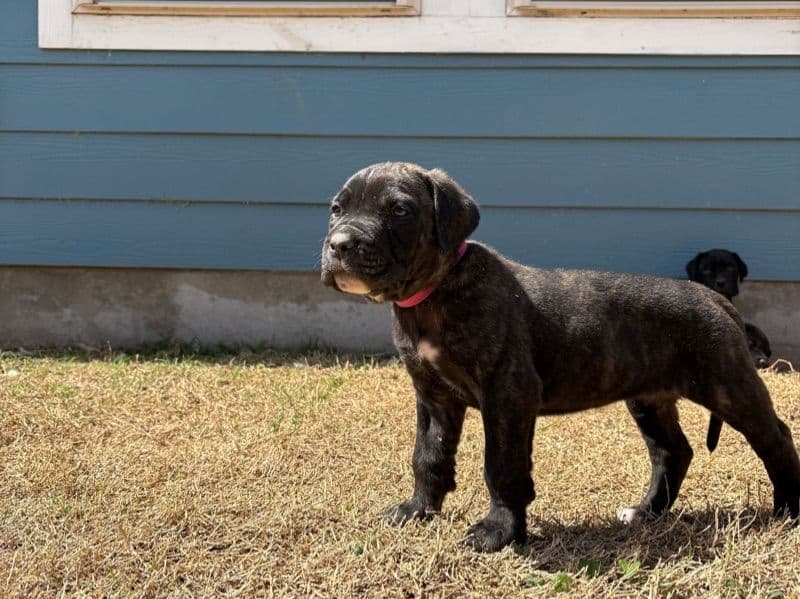
Cane Corso

Cane Corso

Cane Corso

Cane Corso

Cane Corso
Looking at Cane Corso dogs and puppies for sale, it is easy to be drawn to the size and the striking looks. The harder, more important part is being honest about what a 100-pound guardian dog needs: an experienced owner, real training, and a home set up for it.
This guide covers the temperament, the law and insurance, what the price should tell you, the health, and how to avoid scams. Read it before you send anyone a deposit.
Not every listing here is a puppy. Sellers post breeder litters, grown Cane Corsos, Corso mixes, and dogs whose owners could not manage the size. With a guardian breed an adult tells you far more, because the temperament is already formed rather than promised. It costs less as well.
Short answer
The Cane Corso is a 100-pound Italian guardian dog, bred to protect. It is loyal and calm with its family, but wary of strangers and strong enough to be a real handful. This is not a first dog. It needs an experienced owner, early socialization, steady training, and a securely fenced yard. Get those right and you have a steady, devoted protector.
The Cane Corso is an Italian molosser (a heavy mastiff-type guardian), bred to watch over property and family. It is intelligent and deeply loyal, but assertive and protective by nature. The AKC is blunt that this breed needs an experienced owner who can lead calmly and consistently.
Socialization is not optional. The main window for shaping a confident dog closes around 16 weeks of age. Heavy, positive exposure to people, dogs, and new places in those early months prevents a fearful, over-protective adult.
Here is the honest warning. An under-socialized or poorly trained Cane Corso is a liability, not just a handful. With this much size and power, the cost of getting it wrong is high.
Considering another powerful working breed? See our Doberman buyer guide.
Short answer
Before you buy a Cane Corso, check two things: your lease and your home insurance. Very few cities ban the breed, but many landlords do, and several home and renter insurers will not cover it or will charge more. A powerful guardian dog is a real liability, so sort the paperwork before the puppy, not after.
First, the ban myth. There is no US federal or statewide ban on the Cane Corso. Breed-specific legislation (BSL, local laws that target a breed by name) names it far less often than pit bulls or Rottweilers. A few cities and counties single out large guardian breeds in local rules, so check your own city's ordinances.
The real obstacle is private, not municipal. Many landlords ban large guardian breeds. Several home and renter insurers put the Cane Corso on a restricted-breed list and will not cover it or charge more. Some insurers, like State Farm and USAA, judge by the individual dog's bite history, not the breed.
Liability is real. A Cane Corso can do serious harm, so you are responsible for secure containment and control. Confirm your housing and liability cover before you commit, not after the puppy is home. Next, look at what owning one really costs.
Short answer
Typical asking prices for a health-tested Cane Corso puppy from a breeder in the US run $1,500 to $3,000, with show lines higher. What you should pay for is health testing, titles, and registration, not a "rare" color or an oversized "XL" build. Then budget for a giant breed: more food, professional training, and bigger vet bills than a small dog will ever run.
Price should reflect bloodline, titles, registration with the AKC and the breed registry (the ICCF, the International Cane Corso Federation), and the parents' health testing. When a price sits far below that, ask which of those tests were actually done, and look the results up yourself on ofa.org.
Those tiers describe a puppy from a breeder. Adult Cane Corsos, Corso mixes, and dogs being rehomed by their owners are priced lower, and that lower price is honest, because nobody paid to raise a litter.
The giant-breed budget is the part new owners miss. Food for a 100-pound dog runs about $60 to $150 a month. Professional training is close to non-negotiable here, at roughly $500 to $1,650 a week for a board-and-train program, or less for private and group classes.
Many owners also pay for a preventive surgery against the stomach twist that can follow bloat (a dangerous stomach swelling that can kill fast), called a gastropexy, which tacks the stomach so it cannot twist. It often costs $400 to $2,000 and is frequently done at the spay or neuter (the desexing surgery so the dog cannot breed).
Plan for higher insurance too. Pet insurance for a big guardian breed commonly runs around $70 a month. For more on what really drives a puppy's price, read how to find a quality puppy within your budget.
Short answer
Big dogs carry big-dog health risks. The Cane Corso has one of the highest rates of hip dysplasia (a poorly formed hip joint) of any breed. Its deep chest also puts it at real risk of bloat, where the stomach fills with gas and can twist, turning deadly within hours. Plan on health-tested parents, and ask your vet whether a preventive stomach-tack (gastropexy) makes sense. It does not stop bloat itself, but it keeps the stomach from twisting.
The big one is hip dysplasia, where the hip joint forms poorly and wears painfully (elbow dysplasia is the same problem in the elbow). The Cane Corso has one of the highest hip-dysplasia rates of any breed. Buy only from parents with OFA (the Orthopedic Foundation for Animals, a health-screening registry) or PennHIP (a hip X-ray scoring method) scores you can verify.
Bloat, also called gastric dilatation-volvulus or GDV, is when the stomach fills with gas and twists, cutting off blood flow. It is a deadly emergency, most common in deep-chested big breeds. Even with surgery, many dogs do not survive, which is why a preventive gastropexy and slow feeding matter.
The breed is also prone to eyelid problems. Entropion and ectropion are eyelids that roll inward or outward, and cherry eye is a tear gland that pops out of place. Most are correctable with surgery.
Some bloodlines also carry idiopathic epilepsy (seizures with no clear cause), skin issues, and thyroid problems, so ask the breeder about the family history.
A Cane Corso lives about 9 to 12 years, shorter than a small breed, so the early years of training and care count. For the full breeding-side health detail, see our Cane Corso breeding guide.
The Cane Corso comes in a handful of standard colors. Knowing them helps you spot a breeder who is selling a healthy dog, not a story.
Red is also a standard color. Source: the AKC breed standard.
On the cropped-ear look: it is cosmetic, not a health need. The AVMA opposes cropping ears for looks, and it is banned or restricted in many places. An uncropped Cane Corso is fully standard, so this is your choice, not a mark of quality.
Short answer
Most puppy scams open with a price that looks too good and a push to pay by Zelle, wire, gift card, or crypto. Scammers favor in-demand breeds, and an ad for a "merle," "blue," or "XL" Cane Corso is doubly suspect, since those are not standard. The Better Business Bureau put the average puppy-scam loss at about $1,293 in 2024. Insist on a live video call with the puppy and its parents, and never send money you cannot get back.
The Better Business Bureau tracks thousands of pet scams. Reported puppy-scam complaints fell about 21% in 2024, even as the average loss climbed. The FTC gives the same advice: insist on a video call, and never wire money. For more, read our guide on how to avoid puppy scams.
With a powerful guardian breed, the breeder matters more, not less. Here is what to see, verify, and expect.
The breed's health checklist is the CHIC program (the Canine Health Information Center, a shared health-testing checklist run with the parent club). It requires hips, elbows, heart, and knee (patella) checks, plus two breed DNA tests. One is for DSRA (dental skeletal retinal anomaly, a breed-specific bone and eye disorder). The other is for NCL (neuronal ceroid lipofuscinosis, a fatal nerve disease). An eye exam and a thyroid test are recommended, not required. Verify any clearance yourself, free, in the OFA database.
A good breeder welcomes these questions. Read more on the Cane Corso Association of America's breeder guidance.
Petmeetly connects you directly with people listing Cane Corsos, with no broker in the middle. Use the checks above, and be the experienced, prepared owner this breed needs. Open to an adult dog instead of a puppy? See how to adopt a Cane Corso.
With a guardian breed, buyers want proof before pictures, so lead with the records.
Sources
Get answers to common questions about buying Cane Corsos responsibly
Typical asking prices for a health-tested Cane Corso puppy from a breeder in the US run $1,500 to $3,000, and show or champion lines run higher. A price far under that range is a prompt to ask for the parents' results by name. Ask for the hip and elbow scores, the cardiac and patella results, and the DSRA and NCL DNA tests, then look them up on ofa.org. What you pay for should be health testing, titles, and registration, not a "rare" color or an oversized "XL" build. Adult Cane Corsos, Corso mixes, and owner rehomes cost less for honest reasons, so judge those listings on the dog and the records.
For most people, no. The Cane Corso is a powerful, protective guardian breed that needs an experienced owner, heavy early socialization, and steady training to be safe and relaxed. It bonds deeply and is wonderful in the right home, but it is a serious commitment, not a beginner's dog.
The big ones are hip dysplasia, a poorly formed hip joint the breed gets at one of the highest rates of any dog. The other is bloat, a twisted stomach that is a deadly emergency in deep-chested breeds. They are also prone to eyelid problems and, in some lines, seizures. A Cane Corso lives about 9 to 12 years, so health-tested parents and preventive care really matter.
There is no US federal or statewide ban, and few cities restrict the breed. The real obstacles are private: many landlords prohibit large guardian breeds, and several home and renter insurers will not cover a Cane Corso or charge more. Check your lease and your insurance before you bring one home.
Insist on a live video call showing the specific puppy with its parents, and never pay by wire, Zelle, gift card, or crypto, because that money cannot be recovered. The Better Business Bureau put the average puppy-scam loss at about $1,293 in 2024, and an ad for a "merle," "blue," or "XL" Cane Corso is a double red flag, because those are not standard. Verify the parents' health tests yourself on ofa.org before you send anything.
Discover puppies and dogs for sale from various breeds and find your perfect companion
Browse Cane Corsos listed on Petmeetly, then use the temperament, legal, health, and seller checks above before you pay.
No card required to sign up.