
Browse the Maltese listed on Petmeetly, then ask for the parents' knee and heart clearances and check the seller's identity before you pay.

Maltese mix

Maltese

Maltese

Maltese

Maltese
Maltese
Maltese

Maltese
Looking at Maltese dogs and puppies for sale, it is easy to fall for that white silky coat and sweet face. The harder part is knowing a fair price, planning for the daily grooming that coat needs, and understanding the toy-breed health behind it.
This guide covers the coat, the health, the price, and how to avoid scams. Read it before you send anyone a deposit.
Sellers here list more than litters. You will also see grown Maltese, Maltese mixes, and dogs being rehomed by their owners. A settled adult is often the easier start, because the price is lower and the coat, teeth, and knees can be checked today rather than guessed at.
Short answer
The Maltese is the white, silky lapdog, and that single coat is its whole look and its biggest job. There is no undercoat, so it sheds very little, but the coat mats fast without daily brushing. No dog is truly hypoallergenic, but a Maltese is often easier on allergy sufferers. Plan for daily grooming and some tear-stain care.
A Maltese has a single, long, silky coat with no undercoat, so it sheds very little. That is also why it mats quickly. There is no shedding to clear loose hair, so a missed day of brushing turns into tangles.
Most owners keep a short "puppy cut" instead of the floor-length show coat, with a topknot to keep hair out of the eyes.
On allergies, be honest with yourself. The AKC is clear that no dog is 100% hypoallergenic, but it lists the Maltese among lower-allergen breeds because the non-shedding coat spreads less dander. Many allergy sufferers tolerate a Maltese better, but spend time with one before you buy.
The reddish-brown stains under a Maltese's eyes come from porphyrins (iron pigments in tears that darken in the air), and they show clearly on the white face. Wipe the area daily and keep the fur trimmed. If staining appears suddenly, see a vet first, since it can mean a blocked tear duct or an eye problem.
Cross-shopping another silky toy breed? See our Yorkshire Terrier buyer guide.
Short answer
For such a tiny dog, the Maltese has a few real health needs. The main ones are a slipping kneecap (luxating patella), a weak windpipe (tracheal collapse), dental disease, and a liver shunt the breed is prone to. Some young Maltese also get white shaker syndrome, a treatable bout of body tremors. The good news is a long life, often 12 to 15 years with good care.
The most common is a luxating patella, where the kneecap slips out of its groove and causes a little skip or hop. It is common in toy breeds, and mild cases are managed without surgery.
A weak windpipe, called tracheal collapse, gives a dry, honking cough. Walk a Maltese on a harness, not a neck collar, to keep pressure off the windpipe.
A liver shunt, or portosystemic shunt, is a blood vessel that routes blood around the liver, so toxins are not filtered out. The Maltese is among the toy breeds most prone to it. Signs usually show up young: poor growth, plus confusion or wobbliness after meals. A bile acid blood test screens for it, and surgery can correct it.
Some young Maltese get white shaker syndrome, a sudden bout of full-body tremors with no known cause. It sounds scary, but it usually responds well to steroids.
A small, crowded jaw lets gum disease (periodontal disease) start early, so brush the teeth and budget for cleanings. Very small puppies can also drop their blood sugar (hypoglycemia) when they miss meals, so they need to eat several times a day.
With that care, Maltese are long-lived, often 12 to 15 years. For the full breeding-side health detail, see our Maltese breeding guide.
Short answer
Typical asking prices for a health-tested Maltese puppy from a breeder in the US run $800 to $2,000, with show lines running higher. A price far under that is a prompt to ask for the parents' patella and cardiac clearances by name. Skip the "teacup" and "micro" labels either way, because there is no such size class. The bigger long-term cost is grooming: plan for daily brushing and a professional groom every four to six weeks.
"Teacup," "micro," and "tiny toy" Maltese are marketing labels, not real sizes. The AKC standard is simply under 7 pounds, with no smaller class. Breeding deliberately undersized dogs raises the risk of low blood sugar, fragile bones, and heart or liver problems.
Those figures describe a puppy from a breeder. Adult Maltese, Maltese mixes, and owner rehomes are priced lower, and that is honest, because nobody paid to raise a litter.
Grooming is the cost most new owners underestimate. A professional groom runs about $45 to $90 every four to six weeks, roughly $540 to $1,200 a year, on top of daily brushing at home.
Budget for the real vet costs too. A luxating patella repair runs about $1,500 to $5,000 per knee. A liver shunt repair commonly runs $3,500 to $5,000 for a small-breed shunt, and more for complex cases.
There is some good news on cost. Maltese are among the lower-cost breeds to insure, commonly $30 to $50 a month.
For more on what really drives a puppy's price, read how to find a quality puppy within your budget.
The Maltese is a white breed. The AKC standard calls for a pure white coat, with a light tan or lemon on the ears allowed but not preferred.
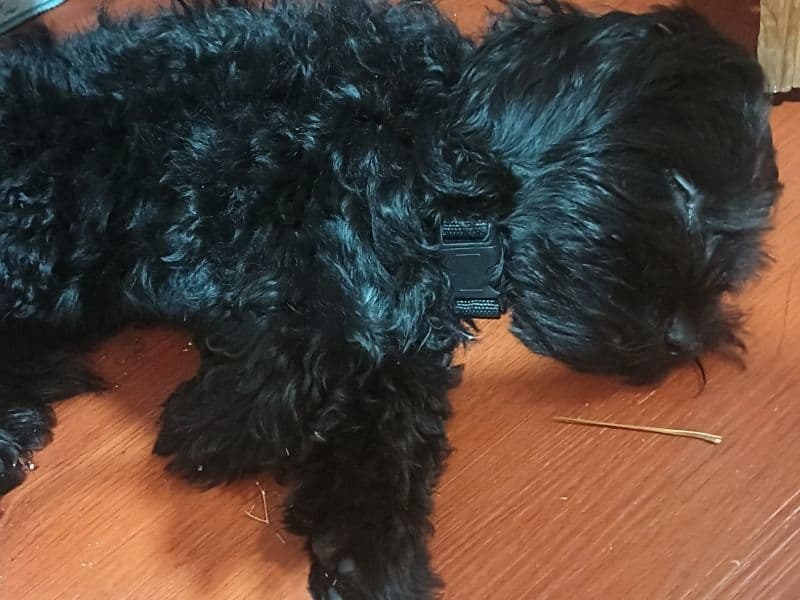
There is no black, brown, or "rare colored" Maltese. Those colors are not in the breed's genetics, so a solid-colored "Maltese" is most likely a mix or another breed. Treat a "rare colored Maltese" sold at a premium as a warning sign of misrepresentation.
Bottom line: with a Maltese, white is the breed. Pay for health-tested parents, not for a "color" that should not exist.
The American Maltese Association and the OFA CHIC program (the Orthopedic Foundation for Animals' shared health-testing checklist) require two tests for a Maltese.
Responsible breeders often add a bile acid blood test for liver shunt and an eye exam, which are good practice but not CHIC-required. Verify any clearance yourself in the free OFA database and read the actual results.
Short answer
Most puppy scams start with a price that looks too good and a push to pay by Zelle, Cash App, wire, gift card, or crypto. Scammers favor small, in-demand breeds, and "teacup" or "rare colored Maltese" ads are classic bait. The Better Business Bureau reports the average puppy-scam loss reached about $1,293 in 2024. Insist on a live video call with the puppy and its mother, and never send money you cannot get back.
The Better Business Bureau tracks thousands of pet scams. Reported puppy-scam complaints fell about 21% in 2024, even as the average loss climbed. The FTC gives the same advice: insist on a video call, and never wire money. Pay only with a method you can dispute, and read our guide on how to avoid puppy scams.
A good breeder welcomes your questions. Here is what to see, get in writing, and verify.
We keep the in-depth health-clearance detail on the breeding side. See our Maltese breeding guide, part of our responsible-breeding hub.
Petmeetly connects you directly with people listing Maltese, with no broker in the middle. Use the checks above before you pay. Open to an adult dog instead of a puppy? See how to adopt a Maltese.
Maltese buyers ask for certificates, so add yours to the listing before it goes live.
Sources
Get answers to common questions about buying Malteses responsibly
Typical asking prices for a health-tested Maltese puppy from a breeder in the US run $800 to $2,000, and show or champion lines run higher. A price far under that range is a prompt to ask for the parents' patella (kneecap) exam and congenital cardiac test, then look both dogs up on ofa.org. Adult Maltese, Maltese mixes, and owner rehomes usually cost less for honest reasons, so judge those listings on the dog and the records. Be wary of "teacup" pricing either way, because there is no recognized teacup Maltese, and the bigger long-term cost is grooming.
No dog is truly 100% hypoallergenic, but the Maltese comes close for many people. Its single coat has no undercoat and sheds very little, so it spreads less dander, and the AKC lists it among lower-allergen breeds. If anyone in the home has allergies, spend time with a Maltese before you commit, and keep up the daily grooming.
The most common are a slipping kneecap (luxating patella), a weak windpipe (tracheal collapse), dental disease, and a liver shunt the breed is prone to. Some young Maltese also get white shaker syndrome, a treatable bout of full-body tremors. The upside is a long life, often 12 to 15 years with good dental, weight, and joint care.
Those are tear stains, caused by porphyrins (iron pigments in tears) that darken in the air and show clearly on the white coat. Wipe the eye area daily and keep the fur there trimmed and dry. See a vet if the staining appears suddenly, because it can signal a blocked tear duct or an eye problem rather than just cosmetics.
Insist on a live video call showing the specific puppy with its mother, and never pay by wire, Zelle, Cash App, gift card, or crypto, because that money cannot be recovered. The Better Business Bureau reports the average puppy-scam loss reached about $1,293 in 2024, and "teacup" or "rare colored Maltese" ads are common bait. Pay by credit card and verify the parents' health tests yourself on ofa.org before you send anything.
Discover puppies and dogs for sale from various breeds and find your perfect companion
Browse Maltese listed on Petmeetly, then use the coat, health, price, and seller checks above before you pay.
No card required to sign up.