


The most expensive dog breeds carry prices that can shock first-time buyers. A red Tibetan Mastiff named Big Splash sold in China for $1.5 million in 2011, the highest price ever paid for a dog. Typical buyers will see far less dramatic numbers, but $2,000 to $12,000 from a reputable breeder is now normal for the breeds on this list. This guide breaks down what you're actually paying for and where the scams are.
The companion cheapest dog breeds guide covers the other end of the price range. Read both before you commit; the two together cover the full purchase-to-lifetime-cost picture for almost any breed you'd consider.
Reputable breeder, 10 listed breeds
Dogster 2026
#1 most expensive of any breed
Insurify 2026
Last 3 years, 60% lost the money
BBB / Humane Society
Why are some dog breeds so expensive?
Four drivers account for almost all of the price difference between an $800 Beagle and a $10,000 Tibetan Mastiff. The card below covers each one with the cost breakdown.
The 4 cost drivers behind every expensive breed
- Rarity.A small founding population concentrates supply. The Lowchen ("little lion dog") had 65 known dogs worldwide in 1970, almost extinct. Rebuilt populations stay tiny, so the few breeders left can charge $5,000 to $12,000 per puppy.
- Health testing the breeder paid for.Ethical breeders run OFA-CHIC panels (hips, elbows, eyes, breed-specific DNA) on both parents before mating, at $500 to $1,500 per pair. The cost is baked into the puppy price. A $400 puppy from a breeder who skipped this work transfers the cost to the buyer later in hereditary disease.
- Reproductive cost (brachycephalic breeds).Brachycephalic (flat-faced) breeds like French Bulldogs, English Bulldogs, and Pugs almost always need artificial insemination to conceive and C-section to whelp. Each procedure adds $1,500 to $3,500 to the breeder's cost per litter, and a bulldog litter typically has only 3 to 5 puppies.
- Import cost (overseas-only breeds).Tibetan Mastiffs from Tibet, Azawakhs from West Africa, and Dogo Argentinos from South America carry import fees, quarantine, and breeder-network costs that domestic breeds don't. A breeder importing breeding stock from the country of origin spreads that cost across the litter.
Pedigree and show-line bloodlines move the price within a breed, but they rarely push a $1,500 breed into $10,000 territory. The four drivers above do that. AKC's Guide to Responsible Dog Breeding details the standards reputable breeders actually meet, which is the floor for any legitimate premium price.
Which dog breed is the most expensive to buy in 2026?
Tibetan Mastiff leads for typical buyers, at $2,000 to $10,000 from a reputable US breeder per Dogster 2026. Lowchen pups can reach $12,000 because the breed nearly went extinct in the 1970s and the population is still tiny. The current outlier is the rare "fluffy" long-coat French Bulldog variant: $15,000 to $35,000 standard, and rare-color fluffies cross $65,000 per Dogster.
For non-rarity buyers, Samoyed averaged $2,530 in 2025 from a reputable breeder, with reputable breeders running 6 to 18-month waitlists. Most popular expensive breeds land in the $2,000 to $6,000 zone. Anything below $1,500 for a breed on this list deserves the scam check below.
The 10 most expensive dog breeds (with what drives each one's price)
The list below mixes rarity-driven breeds (Tibetan Mastiff, Lowchen, Chow Chow), reproduction-driven breeds (French Bulldog, English Bulldog), and lifetime-cost leaders (Bernese Mountain Dog, English Mastiff). Each card shows the typical breeder price, the specific cost driver, and what to watch for before you commit.
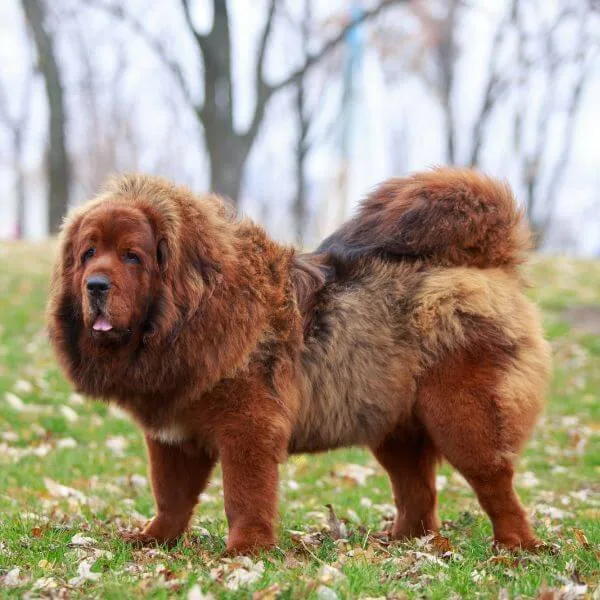
Tibetan Mastiff
Why it's expensive
Import from Tibet plus extreme rarity in the US. Red coats run higher than black; champion bloodlines hit $12,000+.
Watch for
Strong guardian instinct (territorial with strangers). Requires substantial securely fenced yard. Heavy seasonal shedding.
Find a Tibetan for me →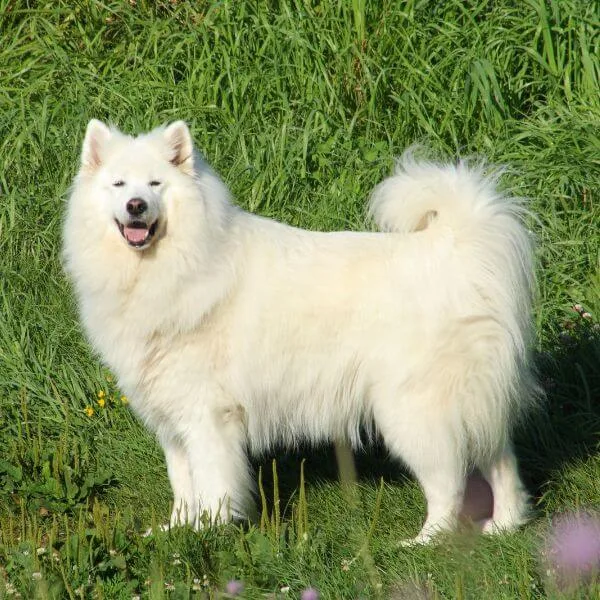
Samoyed
Why it's expensive
Heavy breeder investment in health testing (hips, eyes, cardiac, breed-specific DNA). Reputable breeders run waitlists 6-18 months long.
Watch for
Heavy daily brushing on the double coat; grooming budget $50-$80 every 4-6 weeks. Vocal breed (alert barker).
Find a Samoyed for me →
French Bulldog
Why it's expensive
Artificial insemination plus C-section required for almost every litter. Color rarity drives the high end; the "fluffy" long-coat variant is the current premium.
Watch for
BOAS (Brachycephalic Obstructive Airway Syndrome) surgery $1,000-$3,500. Insurance 2-3x a mixed-breed of similar size per Insurify. Lifetime $30K-$60K.
Find a French for me →
English Bulldog
Why it's expensive
Same artificial insemination + C-section economics as the French Bulldog. Litters average 4 puppies, so reproductive cost spreads across fewer puppies.
Watch for
Shortest lifespan of the popular brachycephalic breeds. BOAS surgery, hip dysplasia (a malformed hip joint), cherry eye. Lifetime $35K-$65K.
Find a English for me →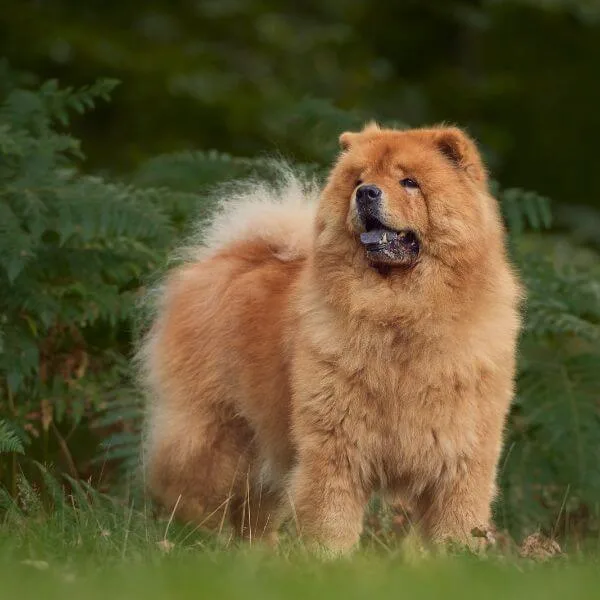
Chow Chow
Why it's expensive
Rarity in the US (more popular in Asia) plus difficult breeding (narrow birth canal makes C-section common). Show-quality blue or black puppies command the top end.
Watch for
Aloof temperament (not a snuggly dog for kids). Heavy double coat; daily brushing during shed. Aggressive with unfamiliar dogs if not socialized early.
Find a Chow for me →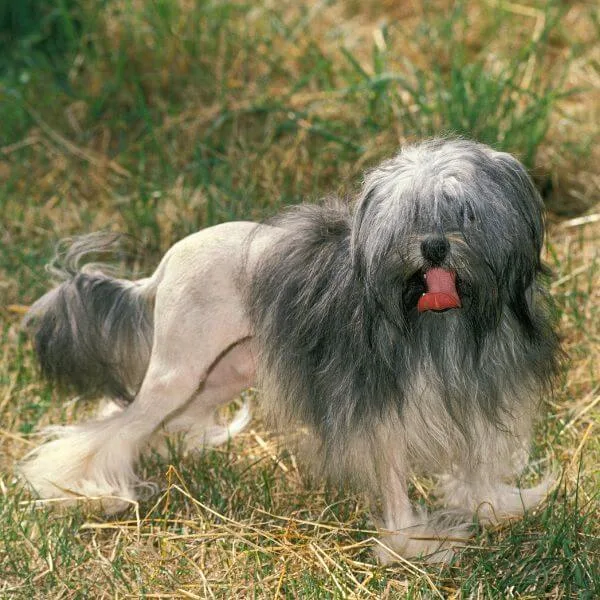
Lowchen ("Little Lion Dog")
Why it's expensive
Pure rarity. Population dropped to roughly 65 worldwide in 1970, listed in the Guinness Book as the rarest breed. Rebuilt populations stay small.
Watch for
Almost no breeders in the US (most are in Europe). Long waitlists. Distinctive show clip is optional in pet placements.
Learn about the Lowchen on AKC →
Bernese Mountain Dog
Why it's expensive
Purchase price is mid-range, but lifetime cost is at the top. Cancer kills roughly 50 percent of the breed by age 10 (histiocytic sarcoma, a fast-moving cancer the breed is prone to). Lifetime estimate $28,000 per Insurify.
Watch for
Shortest lifespan on this list. Cancer treatment can run $5,000-$15,000. Start pet insurance day one.
Find a Bernese for me →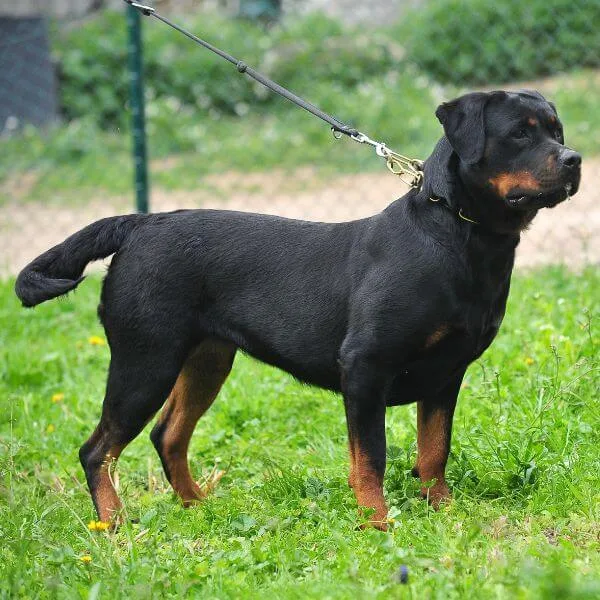
Rottweiler
Why it's expensive
Reputable breeders invest heavily in temperament testing and OFA hip and elbow clearances. Working-line and show-line pups run higher than companion-line.
Watch for
Highest average insurance claim of any breed at $567 per claim (The Zebra). Hip and elbow dysplasia, cancer, cardiac issues. Strong-willed; needs experienced handler.
Find a Rottweiler for me →
Akita
Why it's expensive
Limited US population (most pure Japanese-line Akitas are imported from Japan). Health testing for hip dysplasia and autoimmune disease drives breeder cost.
Watch for
Aloof and reserved (not friendly with strangers). Strong same-sex dog aggression. Needs an experienced owner with secure containment.
Find a Akita for me →
English Mastiff
Why it's expensive
Modest purchase price, brutal lifetime cost. Insurify ranks the Mastiff #1 most expensive breed to insure at $2,546 a year, 264 percent above the national average.
Watch for
Largest food budget of any popular breed (4-8 cups per day). Bloat, hip dysplasia, cardiac issues. Drool. Short lifespan.
Find a English for me →Prices reflect typical reputable-breeder ranges in the US. Champion show-line and rare-color pups land at the high end. The Lowchen is the only entry without a Petmeetly sale page because the US population is too small to maintain regular listings. The AKC link in the card connects to the breed parent club instead.
Which expensive breeds are also expensive to OWN?
The lifetime-cost gap matters more than the purchase-price gap. A $10,000 Tibetan Mastiff with average health may cost less to own across 12 years than a $1,500 Bernese Mountain Dog that develops cancer at age 7. Per Insurify 2026, Mastiff insurance averages $2,546 a year, 264 percent above the national average for any breed.
| Breed | Lifetime-cost metric | Value | Source |
|---|---|---|---|
| English Mastiff | Annual pet insurance | $2,546 (#1 of any breed) | Insurify 2026 |
| Standard Schnauzer | Annual pet insurance | $1,797 (#2 of any breed) | Insurify 2026 |
| Bernese Mountain Dog | Lifetime cost (7-10 year lifespan) | $28,000 (cancer kills ~50% by age 10) | Insurify |
| Rottweiler | Average insurance claim amount | $567 (#1 of any breed) | The Zebra |
| French Bulldog | Lifetime cost | $30,000-$60,000 | Compare.com / Insurify |
| English Bulldog | Lifetime cost | $35,000-$65,000 | Compare.com / Insurify |
Bernese Mountain Dog cancer is the starkest example. The breed carries elevated rates of histiocytic sarcoma, a fast-moving cancer of immune cells. Insurify estimates lifetime cost at $28,000 across the breed's 7 to 10-year lifespan. Cancer treatment alone can add $5,000 to $15,000. If you commit to a Berner, start pet insurance the day you bring the puppy home, before any condition becomes pre-existing and excluded.
How do you spot a puppy scam on an expensive breed?
The BBB logged nearly 10,000 puppy-sale scam reports in the past 3 years, and the Humane Society reports that 60 percent of victims never receive a dog. Expensive breeds are scam magnets because the price tag justifies a large wire transfer. The six red flags below catch almost every scam variant.
6 red flags that mean walk away
- Price suspiciously below the breed range.A $400 Tibetan Mastiff or $800 French Bulldog is a scam in 99 percent of cases. Either the puppy doesn't exist or the seller is a puppy mill skipping all health testing.
- Email-only seller (no phone, no video).Reputable breeders take phone calls and video chats with you and the puppy. A seller who refuses both is hiding something (often that the puppy doesn't exist).
- Wire transfer or gift card payment.Scammers prefer payment methods you can't reverse. PayPal Goods and Services, credit cards, and escrow services protect the buyer. Wire and gift cards do not.
- Won't let you visit in person.Reputable breeders encourage in-person visits to meet the puppy, the parents, and see the breeding facility. Excuses like "we're out of state" or "shipping only" on a non-shipped breed should stop the sale.
- Stock photos in a reverse image search.Right-click the puppy photo, search Google Images. Scammers reuse photos across multiple listings and websites. Unique photos shot in the breeder's home are the baseline.
- Constant availability.Reputable breeders of expensive breeds run waitlists, not inventory. A seller who always has "this litter and the next one ready" is selling either puppy-mill puppies or no puppies at all.
The AKC's guide to spotting a puppy scam covers additional variants. The sibling puppy buying guide walks through how to verify a breeder once you've cleared the scam-detection bar.
Is an expensive breed actually better than a shelter mutt?
No. Price reflects scarcity and breeder investment, not genetic superiority. Mixed-breed dogs statistically live longer with fewer hereditary diseases because a wider gene pool lowers the chance that recessive disease shows up in any given dog. Two famous purebreds prove the inverse. Cavalier King Charles Spaniels carry mitral valve disease (a degenerative heart condition) in roughly 50 percent of the breed by age 5. Dalmatians carry congenital deafness in about 22 percent of the breed.
Premium price doesn't buy health. It buys a specific look, temperament, or working trait you can't reliably get from a mixed-breed dog. If you don't need a specific look or trait, the math points to adoption. The Petmeetly dog adoption hub lists rescue dogs that include rarer breeds more often than buyers expect. Breed-specific rescues exist for Bulldogs, Mastiffs, Samoyeds, and most other breeds on this list.
When does paying premium for a purebred make sense?
Three situations. The first is a working-dog job: Belgian Malinois for security work, Border Collie for stock work, German Shorthaired Pointer for hunting. The breed has been selected for a specific trait over generations, and the purebred-from-working-lines pedigree is the only reliable shortcut to that trait.
The second is a serious allergy that matches a specific coat. A truly hypoallergenic dog doesn't exist, but Poodles, Bichon Frises, and a few others produce less of the protein that triggers most dog allergies. Test the match before you commit; spend a few hours with an adult of the breed in a breeder's home or at a show, not 10 minutes with a puppy.
The third is breed preservation. Endangered breeds (Lowchen, Otterhound, Skye Terrier) survive only because hobbyists keep the bloodlines going. If you join a parent club, work with a mentor, and commit to ethical breeding standards, paying premium for breeding-quality stock contributes to the breed's survival.
When does it NOT make sense? Status, social media, "I've always wanted one," or the look. All four are real reasons people buy, but none of them justify the $30K-$60K lifetime cost of a French Bulldog over a $50 mixed-breed rescue. If your reason is on this list, adopt a similar-coated mixed-breed dog from a shelter instead.
Ready to find your dog?
Start with the companion cheapest dog breeds guide if budget is your binding constraint. If you've committed to a premium purebred, browse the Petmeetly sale hub filtered by breed and location, and run every breeder through the puppy buying guide before sending money. If the ethics section talked you into adoption, adopt from a shelter or breed-specific rescue instead.
Frequently Asked Questions
What is the most expensive dog breed in the world?
Tibetan Mastiff holds the world record. A red Tibetan Mastiff named Big Splash sold in China for $1.5 million in 2011, still the highest price ever paid for a dog. For typical buyers, Tibetan Mastiff pups run $2,000 to $10,000 from a reputable US breeder. The rare "fluffy" French Bulldog variant can hit $15,000 to $35,000, and rare-color fluffies cross $65,000, per Dogster 2026.
Why do some dog breeds cost so much more than others?
Four drivers account for almost all of the price difference. Rarity (a small founding population, like the Lowchen with 65 dogs worldwide in 1970). Health testing the breeder invested in before mating ($500 to $1,500 per breeding pair on OFA-CHIC panels). Reproductive cost (brachycephalic breeds like French and English Bulldogs almost always need artificial insemination and C-section). And import cost (Tibetan Mastiffs from Tibet, Azawakhs from West Africa).
Are expensive dog breeds healthier than cheaper ones?
No. Price reflects scarcity and breeder investment, not genetic superiority. Mixed-breed dogs statistically live longer with fewer hereditary diseases. Two famous purebreds prove the point: Cavalier King Charles Spaniels carry mitral valve disease (a degenerative heart condition) in roughly 50 percent of the breed by age 5, and Dalmatians carry congenital deafness in about 22 percent of the breed. Premium price doesn't buy health.
How do I avoid scams when buying an expensive puppy?
The BBB logged nearly 10,000 puppy-sale scam reports in the last 3 years, and 60 percent of victims never received a dog. Six red flags: price suspiciously below the breed's typical range, email-only seller (no phone or video), wire transfer or gift card payment, refusal to let you visit in person, stock photos that show up in a reverse image search, and constant availability (reputable breeders run waitlists, not stock).
Is it possible to adopt a rare or expensive breed from a rescue?
Yes, more often than buyers expect. Breed-specific rescues exist for almost every popular breed (Bulldog Rescue Network, National Mastiff Rescue, Samoyed Rescue Alliance, and many more). Tibetan Mastiff rescue adoption typically runs $300 to $500 against the $2,000-$10,000 breeder price. Wait times for a specific breed can run 6 to 18 months, but the math is hard to argue with.