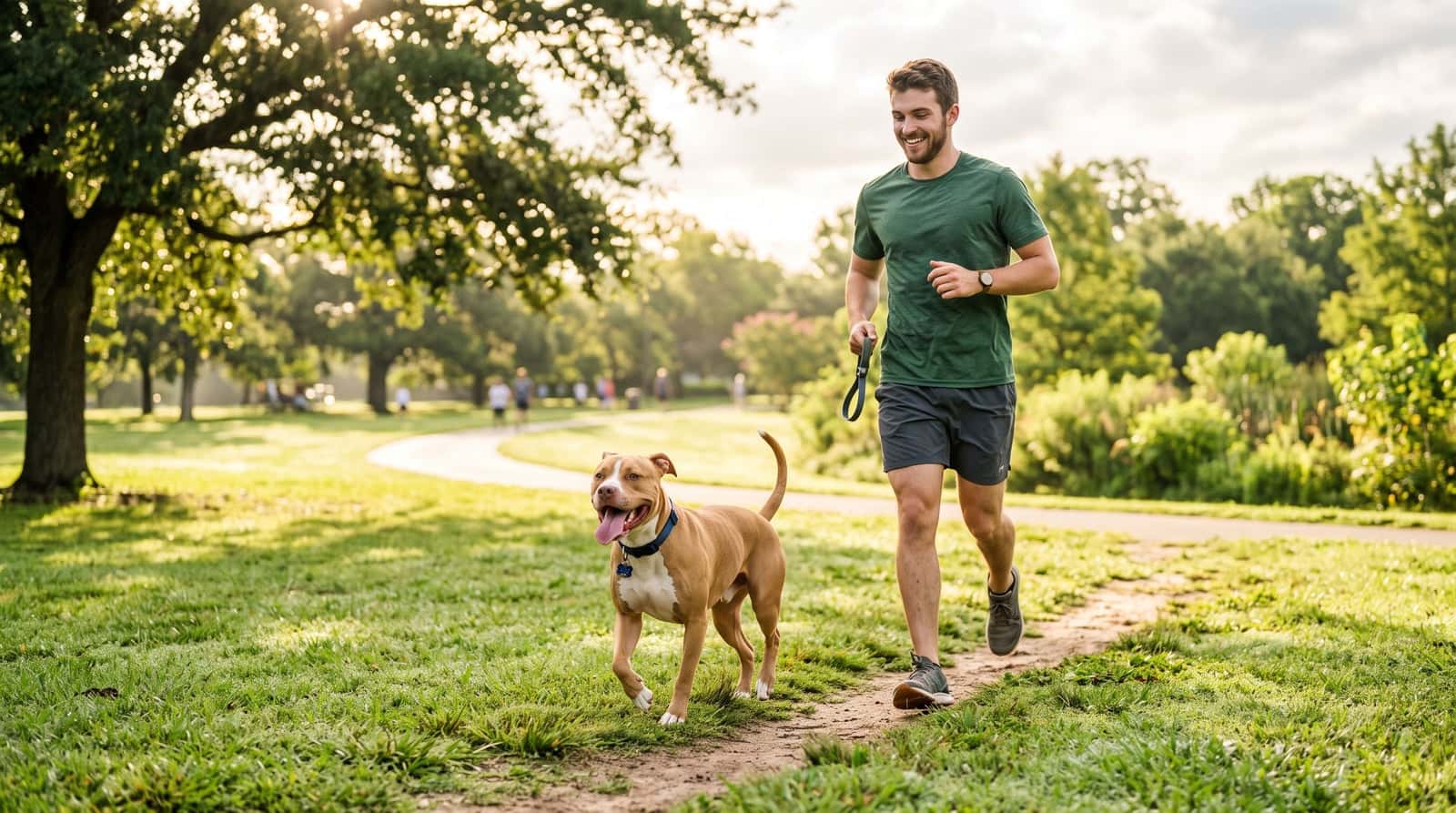
Browse the pit bulls listed on Petmeetly, then check your local breed laws, your insurance, and the parents' health tests before you pay.

American PitBull Terrier

American PitBull Terrier mix

American PitBull Terrier mix

American PitBull Terrier mix

American PitBull Terrier

American PitBull Terrier

American PitBull Terrier

American PitBull Terrier
Looking at American Pit Bull Terrier dogs and puppies for sale, the most important homework is not the price. It is the law and the insurance, because no breed is more affected by breed bans and insurance rules than this one.
This guide covers that reality first, then the real temperament, price guidance, the health, and how to avoid scams. Read it before you send anyone a deposit.
Pit bull listings on Petmeetly are a mix: puppies from breeders, adult dogs, pit bull mixes, and dogs being rehomed by their owners. For many homes an adult or a rehome is the better buy. The price is lower, and the grown dog's temperament is already there to see.
Short answer
Before you buy an American Pit Bull Terrier, check two things in writing: your local breed laws and your home insurance. Pit-bull-type dogs are the most banned and most insurance-restricted dogs in the country, and a dog that is legal in one town can be banned in the next. A powerful dog also means real liability. Sort the paperwork before the puppy, not after.
Start with the law. Of the roughly 1,200 US cities that regulate dogs by breed, about 96% target pit bulls, far more than any other type. These breed-specific laws (BSL, local rules that name a breed) are fading in many states, but you must check your own city.
Then check insurance. Many home and renter insurers exclude or refuse pit-bull-type dogs, which can leave you personally liable if anything happens. This is liability cover, the part of a home or renter policy that pays if your dog hurts someone. Some insurers, like State Farm, judge the individual dog, and a few states bar breed-based insurance discrimination. Get a written answer before you buy.
One reason the rules are messy: "pit bull" is a label for a look, not one breed, so shelters and laws often misjudge which dogs it covers. The American Veterinary Medical Association (AVMA) opposes breed bans, because any dog can bite and breed cannot be judged reliably by sight.
For where this dog fits among pit-bull-type breeds, see our Pit Bull Terrier breeding guide.
Short answer
The American Pit Bull Terrier is a strong, athletic, deeply people-loving dog. Bred to be friendly with people, it usually is. But its history means it can be less tolerant of other dogs, a separate trait you manage with supervision. It is not a dog for a first-time or hands-off owner.
By breeding, this is a people-dog. The American Pit Bull Terrier was selected to be confident and gentle with people, and it scores above the all-breed average on temperament testing. Human aggression is a serious fault, not a breed trait.
Tolerance of other dogs is a different trait. Because of the breed's history, some pit bulls are less patient with other dogs. This is not the same as being unsafe with people, and you manage it with supervision and careful introductions, not a quick fix.
Skip the "nanny dog" story. The idea that pit bulls are natural babysitters is a modern myth with no historical basis, and it is unsafe. Like any breed, a pit bull should never be left alone with young children.
What it needs is an experienced, committed owner who provides training, socialization, and real daily exercise. In the right home, it is loyal, funny, and devoted.
Drawn to the stockier companion cousin instead? See our American Bully guide.
Short answer
Typical asking prices for a health-tested American Pit Bull Terrier puppy from a breeder in the US run $500 to $2,500, with titled working or show lines higher. A price far under that range is a prompt to ask for the parents' OFA hip and cardiac reports and the cerebellar ataxia DNA result. Do not pay a premium for a "blue" or "merle" coat: merle is not even a natural pit bull color and signals an outcross. And remember the breed is not AKC-recognized, so genuine papers come from the UKC or ADBA, not the AKC.
Those figures describe a puppy from a breeder. Adult pit bulls, mixes, and owner rehomes cost far less. That lower price is honest, because nobody paid to raise a litter.
Registration is the key buyer point. The American Kennel Club (AKC) does not recognize the American Pit Bull Terrier. Its show cousin, the American Staffordshire Terrier (AmStaff), is the AKC version. A true APBT is registered with the United Kennel Club (UKC, since 1898) or the American Dog Breeders Association (ADBA). So "AKC pit bull" papers are a red flag; that dog is really an AmStaff.
The merle red flag matters here too. Merle is not a natural pit bull color, so a "merle pit bull" means an outcross to another breed. The UKC disqualifies merle, and breeding two merle dogs together produces deaf and blind puppies. Walk away from a merle litter.
Beyond the puppy, budget for the dog. Food runs about $40 to $100 a month in the US, routine vet care a few hundred a year, and professional training, which is not optional for a strong dog. Keep the two insurance questions separate: pet health insurance covers vet bills, but liability cover, the breed's hard part, is a different policy.
Short answer
American Pit Bull Terriers are generally hardy and long-lived for their size, about 12 to 14 years. The main things to test for are hip dysplasia (a poorly formed hip joint), heart disease, and skin allergies, plus a DNA test for an inherited nerve disease, cerebellar ataxia. Buy from parents with OFA hip, heart, and DNA results you can check.
The main joint concern is hip dysplasia, where the hip joint forms poorly and wears painfully. Reputable breeders screen the parents with an OFA hip X-ray. OFA is the Orthopedic Foundation for Animals, a registry whose results you can look up for free.
The breed is also prone to congenital heart defects (problems present at birth), especially aortic stenosis, a narrowed heart valve. Ask whether the parents had a cardiac screening by a vet cardiologist.
Skin trouble is common, partly because of the short coat. Watch for atopy, an environmental allergy, and demodectic mange, a skin condition driven by mites. Ask the breeder about the family's skin history.
One DNA test is worth insisting on. Cerebellar ataxia is a fatal inherited loss of balance and coordination, and a simple cheek-swab DNA test clears the parents. A careful breeder runs it.
The upside is real. With healthy parents and a lean weight, a pit bull is one of the hardier, longer-lived medium breeds. For the full breeding-side health detail, see our Pit Bull Terrier breeding guide.
American Pit Bull Terriers come in many colors and patterns, from black and brindle to fawn, red, and white. Color tells you nothing about a dog's health or temperament, with one important exception.
Source: the UKC breed standard.
Short answer
Most puppy scams open with a price that looks too good and a push to pay by Zelle, wire, gift card, or crypto. Scammers favor whatever breed is trending, so verify any seller no matter the breed. The Better Business Bureau put the average puppy-scam loss at about $1,293 in 2024. Insist on a live video call with the puppy and its parents, and never send money you cannot get back.
The Better Business Bureau tracks thousands of pet scams. Reported puppy-scam complaints fell about 21% in 2024, even as the average loss climbed. The FTC gives the same advice: insist on a video call, and never wire money. For more, read our guide on how to avoid puppy scams.
For a powerful, sometimes dog-selective breed, the breeder matters a lot. Here is what to see and verify.
You can also verify the parents' results yourself, free, in the OFA database before you commit.
Petmeetly connects you directly with people listing American Pit Bull Terriers, with no broker in the middle. Check your local laws and insurance first, then use the checks above. Could you give an adult dog a home instead? Adopting a pit bull saves a life: see how to adopt a pit bull.
Serious buyers on this page look for proof, so have it ready before you list.
Sources
Get answers to common questions about buying American Pit Bull Terriers responsibly
Pit-bull-type dogs are the most banned and most insurance-restricted dogs in the US, named in about 96% of the cities that regulate dogs by breed. Many home and renter insurers also exclude them, which can leave you personally liable. There is no nationwide ban, and many places are dropping these laws, but check your own city's rules and get a written insurance answer before you buy.
Typical asking prices for a health-tested pit bull puppy from a breeder in the US run $500 to $2,500, with titled working or show lines higher. Adult dogs, pit bull mixes, and owner rehomes usually cost less for honest reasons. A price far under the typical range is a prompt to ask for the parents' results by name: the OFA hip and cardiac reports and the cerebellar ataxia DNA test. Do not pay a premium for a "blue" or "merle" coat, since merle is not even a natural pit bull color and signals an outcross. Genuine papers come from the UKC or ADBA, because the AKC does not recognize the breed.
The American Pit Bull Terrier was bred to be friendly with people, and it scores above the all-breed average on temperament tests. Human aggression is a fault, not a breed trait. Some pit bulls are less tolerant of other dogs. That is a separate thing from people-aggression, and you manage it with supervision. Like any dog, a pit bull should never be left alone with young children.
They come from the same root stock. In the 1930s the AKC recognized the show line as the American Staffordshire Terrier, while the working line stayed with the UKC and ADBA as the American Pit Bull Terrier. The two are often near-identical dogs, so the registry (UKC/ADBA vs AKC) and bloodline tell you more than the name.
Insist on a live video call showing the specific puppy with its parents, and never pay by wire, Zelle, gift card, or crypto. The Better Business Bureau put the average puppy-scam loss at about $1,293 in 2024. Be doubly wary of "AKC-registered" pit bulls (the AKC does not recognize the breed) and "merle" dogs sold at a premium, and verify the parents' health tests on ofa.org.
Discover puppies and dogs for sale from various breeds and find your perfect companion
Browse American Pit Bull Terriers listed on Petmeetly, then use the legal, temperament, health, and seller checks above before you pay.
No card required to sign up.