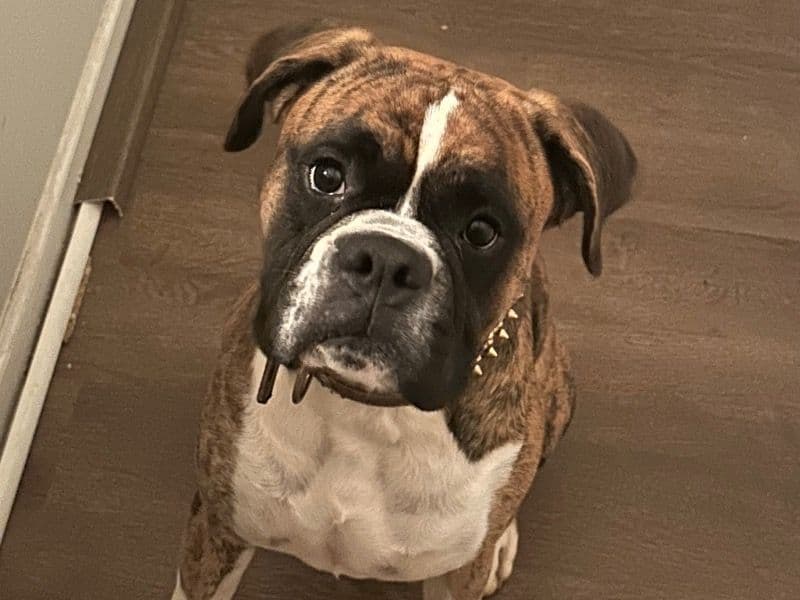
Best Age To Breed A Dog (Male & Female)
Find out the best age to breed dogs and the key factors involved. Ensure your dog’s health and safety with our expert breeding insights.

Connect with responsible Boxer breeders and find the ideal breeding partner for your playful companion
Essential characteristics to consider when breeding these playful, athletic dogs
10-12 years
With proper care
Playful, Loyal
Eternal puppy
Discover what makes Boxers exceptional breeding companions and why they're treasured worldwide
Boxers maintain their playful, clownish personality throughout life. This endearing trait makes them perfect family companions who bring joy and laughter to every home they enter.
Playful personality consistency
Every Boxer brings daily joy and laughter
Boxers excel in multiple disciplines from protection sports to therapy work. Their athletic ability combined with trainability creates versatile working partners.
Every Boxer puppy is a work of art. Their sleek, muscular build and expressive faces with distinctive masks create an unforgettable appearance.
Boxers combine fierce loyalty with gentle hearts. Their natural protective instinct paired with discerning judgment makes them ideal family guardians who know when to protect and when to play.
Every Boxer puppy carries these treasured traits
These exceptional traits make Boxers one of the most beloved family breeds worldwide
Follow these essential guidelines for responsible and successful Boxer breeding
Earlier retirement recommended due to high cancer rates. Heart testing cannot begin until age 3, so initial breeding at 2 requires follow-up.
ARVC is #1 concern - cardiac monitoring critical
Once per year, max 3 litters lifetime
Skip at least one heat cycle between litters
Due to cancer risks, limiting breeding career is advised. Focus on quality and health.
Beautiful dogs needing special consideration
Key Considerations:
White Boxers shine with proper care and make wonderful companions!
Brachycephalic Features
Moderate flat face requires care
Temperature Control
Climate-controlled facilities essential
Exercise Timing
Early morning or evening in summer
Your thoughtful facility planning ensures comfortable Boxers year-round!
Daily Exercise
2+ hours of active play
Mental Stimulation
Training and puzzle games essential
Ideal Homes
Active families who love adventures
Space Needs
Fenced yard highly beneficial
Connect with verified Boxer owners for safe and ethical breeding

Boxer

Boxer

Boxer

Boxer

Boxer

Boxer

Boxer

Boxer
From profile to puppies - your boxer breeding journey in 4 simple steps
Set up a detailed profile with photos, health records, and pedigree information
Browse verified breeding partners based on breed, location, and compatibility
Message owners directly to discuss breeding plans and health certifications
Meet safely, complete breeding agreements, and welcome healthy puppies
Set up a detailed profile with photos, health records, and pedigree information
Browse verified breeding partners based on breed, location, and compatibility
Message owners directly to discuss breeding plans and health certifications
Meet safely, complete breeding agreements, and welcome healthy puppies
Join thousands of responsible boxer owners who trust us for quality breeding connections
Every breeder is verified, ensuring you connect with genuine, responsible pet owners.
Find breeding partners near you to make meetings convenient and stress-free.
Customize your search with detailed filters for breed, age, health status, and more.
Chat directly with pet owners to discuss all details before making any commitments.
Join thousands of responsible boxer owners who've found quality breeding partners on Petmeetly.
Get Started NowReal stories from dog owners who found perfect breeding matches on Petmeetly
Modern health testing empowers you to create vibrant, healthy Boxer bloodlines that thrive for generations
Annual Holter monitoring celebrates their strong hearts! This simple test ensures your Boxers enjoy endless years of playful bouncing and joyful companionship.
Careful bloodline selection creates vibrant health! Your dedication to choosing from healthy families ensures puppies inherit robust constitutions.
OFA or PennHIP testing confirms their athletic excellence! Your commitment ensures puppies inherit the structure for bouncing, playing, and endless zoomies.
Early testing = Better outcomes
Genetic testing safeguards mobility! Simple DM testing ensures your puppies maintain their signature wiggle-butt throughout life.
Simple genetic test prevents Degenerative Myelopathy
Annual thyroid checks keep energy high! Simple monitoring ensures glossy coats and that famous Boxer enthusiasm.
Gastropexy option provides peace of mind for worry-free mealtimes.
Selecting for moderate features ensures comfortable breathing.
By prioritizing comprehensive health testing, you're ensuring every Boxer puppy has the best chance at a long, healthy, playful life. Your commitment to excellence shows in every wiggling tail and joyful bounce.
Every test creates healthier Boxers
Expert advice and tips for Boxer breeding

Find out the best age to breed dogs and the key factors involved. Ensure your dog’s health and safety with our expert breeding insights.

Understand the importance of socializing your pet. This guide will help you create positive experiences for your pet, ensuring they thrive in various environments.

Planning to breed your dog? Use our step-by-step dog breeding checklists to manage health tests, mating, whelping and puppy care—always with vet-backed guidance.
Get answers to common questions about breeding Boxers responsibly
Arrhythmogenic Right Ventricular Cardiomyopathy (ARVC), also known as Boxer Cardiomyopathy, is the leading cause of death in Boxers, affecting up to 40% of the breed. This inherited heart condition causes irregular heartbeats and can lead to sudden death. Annual 24-hour Holter monitoring starting at age 3 is absolutely mandatory. Dogs with over 50 VPCs (ventricular premature complexes) per 24 hours should not breed. Some Boxers show no symptoms before sudden cardiac death, making proactive testing critical for breeding programs.
Boxers have one of the highest cancer rates among all dog breeds, with 38% developing cancer in their lifetime. Most common types include: mast cell tumors, lymphoma, brain tumors (gliomas), and hemangiosarcoma. White Boxers may have higher skin cancer risk. Due to these statistics, breeding dogs should retire by age 5-6, and careful selection from cancer-free bloodlines (no cancer before age 7) is essential. Document family health history for at least 3 generations to identify patterns.
Boxers are moderately brachycephalic with shorter muzzles than most breeds but not as extreme as Bulldogs or Pugs. Common issues include: stenotic nares (narrow nostrils), elongated soft palate, heat intolerance, and exercise limitations in hot weather. Many airlines ban Boxers from cargo holds due to breathing risks. When breeding, select for moderate muzzle length (not too short), open nostrils, and dogs that breathe easily during exercise. Avoid breeding dogs with severe snoring or breathing difficulties.
Approximately 18% of white Boxers (those with more than 30% white markings) are born deaf in one or both ears. This is due to lack of pigment in the inner ear affecting hearing development. BAER (Brainstem Auditory Evoked Response) testing at 5-6 weeks old can determine hearing status. Bilaterally deaf puppies require special homes with experienced owners. Unilaterally deaf Boxers can live normal lives but shouldn't be bred. White-to-white breeding is strongly discouraged as it increases deafness risk.
Hip dysplasia affects approximately 11% of Boxers according to OFA statistics. While not as high as some large breeds, it's still significant enough to require mandatory testing. All breeding dogs should have hip X-rays evaluated by OFA or PennHIP at 24 months. Dogs with mild dysplasia may be bred to excellent-hipped partners with breeder discretion, but moderate to severe cases should not breed. Early detection and selective breeding have helped reduce incidence over the past decades.
Degenerative Myelopathy (DM) is a progressive spinal cord disease that causes hind limb weakness and eventual paralysis, typically starting around age 8-9. Boxers have a higher incidence than many breeds. A genetic test identifies carriers (DM/N) and at-risk dogs (DM/DM). Carriers can be safely bred to clear dogs (N/N), producing no affected puppies. At-risk dogs (DM/DM) should not be bred. The disease is heartbreaking as affected dogs remain mentally alert while losing mobility.
Hypothyroidism affects approximately 15% of Boxers, causing weight gain, lethargy, coat problems, and fertility issues. Annual thyroid panels starting at age 2 are recommended for breeding dogs. The condition is easily managed with daily medication, but affected dogs may have reduced fertility. Breeding dogs on thyroid medication should be closely monitored. Some lines have higher incidence, making family history important. Untreated hypothyroidism can affect pregnancy outcomes and puppy development.
Boxers have a moderate-high risk for Gastric Dilatation-Volvulus (bloat/GDV) due to their deep chest conformation. Studies show approximately 7% lifetime risk. Preventive gastropexy during spay/neuter can reduce death risk by 95%. Risk factors include: eating too fast, exercise after meals, stress, and genetics. Breeding dogs with bloat history should be carefully considered. Educate puppy buyers about prevention: slow feeders, multiple small meals, avoiding exercise 1 hour before/after eating, and recognizing symptoms (distended abdomen, unsuccessful vomiting attempts).
The natural tail versus docking debate is significant in Boxer breeding. Traditionally docked in the US for breed standard, many countries now ban docking. Natural tails are long and whip-like, prone to injury ('happy tail syndrome'). AKC allows natural tails in conformation. Consider your market: some buyers prefer natural, others want traditional docked appearance. If docking, must be done at 2-5 days old by a veterinarian. Natural-tailed Boxers may need different home environments to prevent tail injuries. Breeding decisions should consider local laws and buyer preferences.
Boxers are heat-sensitive due to their brachycephalic features, requiring careful management in warm climates. They cannot regulate temperature as efficiently as longer-muzzled breeds. Exercise needs are high - minimum 2 hours daily of activity including running, playing, and mental stimulation. However, exercise must be avoided in heat over 75°F. Breeding facilities need climate control, and puppies should go to homes that understand these limitations. Athletic Boxers that breathe well during exercise produce healthier puppies. Screen homes for appropriate exercise plans and climate considerations.
Discover breeding guides for different dog breeds and find the perfect match for your breeding program
Join our community of responsible Boxer breeders committed to preserving this noble breed