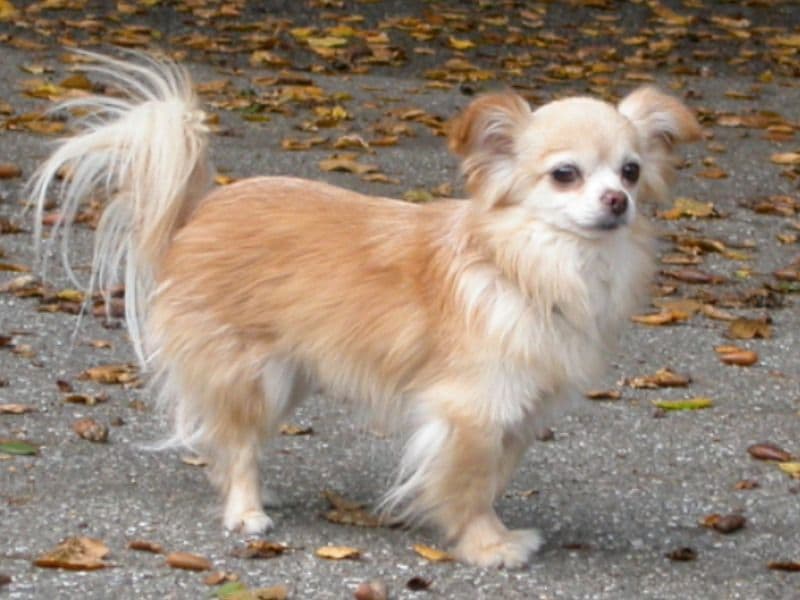
Best Age To Breed A Dog (Male & Female)
Find out the best age to breed dogs and the key factors involved. Ensure your dog’s health and safety with our expert breeding insights.

Connect with responsible Chihuahua breeders and find the ideal breeding partner for your tiny companion
Essential characteristics to consider when breeding the world's smallest dogs
14-18 years
One of the longest-lived breeds
Alert, Confident
Big dog in tiny body
Discover what makes Chihuahuas exceptional breeding companions despite their tiny size
Dating back to ancient Aztec civilization, Chihuahuas carry millennia of selective breeding. Their remarkable 14-18+ year lifespan makes them one of the longest-lived breeds, offering families decades of devoted companionship.
Years average lifespan
Oldest recorded: 20+ years!
Chihuahuas hold the Guinness World Record as the smallest dog breed. Their perfectly portable size makes them ideal for apartment living and travel companions.
Don't let their size fool you! Chihuahuas possess the confidence of a Great Dane, creating unforgettable personalities that charm families worldwide.
Despite their tiny size, Chihuahua mothers are fiercely protective and nurturing. Standard-sized females (4+ lbs) ensure safe pregnancies and healthy litters, creating the next generation of beloved companions.
Small litters mean each puppy gets exceptional care
These exceptional traits make Chihuahuas one of the most rewarding toy breeds to work with
Follow these essential guidelines for responsible and successful Chihuahua breeding
Wait until fully mature at 2 years for females. Ensure females are at least 4 lbs for safe pregnancies.
Comprehensive testing creates healthy bloodlines
Once per year max
3-4 litters lifetime maximum
2-3 times annually
Small bodies need extra recovery time. Skip at least one heat cycle between litters.
Prevents "small dog syndrome"
Key Focus Areas:
Early socialization prevents fearful, yappy behaviors common in poorly socialized toy breeds.
Never breed under 4 lbs
High risk of complications
Ideal: 4-6 lbs
Optimal health & safety
C-section preparedness
Small pelvis = higher risk
Prioritize standard sizes for healthier mothers and puppies. "Teacup" breeding is dangerous.
Hypoglycemia Prevention
Feed puppies every 2-3 hours
Temperature Sensitivity
Keep warm - heating pads essential
Molera Awareness
Soft spot normal - handle gently
Small Litter Management
1-3 puppies typical
Connect with verified Chihuahua owners for safe and ethical breeding

Chihuahua mix

Chihuahua

Chihuahua mix

Chihuahua mix

Chihuahua

Chihuahua

Chihuahua mix

Chihuahua
From profile to puppies - your chihuahua breeding journey in 4 simple steps
Set up a detailed profile with photos, health records, and pedigree information
Browse verified breeding partners based on breed, location, and compatibility
Message owners directly to discuss breeding plans and health certifications
Meet safely, complete breeding agreements, and welcome healthy puppies
Set up a detailed profile with photos, health records, and pedigree information
Browse verified breeding partners based on breed, location, and compatibility
Message owners directly to discuss breeding plans and health certifications
Meet safely, complete breeding agreements, and welcome healthy puppies
Join thousands of responsible chihuahua owners who trust us for quality breeding connections
Every breeder is verified, ensuring you connect with genuine, responsible pet owners.
Find breeding partners near you to make meetings convenient and stress-free.
Customize your search with detailed filters for breed, age, health status, and more.
Chat directly with pet owners to discuss all details before making any commitments.
Join thousands of responsible chihuahua owners who've found quality breeding partners on Petmeetly.
Get Started NowReal stories from dog owners who found perfect breeding matches on Petmeetly
We found a lovely girl, and together she and Baxter welcomed adorable puppies. Baxter enjoyed the experience so much that he’s excited to keep making new connections on PetMeetly. Thank you!
Helen
California, US
Thanks to Petmeetly, we were able to connect easily, communicate clearly, and arrange a smooth and successful breeding for our French Bulldogs. The platform made the entire process simple, professional, and trustworthy. I highly recommend it to every Frenchie owner looking for genuine connections!
Gabriel
California, US
Thank you for providing this animal match-up platform. It fulfills a need that would otherwise require posting across multiple social media platforms. This truly is a GREAT service!
Lee W
Arizona, US
Despite their tiny size, Chihuahuas can live incredibly long, healthy lives with proper breeding practices
OFA patella evaluation celebrates their tiny but mighty structure! Your testing ensures puppies enjoy bouncing and playing throughout their long lives.
Annual cardiac checks
Keep devoted hearts beating strong
Regular monitoring
Years of lap-warming companionship
Healthy hearts for 14-18+ years
Frequent feeding schedules create thriving puppies! Your careful attention ensures tiny champions grow strong.
Karo syrup and feeding schedule guidance ensures smooth transitions to new homes.
Regular dental care keeps tiny smiles sparkling! Your guidance on oral health ensures comfortable eating and fresh kisses.
Sparkling eyes and healthy smiles
Moleras (soft spots) are natural in Chihuahuas! Your gentle handling guidance ensures these special features stay protected.
Part of their unique charm!
Standard-sized Chihuahuas (4-6 lbs) ensure safe pregnancies and healthy puppies.
Proper sizing = Healthy generations
Standard-sized Chihuahuas are ideal companions! At 4-6 lbs, they're perfectly portable while maintaining robust health. Your commitment to moderate sizing ensures strong bones, stable metabolism, and long lives.
Standard size = Maximum love & longevity
Expert advice and tips for Chihuahua breeding

Find out the best age to breed dogs and the key factors involved. Ensure your dog’s health and safety with our expert breeding insights.

Understand the importance of socializing your pet. This guide will help you create positive experiences for your pet, ensuring they thrive in various environments.

Planning to breed your dog? Use our step-by-step dog breeding checklists to manage health tests, mating, whelping and puppy care—always with vet-backed guidance.
Get answers to common questions about breeding Chihuahuas responsibly
Hypoglycemia (low blood sugar) is life-threatening for Chihuahuas, especially puppies under 4 months and adults under 4 lbs. It can cause weakness, seizures, coma, and death within hours. Prevention requires feeding every 3-4 hours, keeping puppies warm, and avoiding stress. Emergency treatment involves rubbing Karo syrup on gums and immediate veterinary care. Breeders should avoid producing extremely small puppies and must educate all buyers about prevention, as this is the leading cause of death in Chihuahua puppies.
Luxating patellas affect 40% of Chihuahuas - one of the highest rates among all breeds. This inherited condition causes kneecaps to dislocate, graded 1-4 in severity. OFA patella evaluation is MANDATORY for all breeding stock. Never breed dogs with Grade 2 or higher as surgery costs $1,500-3,000 per knee. The condition causes arthritis and chronic pain if untreated. Both parents should have normal patellas to reduce incidence in puppies.
Chihuahuas have the worst dental disease rate of all breeds - 80% have periodontal disease by age 2. Their tiny mouths cause overcrowding and retained baby teeth. This leads to infection, heart disease, kidney failure, and even jaw fractures. Daily brushing is essential, along with annual dental cleanings under anesthesia. Poor dentition is hereditary, so check both parents' teeth before breeding. Dental disease significantly shortens lifespan if untreated.
A molera is an open fontanel (soft spot) on the skull, present in 80-90% of Chihuahua puppies. It's NOT a defect but a breed characteristic, similar to human babies. Some close by 6 months; others remain permanent. Dogs with moleras can live normal lives but require careful handling to prevent injury. Size varies from pinpoint to dime-sized. Large moleras increase injury risk. Educate all owners about protecting the head area, especially during play and grooming.
Tracheal collapse is a progressive disease where the trachea flattens, common in Chihuahuas. It causes a characteristic honking cough, exercise intolerance, and respiratory distress. Triggers include excitement, collar pressure, heat, and obesity. Management requires using harnesses only (never collars), maintaining ideal weight, and avoiding triggers. The condition has a hereditary component, so check family history before breeding. Severe cases may require medication or surgery.
'Teacup' is NOT a recognized variety but a marketing term for undersized Chihuahuas. Dogs under 3 lbs face severe health risks: hypoglycemia, organ failure, bone fractures, and shortened lifespan. The breed standard is 2-6 lbs. Ethical breeders never intentionally breed for extreme small size. Breeding runts together is unethical and creates suffering. Educate buyers that smaller isn't better - it's dangerous. Standard-sized Chihuahuas are already the world's smallest breed.
Chihuahuas' prominent eyes are prone to injuries and genetic conditions. Corneal ulcers from trauma are common emergencies. Progressive Retinal Atrophy (PRA) causes genetic blindness. Lens luxation and dry eye (KCS) affect older dogs. Annual CERF/OFA eye exams are required for breeding stock. Avoid breeding dogs with excessively bulging eyes as they're more injury-prone. Educate owners about protecting eyes from trauma during play and grooming.
Hydrocephalus (water on the brain) involves fluid accumulation in the skull, more common in apple head Chihuahuas. Symptoms include an abnormally domed skull, wide-set eyes, circling, seizures, and blindness, usually apparent by 4 months. Mild cases may be manageable, but severe cases are fatal. There's a genetic component, so avoid breeding dogs with overly domed skulls or any signs of neurological issues. MRI can diagnose but is expensive.
Males: minimum 1.5 years, optimal 2-8 years. Females: minimum 2 years (must be fully grown), retire by 6 years. Maximum 3 litters lifetime due to physical stress on tiny bodies. Small litters (1-3 puppies) are normal. Single puppy pregnancies are high risk due to large puppy size. C-section rate is 30-40%. Skip at least 2 heat cycles between litters for full recovery. Never breed females under 4 lbs due to increased complications.
Chihuahuas have poor temperature regulation due to their tiny size and high surface area to volume ratio. They're at risk for hypothermia in cold weather and heat stroke in hot weather. They require clothing in cold climates and air conditioning in heat. Shivering may indicate cold OR stress. Never leave them outside unattended. Puppies and seniors are especially vulnerable. This isn't a defect but requires owner education about providing appropriate environmental protection year-round.
Discover breeding guides for different dog breeds and find the perfect match for your breeding program
Join our community of responsible Chihuahua breeders committed to preserving this noble breed