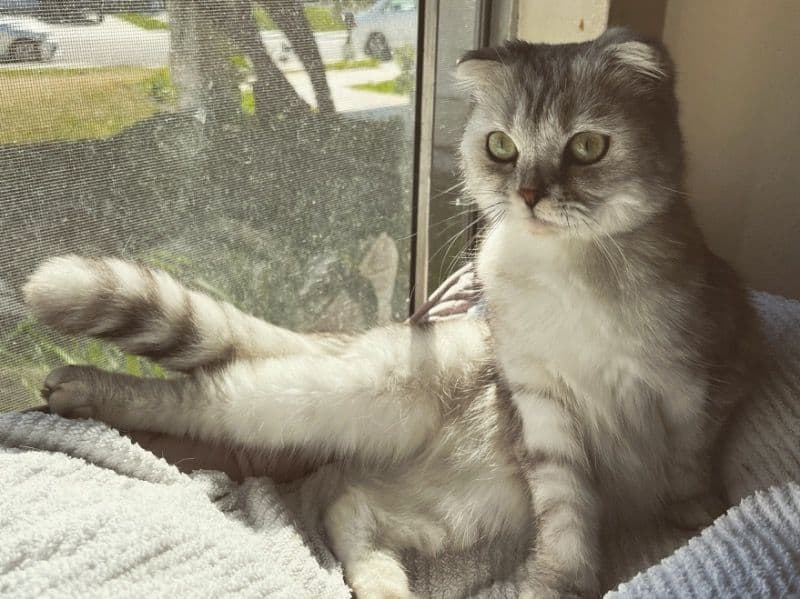
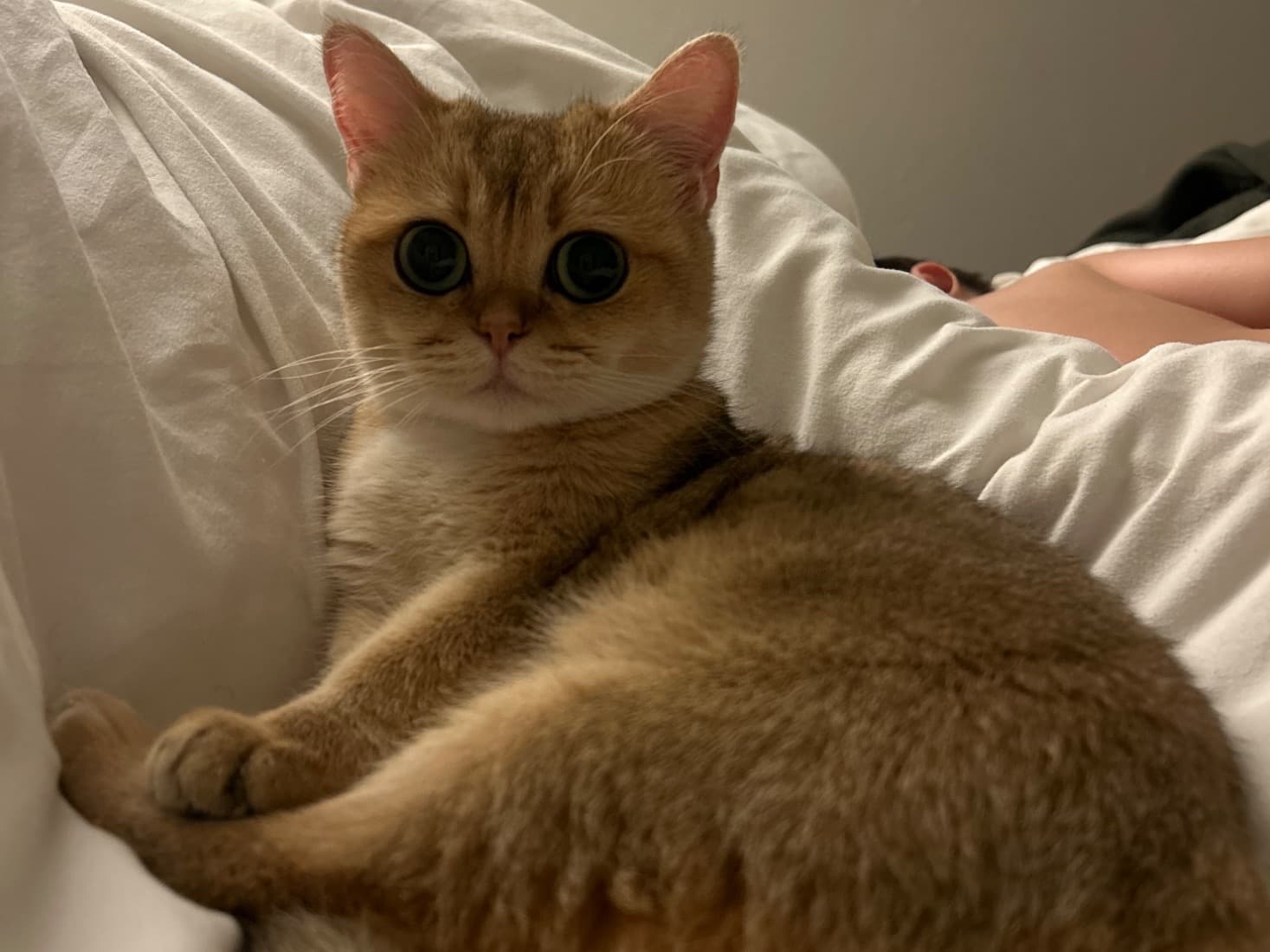
Fold breeders will ask, because the British Shorthair is the permitted outcross for the breed. Understand what you are agreeing to first. Every folded-ear kitten carries a gene that affects cartilage throughout the body, not just the ear. The GCCF and FIFe will not register the breed at all, and the Netherlands banned keeping them from January 2026.
Why they ask you
The CFA lists the allowable outcross breeds for the Scottish Fold as the British Shorthair and the American Shorthair.[16] A large share of the world’s Folds carry British Shorthair blood by design, which is why the request lands in your inbox rather than someone else’s.
What the gene does
A dominant variant in the TRPV4 gene folds the ear by disrupting cartilage.[17] The same cartilage sits in every joint, so the effect does not stop at the ear. The condition that follows is osteochondrodysplasia, a disease of bone and cartilage.
Where the evidence genuinely conflicts
Registries take the strong line. The GCCF lists the Scottish Fold as ineligible for recognition, citing "known serious health problems (osteochondrodysplasia)". It tells owners to expect "a pet who suffers with joint pain in mid-old age".[16] FIFe goes further still. A cat with osteochondrodysplasia, or with such a cat in its ancestry, cannot be bred, registered, exhibited or advertised under its rules.[15]
Two careful studies read differently. The best-controlled one took X-rays and DNA from 22 cats. Ten had folded ears and all ten carried one copy of the variant. Twelve had straight ears and none carried it. Four reviewers scored the images without knowing which cat was which. They rated the folded cats worse on average, but the authors reported "much milder radiological signs than previously published".[17] A second team genotyped 17 cats and found the variant in every folded-ear cat. Even so, only 1 of the 12 folded cats showed clinical signs, and none had developed skeletal changes 18 months later.[22] Separately, Australian veterinary records covering 26 years and 1,131 Scottish Folds recorded a clinical diagnosis of osteochondrodysplasia in 12 cats, which is 1.1%. A further 64 cats, 5.7%, were logged as suspected.[17]
Here is the honest position. The variant sits in every folded-ear cat, so the risk is real and you cannot breed around it. How often it turns into a painful joint disease is genuinely disputed, and the best-controlled study to date found milder signs than the older literature. Anyone who tells you the question is settled, in either direction, is ahead of the evidence.
Ear shape will not tell you what a kitten carries
Researchers photographed 114 cats as they grew, then genotyped them. Seven moved from folded ears to straight ears while maturing, and all seven carried the variant.[18] Those cats looked like safe straight-eared cats and were not. Picking by appearance does not work, which is the whole argument for testing.
What the kittens can be registered as
This is the practical part for a British Shorthair owner. Straight-eared kittens from a Fold mating are Scottish Straights, not British Shorthairs. Neither the GCCF nor FIFe recognises the Scottish Fold, so in their territory those kittens can never be registered as British Shorthairs.[16][15] The GCCF is explicit about the Scottish Straight too. It would need DNA screening to prove the cats do not carry the Fold gene.[16]
Where it is now restricted
The Netherlands banned keeping folded-ear cats from 1 January 2026. Cats born and microchipped before that date are exempt.[19] That is a keeping ban rather than a breeding ban, and it is the furthest any national rule has gone so far.