PetmeetlyPetmeetly
Find a match
Dog Breeders & Stud Dogs
Dogs For Sale
Dogs For Adoption
Cat Breeders & Stud Cats
Cats For Sale
Cats For Adoption
Rabbit Breeders
Rabbits For Sale
Rabbits For Adoption
Small Pet Breeders
Small Pets For Sale
Small Pets For Adoption
How It Works
Pet Blogs
Testimonials
About Us
Find a match

Dogs & Puppies

Dog Breeders & Stud DogsDogs For SaleDogs For Adoption

Cats & Kittens

Cat Breeders & Stud CatsCats For SaleCats For Adoption

Rabbits

Rabbit BreedersRabbits For SaleRabbits For Adoption

Small Pets

Small Pet BreedersSmall Pets For SaleSmall Pets For Adoption

Resources

How It WorksPet BlogsTestimonialsAbout Us
Find a MatchSign In
Petmeetly

Your platform for finding the perfect pet companion. Connect with pet owners and discover loving pets looking for homes.

App StoreGoogle Play

Quick Links

  • Home
  • How It Works
  • About Us
  • Editorial Team & Reviewers
  • Blog
  • Privacy Policy
  • Trust & Safety

Dogs

  • Dog Breeders
  • Dogs for Adoption
  • Dogs for Sale

Cats

  • Cat Breeders
  • Cats for Adoption
  • Cats for Sale

Rabbits

  • Rabbit Breeders
  • Rabbits for Adoption
  • Rabbits for Sale

Small Pets

  • Small Pet Breeders
  • Small Pets for Adoption
  • Small Pets for Sale

© 2026 Petmeetly. All rights reserved.

PrivacyTerms
Two adult Maine Coon cats, one brown classic tabby and one silver tabby, sitting side by side on an oak floor in a sunlit living room
983+ Maine Coon cats on Petmeetly

Maine Coon Cat Breeding

One copy of the heart mutation is not the sentence most people think it is.

Find a breeding matchSee the two mutations
  1. Home
  2. /
  3. Cat Breeding
  4. /
  5. Maine Coon

Maine Coon cats available for breeding

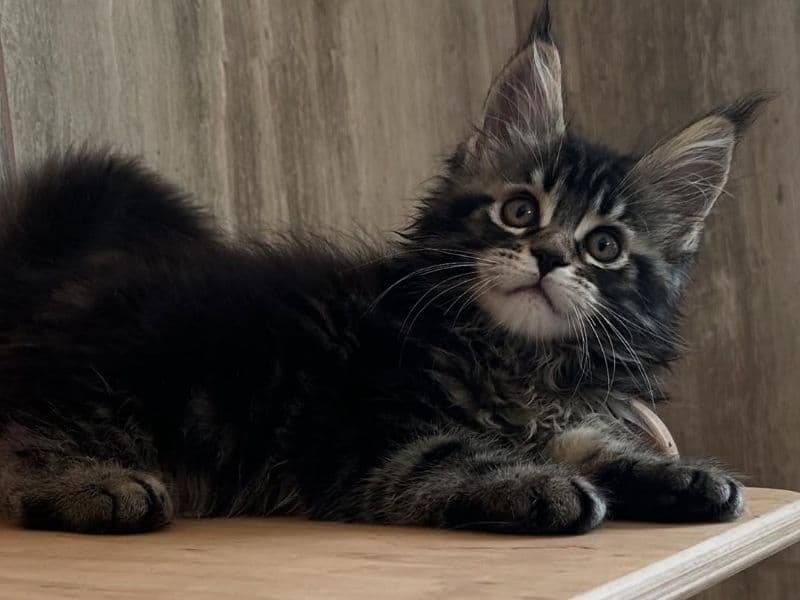
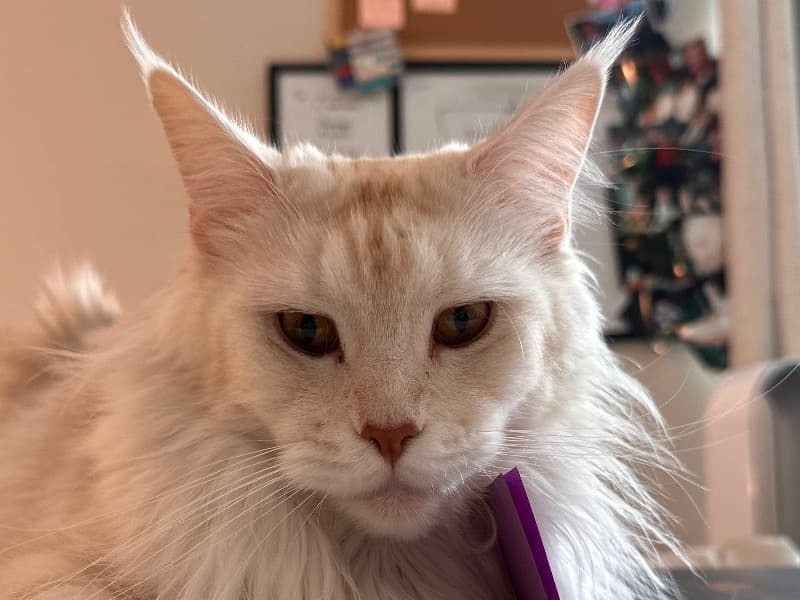
Drake - Maine Coon | Petmeetly

Drake

Maine Coon

4 months old,male
Virginia, US
Vaccinated
Stud Fee: $500.00
View Listing
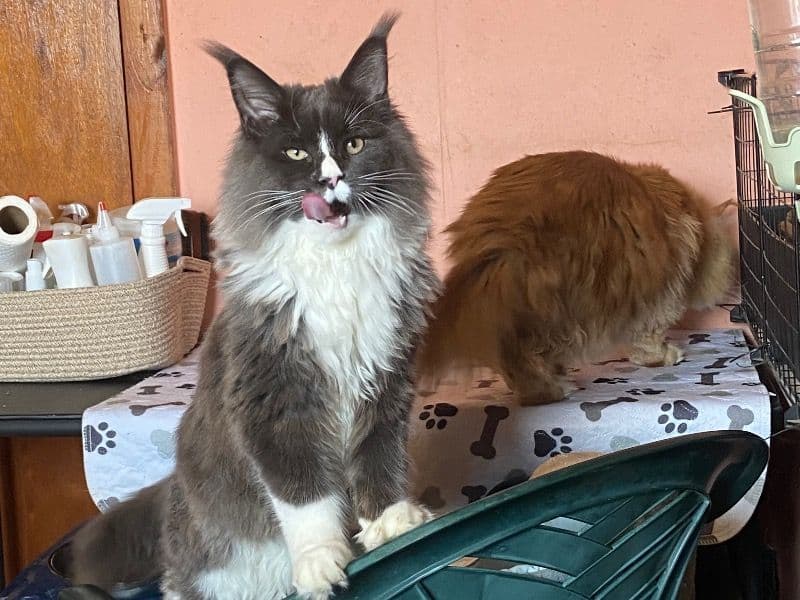
Haku - Maine Coon | Petmeetly

Haku

Maine Coon

9 months old,male
Susquehanna County, Pennsylvania, US
VaccinatedPedigree
Stud Fee: $500.00
View Listing
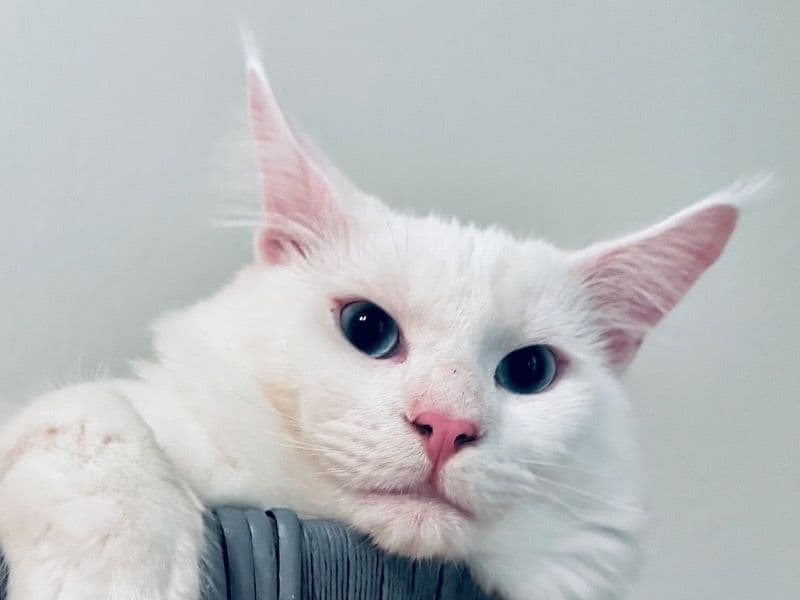
Yennifer - Maine Coon | Petmeetly

Yennifer

Maine Coon

1 year 10 months old,female
Sarasota County, Florida, US
VaccinatedPedigreeDNA Tested
View Listing
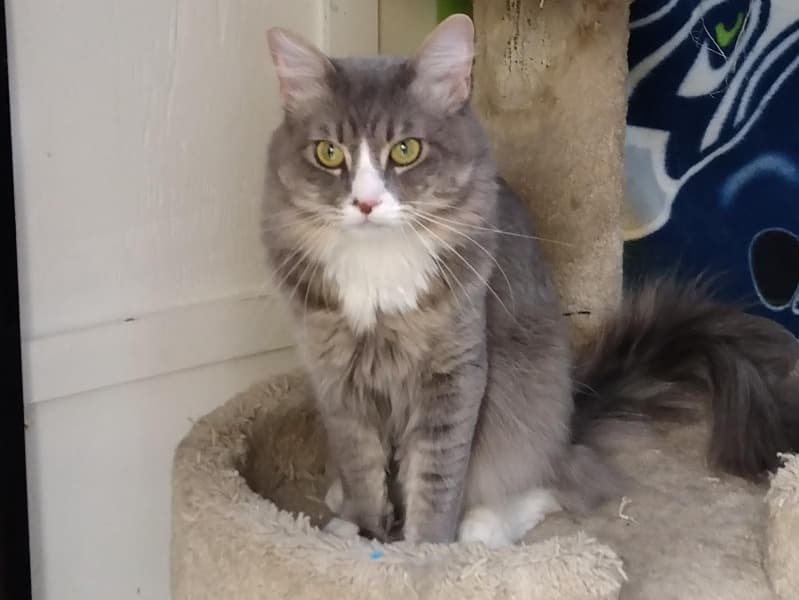
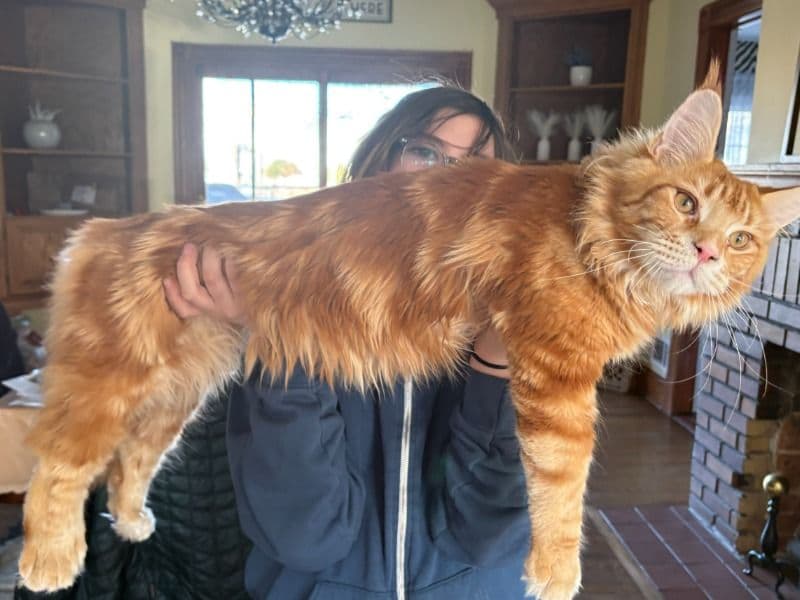
Jr. - Maine Coon | Petmeetly

Jr.

Maine Coon

6 years 3 months old,male
King County, Washington, US
Vaccinated
Stud Fee: $400.00
View Listing
Furball - Maine Coon | Petmeetly

Furball

Maine Coon

6 years 3 months old,male
King County, Washington, US
VaccinatedMicrochipped
Stud Fee: $300.00
View Listing
Stella - Maine Coon | Petmeetly

Stella

Maine Coon

4 years 2 months old,female
North Carolina, US
VaccinatedPedigreeDNA Tested
View Listing
Theodan - Maine Coon | Petmeetly

Theodan

Maine Coon

2 years 2 months old,male
Union County, New Jersey, US
VaccinatedPedigreeDNA Tested
Stud Fee: $2000.00
View Listing
Everest - Maine Coon | Petmeetly

Everest

Maine Coon

2 years 3 months old,male
Duval County, Florida, US
VaccinatedPedigreeDNA TestedMicrochipped
Stud Fee: $500.00
View Listing
See every Maine Coon

Almost everything written about breeding Maine Coons stops at four words: test the parents first. That is where the useful part begins, not where it ends. Two mutations run in this breed, they behave in opposite ways, and knowing which is which changes what you can safely plan. One of them is fully predictable. The other is a question of odds.

The two mutations, and how differently they behave

  • A31Pin the MYBPC3 gene, heartRisk rises sharply with a second copyTwo copies: 58 percent developed heart disease. One copy: 8 percent.[1]
  • SMAa deletion in LIX1, nerves and muscleNeeds two copies, one from each parentTwo copies: the cat is affected, every time. One copy: never.[2]

Read the difference in the right-hand column. SMA is arithmetic, so you can breed around it exactly. A31P is a probability, which is why it needs a heart scan as well as a swab.

What does one copy of the heart mutation mean?

Short answer

Much less than most breeders are told. The published risk sits with cats that inherit two copies. A cat with one copy can be bred responsibly, as long as its partner has none, which makes carrier to carrier the single mating to rule out.

A31P is a change in the MYBPC3 gene, which builds one of the proteins that holds heart muscle together. It is associated with hypertrophic cardiomyopathy, a thickening of the heart muscle that makes the heart work harder than it should. In Maine Coons it is common enough that treating every carrier as unbreedable would remove a large slice of the breed at once.

The numbers argue against doing that. A worldwide study DNA-tested 1,855 cats, then used heart scans to measure how often carrying the mutation actually produced the disease. For cats with one copy the figure was 8 percent. For cats with two copies it was 58 percent.[1] An earlier Danish study of 332 Maine Coons found the same shape. Half of the cats with two copies had the disease. In cats under about six, having one copy showed no meaningful association with the disease at all.[3]

What each pairing can produce

  • Clear to clearNo kitten can inherit the mutationNothing to pass on from either side.
  • Carrier to clearAbout half the kittens carry one copy. None can have two.A defensible mating. This is how carriers stay in the breed.
  • Carrier to carrierAbout one kitten in four inherits two copiesThe one pairing to rule out. A DNA test on both cats prevents it.
  • Two copies, to anythingEvery kitten inherits at least one copyRare, and a decision to take with a cardiologist, not alone.

A cheek swab settles which row you are in before you plan anything. Test both cats, keep the results, and the highest-risk mating simply never gets arranged.

Your cat is old enough to breed before its heart declares

Short answer

Maine Coons develop heart disease younger than other breeds, and they reach breeding age younger still. A clear scan at one year old is worth much less than a clear scan at four, because the disease typically has not appeared yet.

This is the fact that reorganises everything else. Researchers compared 344 cats with heart muscle thickening across five breeds. The median age at diagnosis was 2.5 years for Maine Coons, against 8 years for domestic shorthairs and 11 for Persians. The median age at a first cardiac event followed the same gap: 2.5 years for Maine Coons, 7 years for the others.[4]

Line that up against a breeding calendar. A queen can have her first litter well before two. A stud can be working from a year old. In other breeds the heart usually stays quiet until long after those decisions are made, so a young clear scan is reassuring. In Maine Coons the disease arrives in the middle of a breeding career, which means one scan can never be the end of it.

What actually counts as screening

  • EchocardiogramAn ultrasound scan of the heart, by a cardiologistCalled the gold standard for diagnosis in the ACVIM consensus statement.
  • How oftenEvery year, for as long as the cat is breedingA scan describes the heart on the day it was done. It cannot predict next year.
  • DNA swabOnce in the cat's life, for A31P and SMAPlans matings. Does not describe the state of this cat's heart.
  • Stethoscope checkUseful, but it misses affected catsMany cats with the disease have nothing abnormal to hear.

The ACVIM consensus statement, the reference document veterinary cardiologists work from, puts both instruments in play for this breed. It calls the scan the gold standard for diagnosis. It recommends the A31P test for Maine Coons intended for breeding. And it says a standard scan should be done at a minimum when screening pedigree breeding cats.[5] Worth knowing alongside that: cats with no copies of A31P still develop the disease, because other causes exist that no current test looks for.[6]

Find a Maine Coon breeding match

SMA: the mutation you can plan around exactly

Short answer

Spinal muscular atrophy weakens the muscles that control movement. It takes two copies to affect a kitten, and the DNA test is exact, so two swabs remove the risk completely. It is also far less dangerous than the heart mutation.

The cause is a large missing stretch of DNA covering part of a gene called LIX1, which spinal nerve cells depend on. It is inherited the simple way: a kitten needs one copy from each parent to be affected, and a cat with a single copy is never affected itself.[2] Signs appear at around three to four months, as an unsteady walk and loss of muscle across the hindquarters.

Two things make this easier to live with than the heart mutation. There is no probability involved, so a clear result on either parent guarantees no affected kittens. And the condition itself is not painful and not fatal.[7] Affected cats are wobbly, and they do well as indoor cats with a normal life ahead of them.

The practical version is short. Swab both cats once for A31P and SMA together, keep the certificates, and hand copies to anyone taking a kitten. Neither result expires, which is exactly what makes them different from the heart scan.

Size, joints and a very slow finish

Short answer

Maine Coons keep growing for three to four years, long after most cats have finished. That slow build is part of why the breed is over-represented for hind limb joint problems, and part of why an early breeding decision is made on incomplete information.

Researchers measuring how cats load their limbs noted that Maine Coons appear over-represented for orthopaedic problems of the hind limb. They named two: hip dysplasia, a badly fitting hip joint, and patellar luxation, a kneecap that slips out of place.[8] Weight is the obvious reason. This is a heavy cat carrying that weight on a frame that takes years to finish.

  • Ask your vet to assess hips and knees before a mating, not after a kitten is limping. Both can be checked in a normal consult, and radiographs are available if anything looks off.
  • Do not read size as health. A very large cat is not a better breeding cat. Weight is a load on joints and on a heart that may already be thickening.
  • Let the cat finish. A Maine Coon at one year is perhaps two thirds of the way through its growth, and its heart scan is at its least informative point.

Everything after the mating itself is the same for a Maine Coon as for any other cat, so this page does not repeat it. Our domestic shorthair breeding guide covers pregnancy, birth, raising a litter and what it costs.

Should you breed this Maine Coon at all?

Short answer

Only if both cats have current scans and DNA results, and you can afford to repeat the scans every year. The screening is the cost of breeding this particular breed, and it is not optional.

Reasons to stop and reconsider

  • Neither cat has been scanned, and the plan is to scan later if something seems wrong. By then a litter exists.
  • The other owner will not share DNA results, so you cannot tell whether this is a carrier to carrier mating.
  • The annual scan is not in the budget. In this breed that is not a nice-to-have, it is the screening itself.
  • The plan rests on the kittens being unusually large. Size is not a health claim and buyers who want it are not the buyers you want.
  • A cat was cleared once, years ago, and nobody has scanned it since. That result no longer describes this cat.

None of this argues against breeding a Maine Coon you have screened properly. It argues against breeding one on the strength of a single old certificate. If the honest answer turns out to be no, neutering costs a fraction of a litter and settles the question.

An adult cat that already exists is also a better fit for many households than a kitten. You can adopt or rehome a Maine Coon through the same platform, or see what buyers are asking on our Maine Coon kittens for sale page.

Petmeetly connects owners to each other. If you go ahead, the first step is knowing what both cats carry. The second is finding an owner who screens as carefully as you do.

Find a Maine Coon breeding partner

Maine Coon Cat Breeding FAQ

01

Can you breed a Maine Coon that carries the HCM mutation?

Yes, to a cat that does not carry it. The published risk sits with cats that inherit two copies, so a carrier bred to a clear cat cannot produce one. Removing every carrier from the breed would shrink the gene pool for very little gain.

02

What is A31P and what does one copy actually mean?

A31P is a change in the MYBPC3 gene that raises the risk of heart muscle thickening in Maine Coons. In a study that DNA-tested 1,855 cats and heart-scanned a subset, 8 percent of cats with one copy developed the disease, against 58 percent of cats with two. One copy is a planning fact, not a diagnosis.

03

Which Maine Coon mating should never happen?

Carrier to carrier. That is the only pairing that can produce a kitten with two copies of A31P, and two copies is where the published risk actually sits. A DNA test on both cats rules it out before you plan anything.

04

Does a DNA test replace the heart scan?

No, they answer different questions. The gene test tells you which matings are safe to plan. The heart scan tells you the condition of this cat right now. The ACVIM consensus statement calls echocardiography, an ultrasound scan of the heart, the gold standard for diagnosis.

05

At what age do Maine Coons usually show heart disease?

Earlier than most breeds. Across 344 cats from five breeds, the median age at diagnosis was 2.5 years for Maine Coons, against 8 years for domestic shorthairs and 11 for Persians. A cat can be old enough to breed before its heart has declared anything.

06

How often should a Maine Coon used for breeding be scanned?

Annually, by a cardiologist, for as long as the cat is breeding. A single clear scan at one year old ages badly in this breed because the disease typically appears later. The scan is a snapshot, not a certificate.

07

Can my vet detect heart disease by listening to the chest?

Not reliably. The ACVIM consensus statement notes that many affected cats have no abnormality an ordinary stethoscope check would pick up. A quiet chest is not a clear heart, and it is not a substitute for a scan.

08

What is SMA in Maine Coons?

Spinal muscular atrophy is a condition that weakens the muscles controlling movement. It needs two copies, one from each parent, and signs appear at around three to four months. Unlike the heart mutation, it is fully predictable from a DNA test.

09

Is SMA as serious as the heart mutation?

It is more predictable and much less dangerous. Affected cats have an unsteady walk and lose muscle in the hindquarters, but the condition is not painful and not fatal, and these cats live comfortably indoors. The heart mutation is the one that can kill young.

10

Do Maine Coons have joint problems worth testing for?

They are over-represented for hind limb problems including hip dysplasia, a badly fitting hip joint, and a kneecap that slips out of place. A vet can assess both. Screening matters more in a breed this heavy.

11

How old should a Maine Coon be before its first litter?

Old enough that its heart scan means something. Maine Coons keep growing for three to four years, far longer than most cats, so a cat that looks adult at one is still filling out. Waiting also puts more scans behind the decision.

12

What should both cats have before a Maine Coon mating?

A31P and SMA DNA results for both, a current heart scan from a cardiologist for both, a general vet check, current vaccinations, and negative tests for FeLV and FIV, two contagious feline viruses. The DNA results plan the mating; the scans decide whether it should happen at all.


Sources

  1. Longeri et al. (2013), J Vet Intern Med, MYBPC3 variants and hypertrophic cardiomyopathy in 1,855 cats
  2. OMIA 002389, LIX1-related spinal muscular atrophy in Felis catus (autosomal recessive); Fyfe et al. (2006), Genome Research
  3. Godiksen et al. (2011), Acta Vet Scand, the clinical significance of carrying the p.A31P mutation
  4. Trehiou-Sechi et al. (2012), J Vet Intern Med, hypertrophic cardiomyopathy across five cat breeds
  5. ACVIM consensus statement (2020), J Vet Intern Med, classification and management of feline cardiomyopathies
  6. Langford Vets, Maine Coon hypertrophic cardiomyopathy test
  7. UC Davis Veterinary Genetics Laboratory, spinal muscular atrophy (SMA) in Maine Coon cats
  8. Schnabl-Feichter et al. (2018), PLoS One, gait forces in Maine Coon and domestic shorthair cats
ByPetmeetly Editorial Team•Published August 7, 2026

Fact-checked against peer-reviewed feline cardiology in the Journal of Veterinary Internal Medicine and Acta Veterinaria Scandinavica, and against the ACVIM consensus statement on feline cardiomyopathies.

Success Stories
from Maine Coon Owners

Real stories from cat owners who found perfect breeding matches on Petmeetly

We found a lovely female cat through Petmeetly, and she mated with our male cat. We’re now expecting kittens soon! We also discovered another perfect candidate—our male cat has already mated with one, and will mate with the other once she reaches maturity. We’re so glad to have this platform—it truly helped us find the right matches

Pelin  - Profile photo

Pelin

Florida, US

We liked being able to connect and meet with the parents of the queen.

M

Melisa

Washington, US

We were successful in finding a mate. The platform has been great. Wishing there were more cats options. Seems it hasn’t changed since we’ve been on.

BA

Betsy Aird

California, US

Read More Success Stories

Explore Popular Cat Breeds

Discover breeding guides for different cat breeds and find the perfect match for your breeding program

American Shorthair BreedingBengal BreedingBritish Shorthair BreedingDomestic Shorthair BreedingPersian BreedingRagdoll BreedingScottish Fold BreedingSiamese BreedingTabby Breeding50+ breeds more

Find a Maine Coon breeding partner

983+ Maine Coon cats are on Petmeetly. Find a mate whose owner screens as carefully as you do.

Start a free listing