PetmeetlyPetmeetly
Find a match
Dog Breeders & Stud Dogs
Dogs For Sale
Dogs For Adoption
Cat Breeders & Stud Cats
Cats For Sale
Cats For Adoption
Rabbit Breeders
Rabbits For Sale
Rabbits For Adoption
Small Pet Breeders
Small Pets For Sale
Small Pets For Adoption
How It Works
Pet Blogs
Testimonials
About Us
Find a match

Dogs & Puppies

Dog Breeders & Stud DogsDogs For SaleDogs For Adoption

Cats & Kittens

Cat Breeders & Stud CatsCats For SaleCats For Adoption

Rabbits

Rabbit BreedersRabbits For SaleRabbits For Adoption

Small Pets

Small Pet BreedersSmall Pets For SaleSmall Pets For Adoption

Resources

How It WorksPet BlogsTestimonialsAbout Us
Find a MatchSign In
Petmeetly

Your platform for finding the perfect pet companion. Connect with pet owners and discover loving pets looking for homes.

App StoreGoogle Play

Quick Links

  • Home
  • How It Works
  • About Us
  • Editorial Team & Reviewers
  • Blog
  • Privacy Policy
  • Trust & Safety

Dogs

  • Dog Breeders
  • Dogs for Adoption
  • Dogs for Sale

Cats

  • Cat Breeders
  • Cats for Adoption
  • Cats for Sale

Rabbits

  • Rabbit Breeders
  • Rabbits for Adoption
  • Rabbits for Sale

Small Pets

  • Small Pet Breeders
  • Small Pets for Adoption
  • Small Pets for Sale

© 2026 Petmeetly. All rights reserved.

PrivacyTerms
Adult Scottish Fold cat with folded ears and a dense blue-grey coat sitting alert on a light oak floor beside a sunlit window
798+ Scottish Fold cats on Petmeetly

Breeding Scottish Fold Cats

The fold and the joint disease are one gene, so what you test for decides what you produce.

Find a breeding matchWhat the fold gene does
  1. Home
  2. /
  3. Cat Breeding
  4. /
  5. Scottish Fold

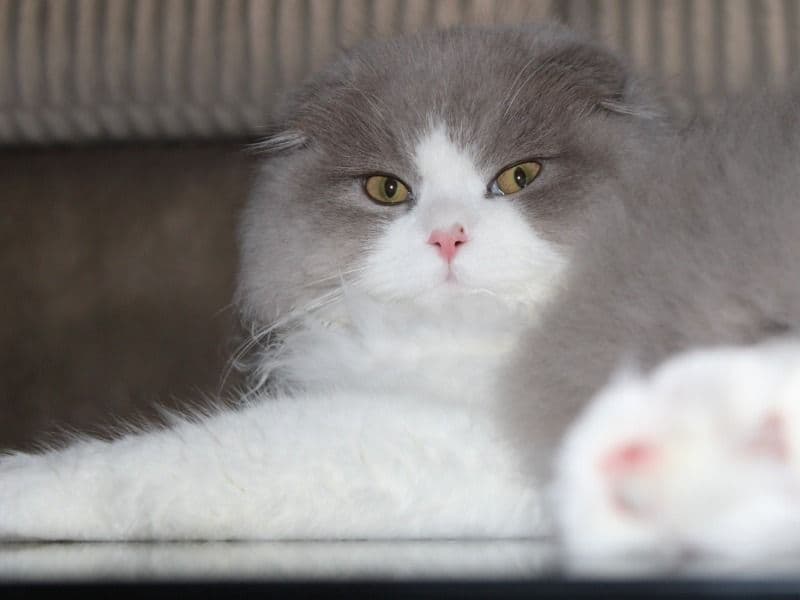
Scottish Fold cats available for breeding

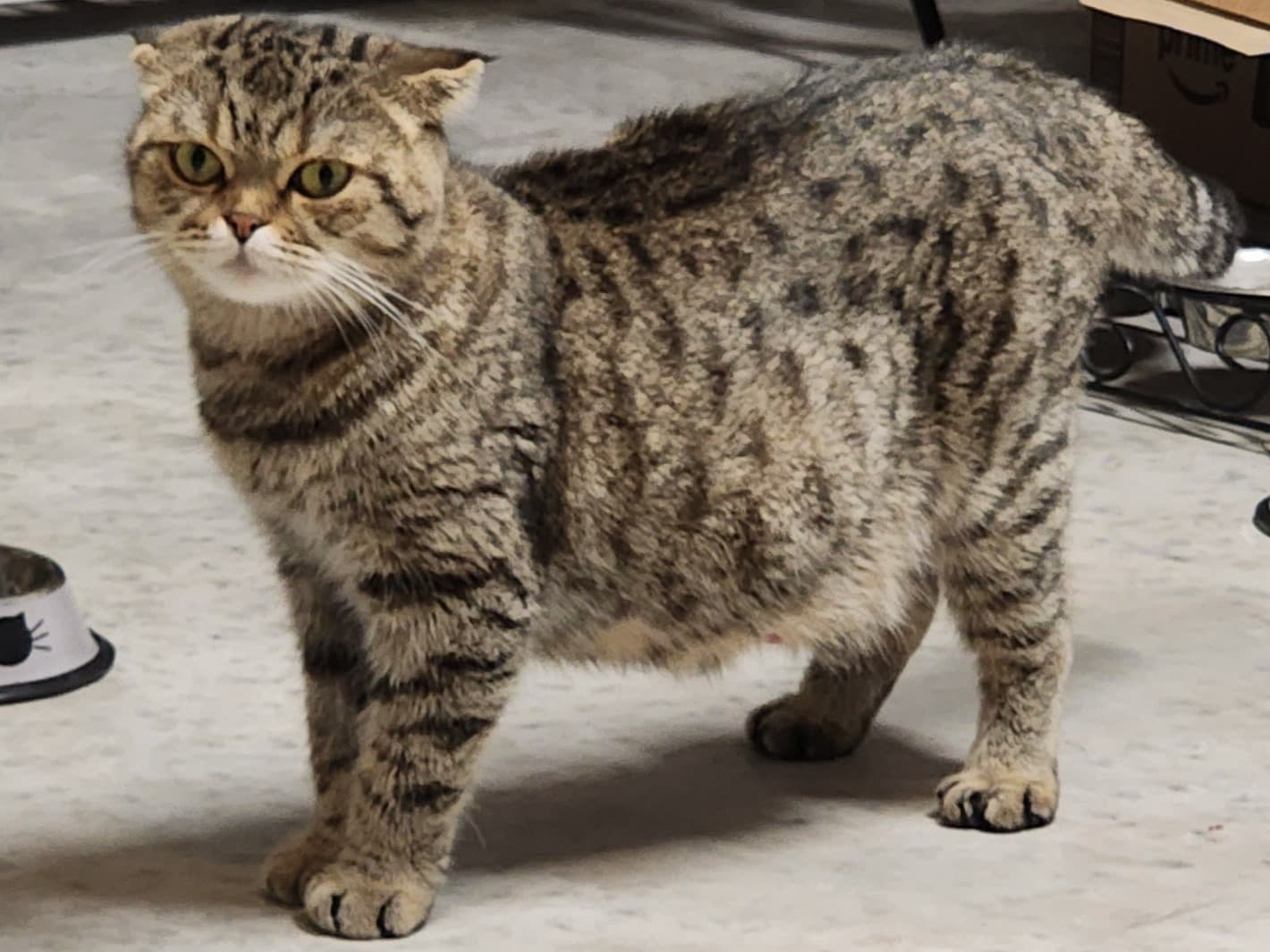
Beekah - Scottish Fold | Petmeetly

Beekah

Scottish Fold

6 years 4 months old,female
Apollo Beach, Florida, US
Vaccinated
View Listing
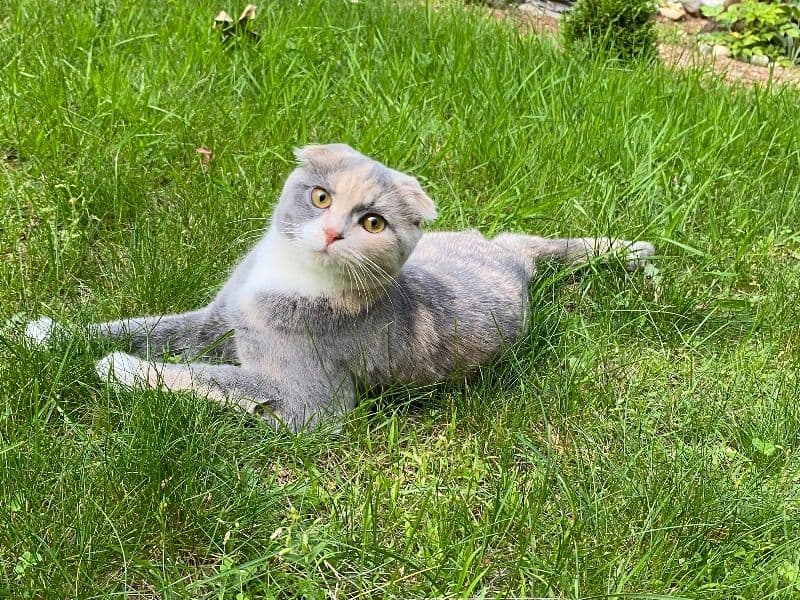
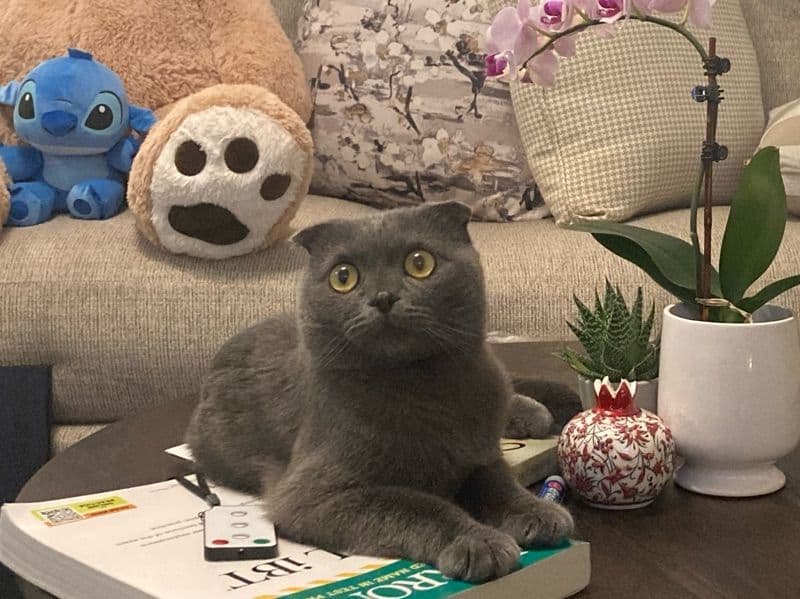
Hanz - Scottish Fold | Petmeetly

Hanz

Scottish Fold mix

1 year 10 months old,male
King County, Washington, US
Vaccinated
View Listing
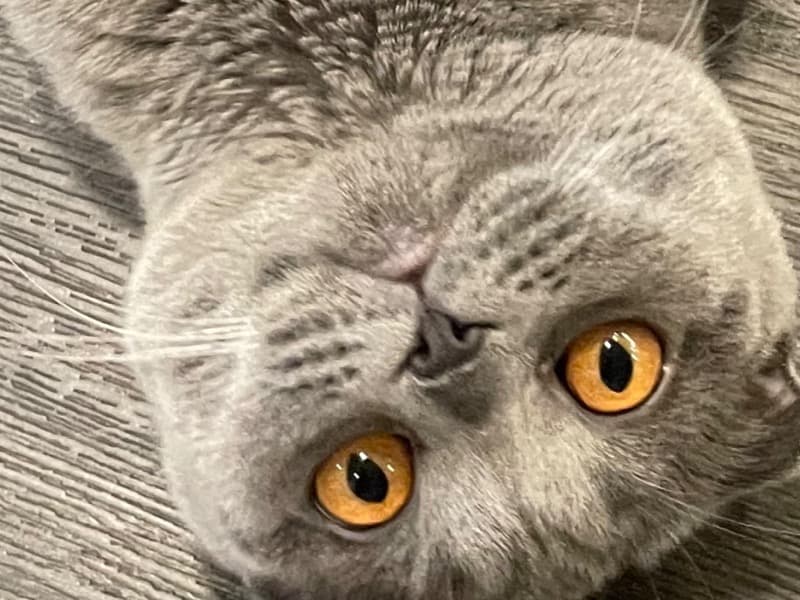
Nina - Scottish Fold | Petmeetly

Nina

Scottish Fold

1 year 10 months old,female
Middlesex County, Massachusetts, US
Vaccinated
View Listing
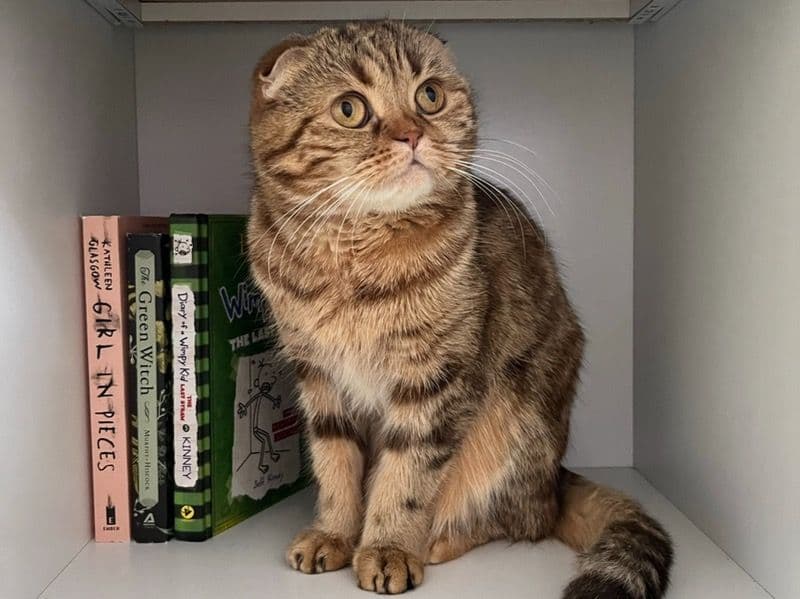
Lola - Scottish Fold | Petmeetly

Lola

Scottish Fold

5 years 2 months old,female
Bergen County, New Jersey, US
View Listing
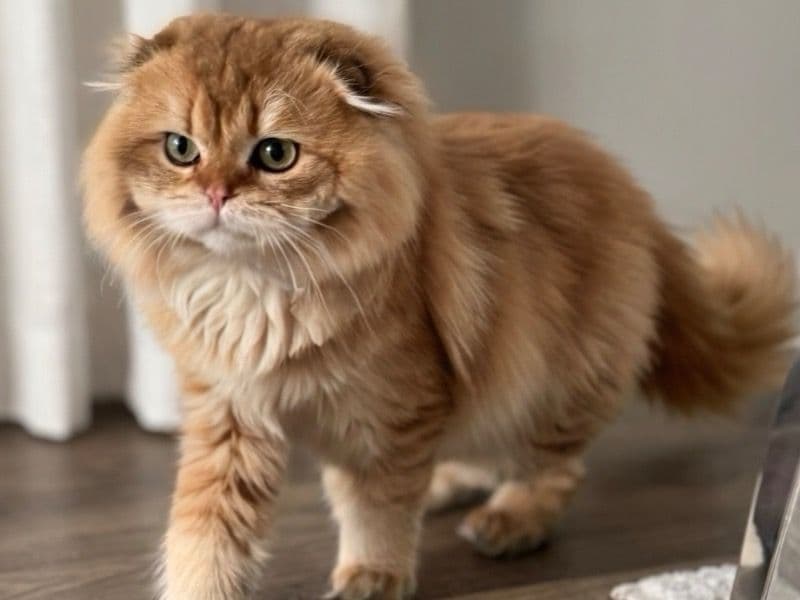
Meow - Scottish Fold | Petmeetly

Meow

Scottish Fold

8 years 2 months old,female
Fairfield County, Connecticut, US
VaccinatedPedigree
View Listing
Lucky - Scottish Fold | Petmeetly

Lucky

Scottish Fold mix

2 years 6 months old,male
Philadelphia County, Pennsylvania, US
Vaccinated
View Listing
Tommy - Scottish Fold | Petmeetly

Tommy

Scottish Fold mix

3 years 4 months old,male
Philadelphia County, Pennsylvania, US
Vaccinated
Stud Fee: $1.00
View Listing
Simba - Scottish Fold | Petmeetly

Simba

Scottish Fold

2 years 5 months old,male
Spartanburg County, South Carolina, US
VaccinatedPedigreeDNA Tested
Stud Fee: $600.00
View Listing
See every Scottish Fold

Almost everything written about breeding this cat treats the folded ear as the trait and the joint problems as a risk that comes with it. That is the wrong way round. Researchers traced the fold to a single change in a gene called TRPV4, which helps build cartilage throughout the body.[1] The ear folds because the cartilage in it is faulty. The same faulty cartilage is in the paws, the lower legs and the tail. It is one defect showing up in several places.

One gene, and everywhere it lands

  • The variantTRPV4 c.1024G>T, a single letter change in the DNAFound in 44 Scottish Folds and in none of 648 cats without the trait.
  • In the earThe ear flap, called the pinna, folds forwardThis is the show trait. It is also the visible sign of the defect.
  • In the limbs and tailMalformed bones in the paws and lower legs, narrowed joint spaces, new bone around jointsKnown as osteochondrodysplasia, a disorder of bone and cartilage development.
  • How it is inheritedDominant, so one copy is enough to fold the earsTwo copies cause more severe disease that starts earlier.

That is why this page is not organised around a list of tests. For most breeds, screening asks whether a particular cat happens to carry something. Here the answer is already known for every folded cat in the world. The useful questions are different, and they start with what a mating can and cannot avoid.

Can you breed a healthy Scottish Fold?

Short answer

Not one without the variant, because the folded ear is the variant. A cat cannot have folded ears and be genetically clear. What a breeder controls is severity, and the mating that controls it best is still not the safe mating it is usually sold as.

The standard advice is to mate a folded cat to a straight-eared cat. It is genuinely worth doing, and the reason is arithmetic. Pair two folded cats and one kitten in four inherits two copies of the variant. Those kittens get the worst version of the disease and get it early. Pair a folded cat with a straight-eared one and no kitten can inherit two copies at all.

What that mating does not do is produce a folded kitten without the variant, and the study that first described the disorder makes the point sharply. Ten affected Scottish Folds were examined in Australian practice. In all nine cases where the pedigree was known, the affected cat came from a Scottish Fold mated to a cat with normal ears.[2] The mating that is meant to be the safe one had produced every one of them.

Cats Protection puts the same conclusion in one line: all Scottish Fold cats are affected by osteochondrodysplasia, and the disorder cannot be bred out of the breed.[3] You can breed for milder, and you should. You cannot breed the variant away while the ears still fold.

What the evidence actually shows

Short answer

That cats with two copies suffer badly is settled. How often cats with one copy develop disease that hurts them is not. Four studies have looked, they disagree, and a breeder is better served by seeing the disagreement than by being handed one number.

Most breed pages pick whichever study suits the story they are telling. The honest version is that this question is open, and each study that has tried to answer it carries a limitation worth knowing about.

Cats with one copy, four attempts to measure the damage

  • Malik and colleagues, 199910 cats, AustraliaConcluded that all Scottish Fold cats suffered from the disorder to some degree, and that the best solution would be to avoid breeding from fold-eared cats.[2]Limitation: Cases were found because they were already ill or came from one cattery, so the sickest cats are over-represented.
  • Rorden and colleagues, 202122 cats, genotypedFour reviewers who could not see the ears scored the x-rays. Folded cats scored worse on average than straight-eared cats, but the signs were much milder than earlier reports described.[4]Limitation: Small group, and a single x-ray view cannot show how the joints change over a whole life.
  • Sartore and colleagues, 202312 folded cats, ItalyEvery folded cat carried one copy of the variant, yet only 1 of the 12 showed changes on x-ray, and follow-up imaging eighteen months later showed no progression.[5]Limitation: The cats averaged 2.3 years old. The disease is progressive, so young cats can look clear and change later.
  • Australian veterinary records, 20231,131 cats, 1992 to 2018Across 34,926 visits, 1.1 percent of Scottish Folds had been clinically diagnosed with the disorder, and a further 5.7 percent of that sample were logged as suspected cases.[6]Limitation: Diagnosis needs x-rays, and these records hold none. The authors say cases were likely missed.

Read together they say something useful. The disease is real, it is caused by the fold variant, and it is not a certainty of misery for every cat with one copy. Plenty of folded cats live comfortably. Others do not, and nobody can currently predict which is which from the kitten in front of them.

For a breeder that uncertainty is the argument for screening rather than against it. If you cannot predict the outcome, the honest approach is to remove the matings that reliably produce the worst of it. Then watch closely for early signs in the cats you keep.

Why you cannot identify a carrier by looking

Short answer

The safe mating depends on knowing which cat is straight-eared. New work from 2026 found that about one carrier in eight started folded as a kitten and had straight ears as an adult. By eye that cat looks like the safe partner, and it is not.

Researchers working with a Japanese pet insurer had something rare: photographs of the same cats as kittens and again as adults, plus DNA from each one. They followed 114 Scottish Folds through that record. Seven of them had folded ears as kittens and straight ears as adults, and genotyping showed all seven carried one copy of the fold variant.[7]

114 cats, ear shape checked against DNA

  • Folded as a kitten and as an adult57 cats48 carried one copy of the variant, 9 carried two.
  • Folded as a kitten, straight as an adult7 catsEvery one carried a copy. The authors call these cryptic folds.
  • Straight at both ages50 catsNone carried the variant in this group.
  • Share of carriers that straightened7 of 55, about 12.7 percentRoughly the same in males and females.

The risk this creates is specific. A breeder who takes a cryptic fold for a straight-eared cat and pairs it with a folded cat has quietly set up the one mating everybody agrees should never happen. Both parents carry a copy, so one kitten in four can inherit two, which is the severe form. The paper spells that out as the reason its finding matters.[7]

Two honest caveats belong with it. Studies of Western cats have found every carrier to have folded ears, so this may be specific to that Japanese population or to when the cats were assessed. And seven cats is a small group, which the authors say themselves while calling for independent confirmation.[7] The conclusion holds regardless of how the number settles, because it does not depend on the size of the effect. Ear shape is a guess. A test is not.

Find an owner who tests

What a TRPV4 test actually tells you

Short answer

It counts copies. A cheek swab comes back saying the cat has no copies of the fold variant, one copy, or two. That count is the only thing that separates a mating that can produce severely affected kittens from one that cannot.

The test looks for the exact change Gandolfi and colleagues identified, written as TRPV4 c.1024G>T.[8] It is a one-time test, because a cat's DNA does not change. The Cat Fanciers Association, which does recognise the breed, states on its own breed page that DNA testing is of paramount importance alongside breeding folded cats only to straight-eared ones.[9]

Reading the result

  • No copiesA true Scottish Straight

    The cat does not carry the variant and cannot pass it on. Its ears stand up and its joints are not at risk from this gene.

    Breeding rule: Safe to pair with a folded cat. This is the only partner that guarantees no kitten inherits two copies.

  • One copyA folded cat, or a cryptic fold

    Usually a folded cat, but sometimes an adult whose ears straightened. Either way it passes the variant to about half its kittens and can develop the disorder itself.

    Breeding rule: Never pair with another cat that carries a copy. Pair only with a tested cat that has none.

  • Two copiesSevere disease, early onset

    Testing laboratories describe cats with two copies as having more severe signs starting earlier in life.[8] These are the cats the whole mating rule exists to prevent.

    Breeding rule: Do not breed. Every kitten would inherit at least one copy.

The practical instruction is short. Test both parents before the mating, not after, and ask for the certificate rather than a verbal assurance. A cat described as coming from tested lines has not been tested. Only a result for that individual cat tells you anything.

Does testing change anything?

Short answer

Yes, and there is now a number for it. Among 8,610 cats tested in Japan, the share born carrying two copies of the variant fell from 14.2 percent in 2017 to 1.9 percent in 2024. The severe form is being bred out even though the trait is not.

This is the most encouraging finding in the whole literature, and it is recent. Researchers looked at cats born between 2017 and 2024 across 14 breeds. Over those eight years the proportion carrying two copies fell from 30 cats in 211 to 14 cats in 730. Meanwhile the share carrying one copy did not change significantly.[10]

Read that carefully, because it says two things at once. Breeders using the test have almost stopped producing the severely affected kittens, which is a real welfare gain and it happened fast. They have not reduced the number of cats carrying a copy, which is expected, since that copy is what makes the ears fold.

The same study found the variant outside the breed as well. It turned up in Munchkins, where 28 cats in 999 carried a copy and three carried two copies. Smaller numbers appeared in Minuets, American Curls and Norwegian Forest Cats.[10] If you cross a Scottish Fold into another breed, the variant goes with it and the next breeder may not know to look for it. That is a reason to record it in writing on every pedigree you issue.

Where the registries, vets and regulators stand

Short answer

Split, and moving in one direction. The major veterinary and welfare bodies oppose breeding folded cats. One registry recognises the breed with rules attached, another refuses to register it at all, and since 1 January 2026 it has been illegal to keep one in the Netherlands.

You are entitled to know exactly who says what before you plan a litter, so here it is without editorialising.

Positions on record

  • Cat Fanciers AssociationRecognises the breed and shows folded and straight-eared cats in separate classes.[9]Says responsible breeders mate folded cats only to straight-eared cats, and calls DNA testing of paramount importance.
  • Governing Council of the Cat FancyLists the breed as ineligible, citing known serious health problems.[11]Describes the likely outcome as joint pain in middle and older age, and names the British Shorthair as the alternative.
  • International Cat CareCalls it unethical to continue breeding cats with a mutation known to cause significant painful disease.[12]Notes the reason the breed exists is that some people like how the ears look.
  • British Veterinary AssociationPolicy is that animals whose conformation harms their health and welfare should not be bred from.[13]Also asks that such animals are not used in advertising or marketing.
  • RSPCA AustraliaBelieves it is unethical to breed from animals with a mutation known to cause painful deformities and disease.[14]Notes affected Scottish Folds cannot be bred in Victoria under the Prevention of Cruelty to Animals Act 1986.
  • Cats ProtectionAdvises against getting a Scottish Fold and is campaigning for breeding to be banned.[3]States the disorder cannot be bred out of the breed.
  • The NetherlandsKeeping, breeding, buying and selling folded-ear cats has been prohibited since 1 January 2026.[15]Cats born before that date and identified by microchip are exempt. The fine is 1,500 euros.

There is one detail in the show ring worth noticing, because it comes from the registry that supports the breed. The CFA standard disqualifies a cat with a kinked tail, a shortened tail, or a tail that cannot flex because the vertebrae are abnormally thick.[9] Those are signs of the same disorder the fold gene causes. So the show ring already turns away cats carrying the visible end of it.

If you breed, the minimum standard

Short answer

Six things, and none of them are optional. Test both parents, never pair two carriers, and retire any cat showing signs before 30 months. X-ray before you breed, tell every buyer in writing, and check what the law says where you live.

People will breed this cat whether or not the welfare bodies approve. If you are going to, these are the steps that separate a breeder who is managing the problem from one who is passing it on.

Before any mating

  • 1Get a TRPV4 result for both catsNot one of them, and not the line. The straight-eared partner is the one people skip, and that is exactly the cat a cryptic fold hides among.[7]
  • 2Never pair two cats that carry a copyThis is the mating that produces kittens with two copies, who get severe disease early.[8] No aesthetic argument outweighs it.
  • 3Retire any cat showing signs before 30 monthsThe Australian record study found clinically diagnosed cats were generally under 30 months, and its authors suggest excluding those cats from breeding.[6] A young cat with a stiff tail or an odd gait is telling you something.
  • 4X-ray the lower legs and tail before you breedThe disorder is diagnosed on x-ray, not by eye.[6] Look for narrowed joint spaces, misshapen bones in the paws, and new bone forming around the joints.
  • 5Put it in writing for every buyerGive each buyer the parents' test results and a plain statement that their folded kitten carries the variant and may develop joint disease. Record it on the pedigree, so it travels if the cat is ever crossed into another breed.[10]
  • 6Check the law where you liveIt has changed recently and it is still changing. Keeping a folded-ear cat is prohibited in the Netherlands,[15] and affected Scottish Folds cannot be bred in Victoria.[14] Check your own jurisdiction rather than assuming.

Claims to stop making

  • That fold to straight produces healthy kittens. It avoids the severe form. It does not produce a kitten without the variant.[2]
  • That a straight-eared cat from your own lines is obviously clear. About one carrier in eight looked straight-eared as an adult in the cohort that checked.[7]
  • That a kitten with a flexible tail at twelve weeks is in the clear. Diagnoses in the Australian records were generally made before 30 months, which is long after the kitten went home.[6]

None of this makes the objection go away. The bodies listed above would say the only reliable way to prevent this disorder is to stop breeding folded cats. That position is worth sitting with rather than arguing past. What the steps above do is remove the worst outcomes from the litters that happen anyway.

If you would rather keep the breed's body, coat and temperament without the fold gene, the straight-eared cat from these lines is a real option. The GCCF, which will not register Folds at all, points people to the British Shorthair.[11]

Find a Scottish Fold breeding partner

Scottish Fold Cat Breeding FAQ

01

Can you breed a healthy Scottish Fold cat?

Not one without the variant, because the folded ear is the variant. The same TRPV4 change that bends the ear cartilage is the one that affects joint cartilage, so a cat cannot have folded ears and be genetically clear. What breeders can control is severity, and that is what screening and mating choices are for.

02

Is mating a folded cat to a straight-eared cat safe?

It is safer, not safe. Pairing a folded cat with a straight-eared cat avoids kittens with two copies, who get the worst disease earliest. It does not remove the variant. In the study that first described the disorder, all nine cats with pedigree records came from exactly that mating.

03

What is Scottish Fold osteochondrodysplasia?

It is a disorder of bone and cartilage development caused by the fold gene. It shows up as malformed bones in the paws, lower legs and tail, narrowed joint spaces, and new bone forming around the joints. The result is degenerative joint disease that can be painful, and severity varies a great deal between cats.

04

Do cats with only one copy of the fold gene get the disease?

They can, and the evidence on how often is genuinely mixed. The original Australian study reported that every folded cat it examined was affected to some degree. A later blinded study found folded cats scored worse than straight-eared cats but with much milder signs than earlier reports described.

05

Can you tell a carrier by looking at the ears?

Not reliably. A Japanese study of insured Scottish Folds found that 7 of 55 carriers, about 12.7 percent, started with folded ears as kittens and had straight ears as adults. The authors called these cryptic folds and concluded that a straight-eared adult does not guarantee a cat without the variant.

06

What does a TRPV4 test tell you?

It tells you how many copies of the fold variant a cat carries, which is the one thing you cannot see. A result comes back as no copies, one copy or two copies. That is the difference between a mating that can produce severely affected kittens and one that cannot.

07

Should two folded cats ever be mated together?

No. Mating two folded cats means every kitten has a one in four chance of inheriting two copies, and cats with two copies develop severe disease early. Testing laboratories and the breed registries agree on this point even where they disagree about everything else.

08

Does genetic testing actually reduce the disease?

Yes, and there is now evidence for it. Across 8,610 cats tested in Japan, the share born with two copies of the variant fell from 14.2 percent in 2017 to 1.9 percent in 2024. The share carrying one copy did not significantly change over the same period.

09

Why will the GCCF not register Scottish Folds?

The UK registry lists the breed as ineligible and gives the reason as known serious health problems, naming osteochondrodysplasia. It describes the likely outcome for the cat as joint pain in middle and older age, and points people towards the British Shorthair instead.

10

Is it legal to breed Scottish Fold cats?

It depends entirely on where you are, and the rules are moving. The Netherlands banned keeping, breeding, buying and selling folded-ear cats from 1 January 2026, with an exemption for microchipped cats born before that date. In Victoria, Australia, affected Scottish Folds cannot be bred. Check your own jurisdiction first.

11

At what age do problems usually show up?

Earlier than most people expect when the disease is significant. In Australian veterinary records covering 1,131 Scottish Folds, cats clinically diagnosed with the disorder were generally under 30 months old. Cats flagged as suspected cases were much older, at a median of 93 months.

12

What do veterinary bodies say about breeding Scottish Folds?

They oppose it. International Cat Care calls it unethical to keep breeding cats with a mutation known to cause significant painful disease. The RSPCA in Australia takes the same view, the British Veterinary Association says animals with health-damaging conformation should not be bred, and Cats Protection is campaigning for a ban.

Sources

  1. Gandolfi et al. (2016), Osteoarthritis and Cartilage, a dominant TRPV4 variant underlies osteochondrodysplasia in Scottish fold cats
  2. Malik et al. (1999), Australian Veterinary Journal, osteochondrodysplasia in Scottish Fold cats
  3. Cats Protection, guidance on Scottish Fold cats
  4. Rorden et al. (2021), Human Genetics, blinded radiographical survey of osteochondrodysplasia in Scottish Fold cats
  5. Sartore et al. (2023), Journal of Feline Medicine and Surgery, osteochondrodysplasia and the TRPV4 c.1024G>T variant, genetic and radiographic evaluation
  6. Hoehne et al. (2023), BMC Veterinary Research, osteochondrodysplasia prevalence in Australian Scottish Fold cats using VetCompass data (1,131 cats)
  7. Matsumoto et al. (2026), Animal Genetics, straightened small pinnae in TRPV4 c.1024G>T heterozygous cats
  8. Laboratoire de genetique veterinaire, osteochondrodysplasia (Scottish Fold) TRPV4 test description
  9. Cat Fanciers Association, Scottish Fold breed profile; CFA Scottish Fold breed standard, including the disqualification list
  10. Ukawa et al. (2026), Animal Genetics, genetic evidence of a recent decline and crossbreed distribution of the TRPV4 c.1024G>T variant (8,610 cats)
  11. Governing Council of the Cat Fancy, unrecognised breeds and why they are ineligible
  12. International Cat Care, Scottish Fold osteochondrodysplasia and the position on breeding
  13. British Veterinary Association, policy position on extreme conformation
  14. RSPCA Australia, animal welfare problems associated with Scottish Fold cats
  15. Union of European Veterinary Practitioners (2025), the Netherlands bans the keeping of folded-ear and hairless cats
ByPetmeetly Editorial Team•Published August 9, 2026

Fact-checked against peer-reviewed feline genetics and radiology research. Sources also include the published positions of the GCCF, the CFA, International Cat Care, the British Veterinary Association and the RSPCA, plus the Dutch keeping ban of January 2026.

Success Stories
from Scottish Fold Owners

Real stories from cat owners who found perfect breeding matches on Petmeetly

We were successful in finding a mate. The platform has been great. Wishing there were more cats options. Seems it hasn’t changed since we’ve been on.

BA

Betsy Aird

California, US

We’ve had wonderful experiences and great success finding the perfect mate for Salem Dexter. I’m very happy with the site and the safe, supportive interactions with potential mates

Autem Glover - Profile photo

Autem Glover

California, US

Grateful to petmeetly.com! It’s not easy to find ga ood match to mate sometimes, but your site helped to find it fast and good breeder to mate my Bengal Matilda! Thank you

YS

Yulia Shic

California, US

Read More Success Stories

Explore Popular Cat Breeds

Discover breeding guides for different cat breeds and find the perfect match for your breeding program

American Shorthair BreedingBengal BreedingBritish Shorthair BreedingDomestic Shorthair BreedingMaine Coon BreedingPersian BreedingRagdoll BreedingSiamese BreedingTabby Breeding50+ breeds more

Find a Scottish Fold breeding partner

798+ Scottish Fold cats are on Petmeetly. Find a mate whose owner tests as carefully as you do.

Start a free listing