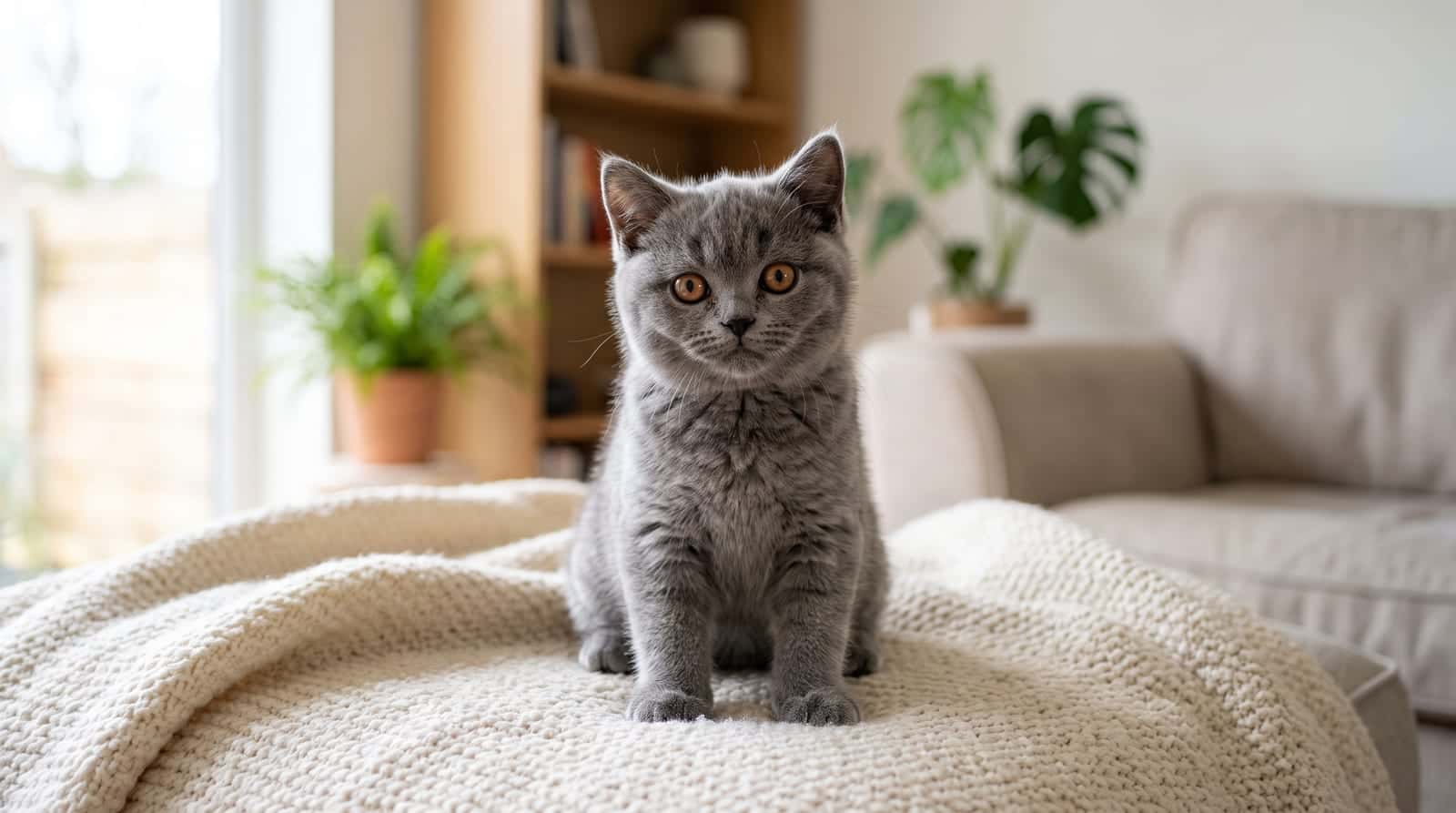
Know the three things sellers get wrong about this breed before you pay a deposit.
British Shorthair
British Shorthair
British Shorthair
British Shorthair
British Shorthair
British Shorthair
British Shorthair
British Shorthair
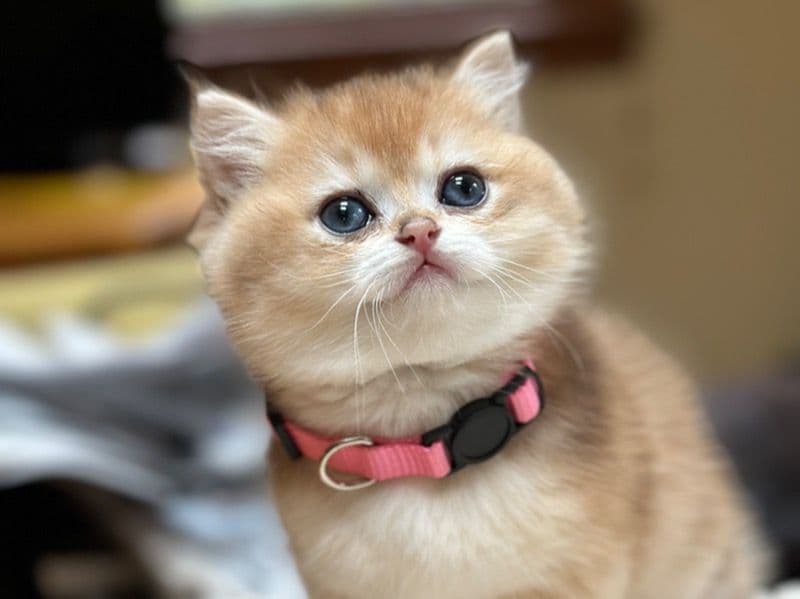
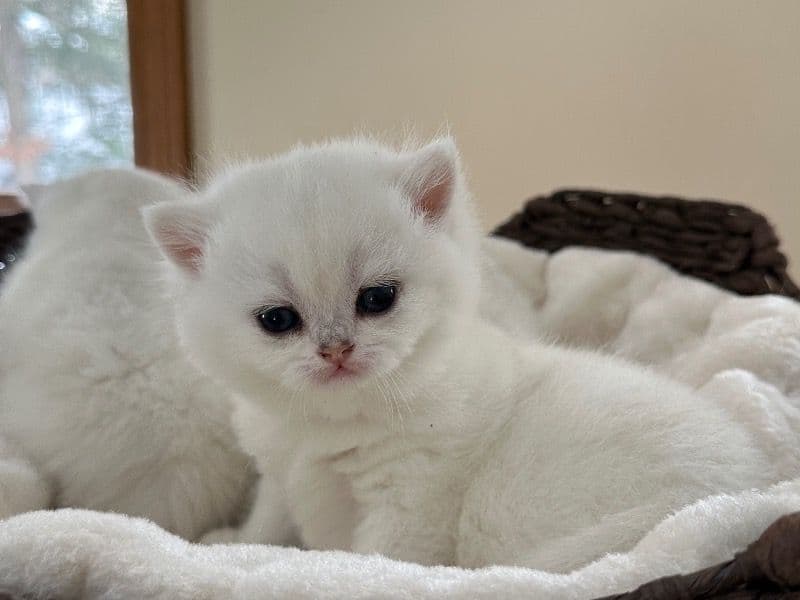
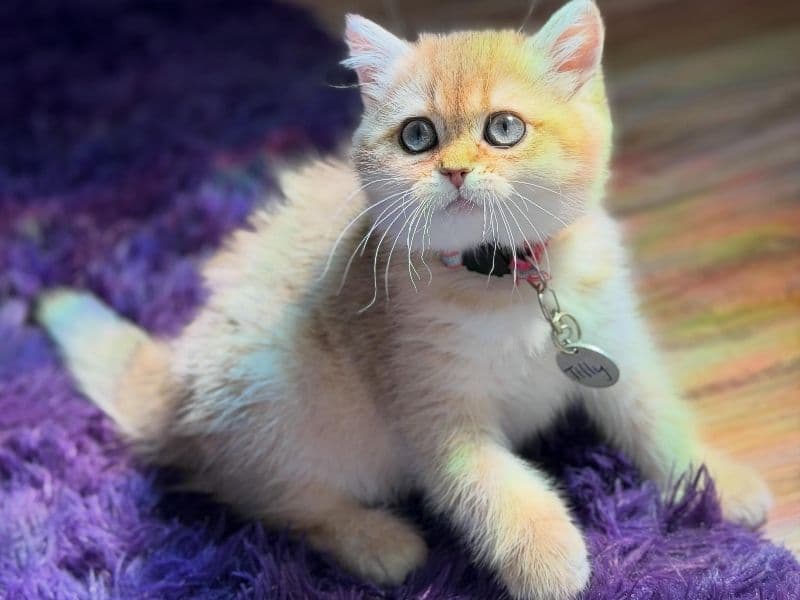
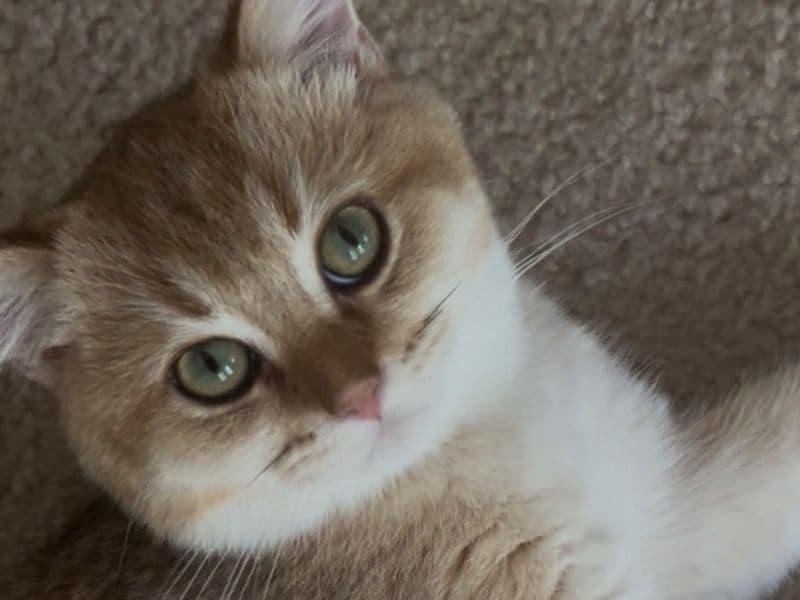
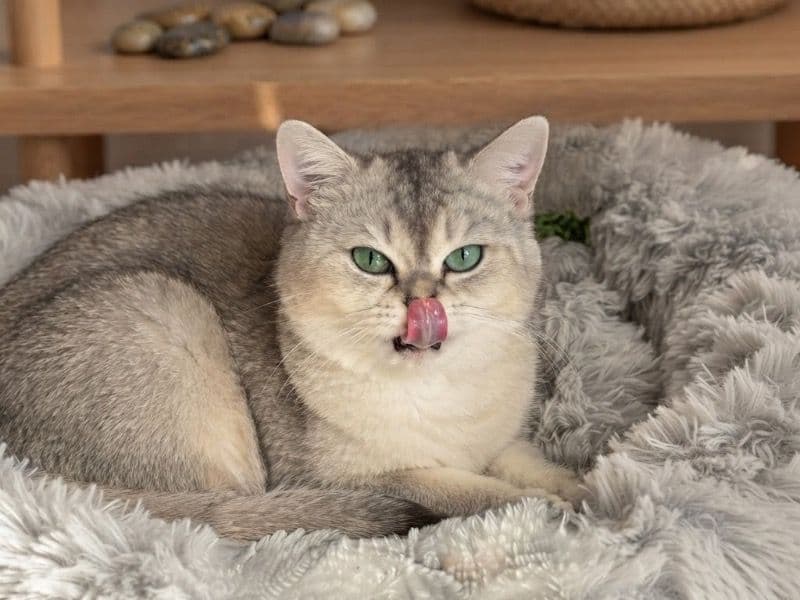
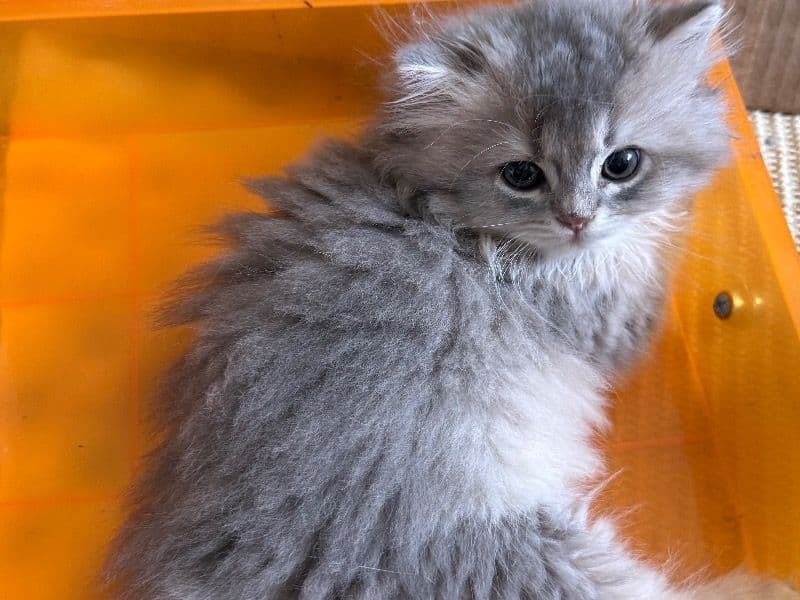
British Shorthair kittens for sale are easy to find and hard to judge. This is the most registered pedigree cat in Britain, so there is more of everything: more good breeders, more resellers, and more paperwork that looks official and proves nothing. Three checks separate a sound kitten from an expensive mistake. The kittens above are listed by their owners.
British Shorthair kittens at a glance
The quick version. Every number here is explained and sourced in the sections below.
Short answer
Nobody publishes survey-grade prices for this breed. UK breeder listings commonly ask £1,000 or more, and US asking prices are widely quoted from roughly $1,200 to $3,500. Those are advertised prices, not sale prices. Treat any cheap British Shorthair as a question rather than a bargain.
What the numbers actually are
Why the spread is so wide. Cat adverts carry asking prices, not sale prices, and the same breed name covers very different animals. One listing is a registered kitten from health-tested parents with papers. The next is an unregistered cat of British Shorthair type, an older cat, or a rehoming advert. A registered pedigree kitten from a tested line is not a £500 cat, so a low price is a prompt to ask what the paperwork actually says.
Where our evidence stops
We are not going to print a precise US price. Every figure available traces to breeder and insurer marketing rather than survey data, so treat any exact number, including ours, as an asking price and not a market rate.
What the standard rewards is not what the market rewards. In the self-colour scale of points published by the GCCF (Governing Council of the Cat Fancy, Britain’s main cat registry), coat texture and length score 25 while colour scores 15.[5] A judge cares more about how the coat feels than what shade it is. A rare colour costs more because fewer people breed it, not because the cat is a better one. Blue is the breed’s foundation colour, and a cheap blue is not an inferior cat.
Budget past the kitten. The PDSA puts the minimum cost of keeping a cat at about £79 a month, and £11,400 to £13,600 across a lifetime.[4] That covers food, litter, insurance, vaccination and neutering. It does not cover treating an illness or an injury, which is the bill that actually hurts.
If the budget is the sticking point, two routes cost less. One is an adult cat already past the kitten stage, so see British Shorthair adoption. The other is a domestic shorthair kitten, which costs a fraction of any pedigree.
Short answer
Usually not. The breed’s own US registry advises owners to teach children that these cats "are not fond of being carried around". Research across 19 breeds found British Shorthairs the least active and the least likely to seek contact with people. They are calm and tolerant rather than cuddly, and they sit near you rather than on you.
The CFA (Cat Fanciers’ Association, a US pedigree cat registry) is unusually direct about this. Its breed page tells owners that these cats "are not fond of being carried around". It says the breed "will wait for an invitation to sit on the couch beside you rather than jumping into your lap". These cats also "enjoy supervising you from a nearby distance".[1] A registry has every reason to sell its own breed. It published that anyway.
A behaviour study of 5,726 cats across 19 breed groups arrived at the same place from a completely different direction. British Shorthairs were the least active breed measured, and they had the highest probability of decreased contact with people.[6] That is two sources, using two different methods, reaching one answer.
The part that must travel with it
Low contact-seeking is not unfriendliness. The same study put British Shorthairs among the least aggressive breeds, both toward strangers and toward other cats.[6] Put the two findings together and you get an undemanding cat. It follows you from room to room, settles nearby, tolerates handling without asking for it, and rarely causes trouble.
A good fit for
A poor fit for
Set on a cat that wants your lap? The Ragdoll was bred for exactly that, and it is a fairer choice than hoping a British Shorthair changes.
Short answer
Ask for a normal PKD result, for the kitten or for both its parents, which UK breeders have needed for active registration since March 2025. Ask for the parents’ heart scans too. Be careful with heart paperwork. There is no DNA test for heart disease in this breed, so an "HCM DNA clear" certificate for a British Shorthair tested mutations that do not occur in it.
The paperwork, and what each piece is worth
PKD result (polycystic kidney disease, inherited cysts that slowly destroy the kidneys)
The parents' heart scans (an echocardiogram, an ultrasound scan of the heart)
An "HCM DNA clear" certificate (hypertrophic cardiomyopathy, a thickening of the heart muscle)
ALPS result (autoimmune lymphoproliferative syndrome, an inherited immune disease that kills kittens from about 6 weeks old)
Hearing test (BAER) (a test that measures how the brainstem responds to sound)
Registration certificate
Active or non-active register
The certificate trap
Labs sell feline heart DNA panels, and some sellers hand a British Shorthair buyer an "HCM DNA clear" result. This is usually not fraud. It is the wrong test. A31P and R820W are Maine Coon and Ragdoll mutations. An ACVIM (American College of Veterinary Internal Medicine) consensus panel says testing them in other breeds "is not recommended", because they are almost entirely specific to those two breeds.[8] A 2022 study genotyped more than 11,000 cats, including 395 British Shorthairs. Neither variant turned up in the breed.[9]
The risk itself is real, which is exactly why the wrong test matters. Among 329 British Shorthairs screened for heart disease, 8.5% were positive overall. Split by sex, 20.4% of the males were positive against 2.1% of the females, and the median age at diagnosis was 2.7 years.[10] That is one male in five, diagnosed young. The screen that finds it is an echocardiogram, not a swab.[8]
The nose question no buyer guide asks. GCCF lists "pronounced nose stop, snub nose, narrow nose leather or reduced nasal aperture" among the withholding faults for the breed.[5] A withholding fault means a judge gives the cat no award at all. A flatter face is a fault, not a feature. A seller marketing an extreme flat-faced British Shorthair as premium is selling away from the standard, and toward a cat that may struggle to breathe.
Pet scam reports to the Better Business Bureau ran to 680 in 2022, jumped to 2,899 in 2023, then fell to 2,278 in 2024. Median reported losses drifted down across the same years, from $750 to $680.[11] That 21% fall in 2024 is the first time the BBB’s own figures have pointed downward. Do not read it as safe. Only about 4.8% of mass-market fraud victims report it, so the real volume is far higher.[11] More than half of pet scams start on a website found through a search engine or social media.[11]
What changed in 2026
The FTC warned in June 2026 that scammers now steal and manipulate pet images and videos, and build listings around AI-generated animals that were never born.[12] A photo proves nothing on its own any more. Keep running the reverse image search, because the FTC still recommends it and it still catches recycled ads.[12] Then add the check that AI has not beaten yet: a live video call with the kitten and its mother in the same frame.
Green flags
Red flags
In England the strongest check is legal, not personal. Lucy’s Law banned commercial third-party sale of puppies and kittens under six months from 6 April 2020. Third-party sale means selling an animal you did not breed, so you now buy from the breeder or you adopt.[14] Licensed breeders have to show the animal with its mother in the place it was born.[14] Asking to see mother and kitten together is not rude. It is the law doing its job.
There is a gap in that law worth knowing. The 2018 licensing regulations list dog breeding as a licensable activity, with no equivalent entry for cats.[14] A British Shorthair breeder in England therefore faces less scrutiny than a dog breeder selling the same number of animals. The paperwork you ask for is doing work the state is not.
US buyers have a short legal backstop. Twenty-two states have pet purchaser protection laws, often called puppy lemon laws, and many of them cover cats as well as dogs.[15] They typically give you a refund, an exchange or veterinary costs back if the animal turns out to be ill. The window is tight, running from about seven days in Vermont to 21 days in Illinois.[15] Check your own state before you pay.
The same patterns repeat across species and price brackets. There is more detail in how pet scams work.
Short answer
Yes. British Blue is the solid grey-blue colour of the British Shorthair, not a separate breed. It is the colour most people picture and roughly half of registrations are solid colours. The breed also comes in black, white, cream, chocolate, lilac, tortie, silver, tabby and colourpoint.
GCCF calls the British Blue "the flagship" of the breed, and notes that almost half of all registrations are self colours, meaning one solid colour right down to the roots.[16] The CFA says these cats were first registered in the US as "British Blues" and are now seen in many colours.[1] So the name is history rather than a separate pedigree.
British Longhair is a different breed. GCCF registers it separately, with its own registration policy, and 413 were registered in 2025 against 5,873 British Shorthairs.[2] The long coat traces back to the Persian outcrossing that rebuilt the breed after the wars. One line matters if a seller shows you a fluffy kitten. GCCF states that "genetically shorthaired British with fluffy coats are not British Longhairs and will not be registered as such".[16] A fluffy British Shorthair is a coat fault, not a rarity, and the standard lists an over-long coat in an adult as a withholding fault.[5]
Short answer
Shorter than most listings claim. UK veterinary records give British cats a life expectancy at birth of 9.58 years, against 11.74 years for UK cats overall. Figures of 15 to 20 years are marketing, not data. Weight is the part you control, and nearly half of this breed carries too much.
The number comes from VetCompass, a research programme built on the clinical records of cats seen in UK general practice. Life expectancy at birth was 9.58 years for British cats, with a 95% confidence interval of 8.73 to 10.43 built on 194 deaths. All UK cats averaged 11.74 years, crossbreds 11.89, Persians 10.93 and Ragdolls 10.31.[18]
Two caveats, said plainly
First, that record group covers British Blue and British Longhair together, so it is not a British Shorthair-only figure.[18] Second, it is life expectancy at birth among cats under veterinary care, so it counts kittens and young cats that died early. It is not the age a healthy adult reaches. Plenty of British Shorthairs live well past it.
Weight is the part you control. Among 2,540 Australian British Shorthairs, 47.7% of the adults were overweight or obese. Their mean body condition score was 5.8 on a 1 to 9 scale, where 5 is ideal.[19] Body condition score is a hands-on check of how much fat a cat is carrying. The breed runs 1.35 times more likely to be overweight than other cats. New Zealand records put the figure at 36% and Swedish records at 65%.[19]
The chain behind that is easy to follow. This is the least active breed measured.[6] Neutering lowers a cat’s daily energy needs. An indoor cat moves less again. So measure the food rather than filling the bowl, and ask for the cat to be weighed at every vet visit.
The coat, honestly. The CFA standard asks for a coat that is "short, very dense" and specifically "not double coated or woolly".[1] GCCF asks for short, dense and crisp, and says a soft coat lacking density is undesirable.[5] A weekly comb is genuinely enough. Matting is not normal on a correct coat. When it appears, look for an over-long coat, a cat too heavy to groom its own back end, or illness. The breed also takes 3 to 5 years to reach full maturity, and the coat thickens across those years.[1]
Fact-checked against the CFA, the GCCF, the FTC, the Better Business Bureau, and the VetCompass programme. Prices here are advertised asking prices and move with the market.
Twelve questions worth answering before you pay a deposit
No survey-grade price data exists for this breed. UK breeder listings commonly ask £1,000 or more, and US asking prices are widely quoted from roughly $1,200 to $3,500. Every one of those figures is an asking price taken from listings rather than a recorded sale, so treat it as a guide and not a market rate.
Usually not. The Cat Fanciers' Association tells owners that these cats are not fond of being carried around. Its breed page says they wait for an invitation to sit beside you rather than jumping into your lap. They are calm and tolerant instead of cuddly. Most will settle near you for hours and object to being picked up.
Yes. British Blue is the solid grey-blue colour of the British Shorthair, not a separate breed. The GCCF calls it the flagship of the breed, and almost half of all registrations are self colours, meaning one solid colour to the roots. The breed also comes in black, white, cream, chocolate, lilac, tortie, silver, tabby and colourpoint.
Thirteen weeks. The GCCF advises that no kitten goes to a new home before then, and that the full vaccination course finishes at least seven days earlier. A seller offering an eight-week kitten is either inexperienced or moving stock quickly. Waiting the extra weeks costs you nothing and protects the kitten.
Yes, if the kitten is on the active register. Since 1 March 2025 the GCCF has required a normal PKD result for active registration, and that result can come from the kitten itself or from both its parents. PKD is polycystic kidney disease, an inherited condition where cysts slowly destroy the kidneys. Ask to see the certificate rather than accepting a verbal assurance.
No. The two feline heart mutations sold on DNA panels, A31P and R820W, were found in Maine Coons and Ragdolls. A veterinary cardiology consensus panel says testing them in other breeds is not recommended. An HCM DNA clear certificate for a British Shorthair tested mutations the breed does not carry. Ask for the parents heart scans instead.
UK veterinary records give British cats a life expectancy at birth of 9.58 years, against 11.74 years for UK cats overall. That record group covers British Blue and British Longhair together, and it counts cats that died young. Figures of 15 to 20 years come from content sites rather than from data.
They shed all year, with heavier moults as the seasons turn. The coat is short and very dense, and the CFA standard says it should not be double coated or woolly. A comb once a week is enough for most cats. Matting is not normal on a correct coat and usually points to weight or illness.
Generally yes. The CFA calls the breed extremely patient and says they do well with children, while noting that they may withdraw during periods of loud activity. A study of 5,726 cats also put British Shorthairs among the least aggressive breeds. Teach children to stroke the cat rather than carry it.
Insist on a live video call with the kitten and its mother in the same shot, then pay by credit card. The FTC warned in June 2026 that scammers now use AI-generated pet images and video, so a photo proves nothing on its own. Anyone who demands a gift card, a payment app, a wire transfer or cryptocurrency is a scammer.
A Scottish Straight is a straight-eared kitten from Scottish Fold breeding. The British Shorthair is an allowable outcross for the Fold, so the two look alike and often come from the same breeder. They are different breeds on paper. If a seller breeds both, ask which registry the kitten is registered with and under what breed name.
Usually, and their temperament is the reason. This is a calm, low-aggression breed that walks away from trouble rather than escalating it. Introduce the two slowly, give the cat high places the dog cannot reach, and feed them apart. An undemanding cat and a settled dog tend to work out well.
Real stories from cat owners who found perfect homes on Petmeetly
We’ve had wonderful experiences and great success finding the perfect mate for Salem Dexter. I’m very happy with the site and the safe, supportive interactions with potential mates

Autem Glover
California, US
We were successful in finding a mate. The platform has been great. Wishing there were more cats options. Seems it hasn’t changed since we’ve been on.
Betsy Aird
California, US
Nothing more to add — the platform is great, and I found it very helpful for my needs
Zaeem
Ontario, CA
Discover kittens and cats for sale from various breeds and find your perfect feline companion
576+ British Shorthairs are on Petmeetly. Join free and message the owners directly.
Get started on PetmeetlyNo card required to sign up.