PetmeetlyPetmeetly
Find a match
Dog Breeders & Stud Dogs
Dogs For Sale
Dogs For Adoption
Cat Breeders & Stud Cats
Cats For Sale
Cats For Adoption
Rabbit Breeders
Rabbits For Sale
Rabbits For Adoption
Small Pet Breeders
Small Pets For Sale
Small Pets For Adoption
How It Works
Pet Blogs
Testimonials
About Us
Find a match

Dogs & Puppies

Dog Breeders & Stud DogsDogs For SaleDogs For Adoption

Cats & Kittens

Cat Breeders & Stud CatsCats For SaleCats For Adoption

Rabbits

Rabbit BreedersRabbits For SaleRabbits For Adoption

Small Pets

Small Pet BreedersSmall Pets For SaleSmall Pets For Adoption

Resources

How It WorksPet BlogsTestimonialsAbout Us
Find a MatchSign In
Petmeetly

Your platform for finding the perfect pet companion. Connect with pet owners and discover loving pets looking for homes.

App StoreGoogle Play

Quick Links

  • Home
  • How It Works
  • About Us
  • Editorial Team & Reviewers
  • Blog
  • Privacy Policy
  • Trust & Safety

Dogs

  • Dog Breeders
  • Dogs for Adoption
  • Dogs for Sale

Cats

  • Cat Breeders
  • Cats for Adoption
  • Cats for Sale

Rabbits

  • Rabbit Breeders
  • Rabbits for Adoption
  • Rabbits for Sale

Small Pets

  • Small Pet Breeders
  • Small Pets for Adoption
  • Small Pets for Sale

© 2026 Petmeetly. All rights reserved.

PrivacyTerms
Adult silver classic tabby American Shorthair cat sitting upright on a linen armchair in a sunlit living room
563+ American Shorthair cats on Petmeetly

American Shorthair Cat Breeding

Whether you can breed the cat you own comes down to two dates in the CFA rulebook.

Find a breeding matchCheck if your cat qualifies
  1. Home
  2. /
  3. Cat Breeding
  4. /
  5. American Shorthair

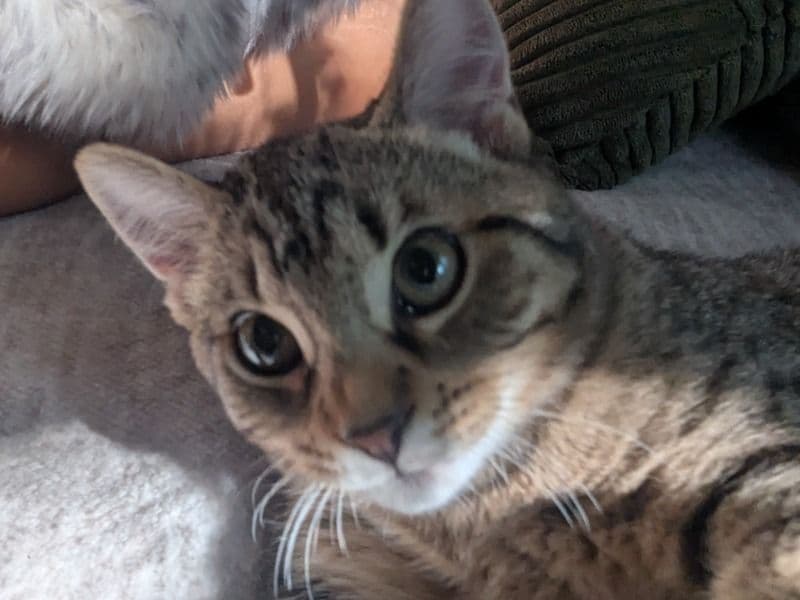
American Shorthair cats available for breeding

Cattuccino - American Shorthair | Petmeetly

Cattuccino

American Shorthair

1 year 3 months old,female
Fulton County, Georgia, US
Vaccinated
View Listing
Leo - American Shorthair | Petmeetly

Leo

American Shorthair

1 year old,male
Fort Worth, Texas, US
View Listing
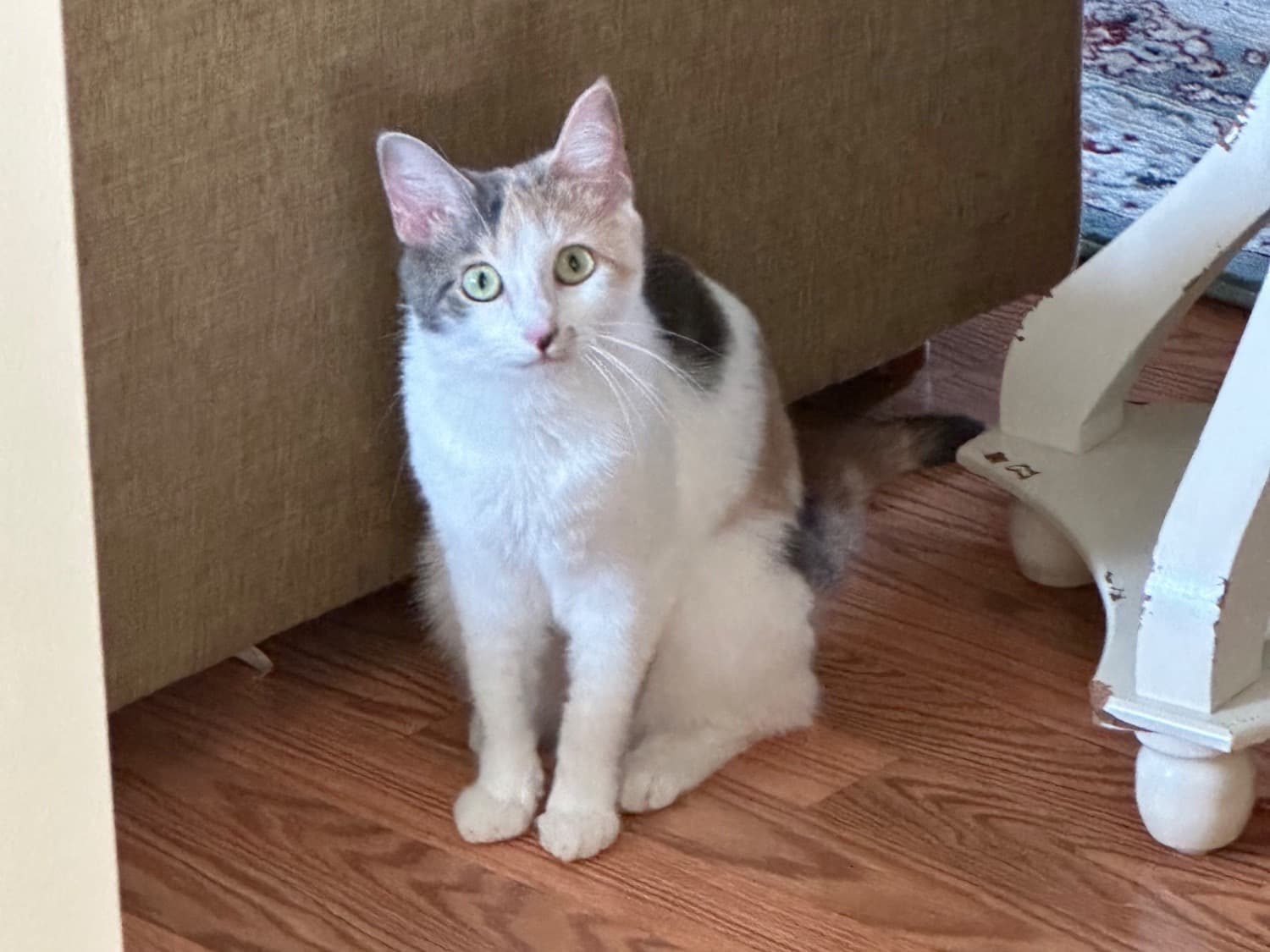
Dusty - American Shorthair | Petmeetly

Dusty

American Shorthair

4 years old,female
Fort Worth, Texas, US
Vaccinated
View Listing
Shadow - American Shorthair | Petmeetly

Shadow

American Shorthair mix

1 year 2 months old,female
Geneva, Ohio, US
View Listing
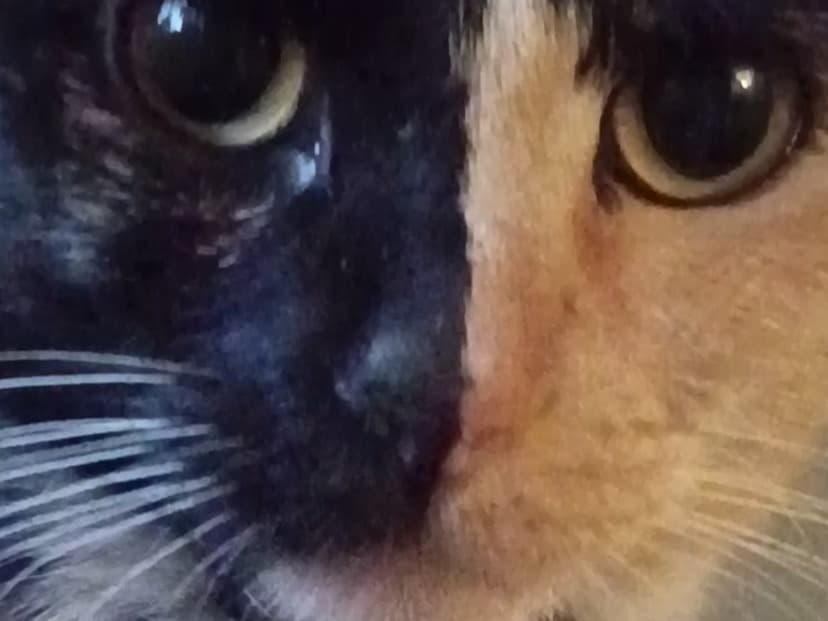
Cleo - American Shorthair | Petmeetly

Cleo

American Shorthair

1 year old,female
Troutdale, Oregon, US
Vaccinated
View Listing
Binx - American Shorthair | Petmeetly

Binx

American Shorthair

1 year old,female
Freeland, Michigan, US
View Listing
Grit - American Shorthair | Petmeetly

Grit

American Shorthair

2 years 9 months old,male
Beverly Hills, California, US
View Listing
luna - American Shorthair | Petmeetly

luna

American Shorthair

1 year old,female
Hagerstown, Maryland, US
VaccinatedDNA Tested
View Listing
See every American Shorthair cat

American Shorthair cat breeding starts with a question that sounds odd until you open the rulebook: is your cat actually one? The registry accepts no outcrosses, has required both parents to be registered since 1985, and checks five generations back. One narrow route in still exists. The cats above are American Shorthairs whose owners are looking for a match.

Can this cat be registered as an American Shorthair?

  • Both parents are registered American ShorthairsRequired
  • A five-generation pedigree is availableRequired
  • Any lilac colouring, anywhere in the pedigreeBlocks it
  • Any chocolate colouring, anywhere in the pedigreeBlocks it
  • Long hair, a curly coat, or a wavy coatBlocks it
  • Pointed pattern, meaning colour only on the face, ears, legs and tailBlocks it
  • Spotted tabby markingsBlocks it
  • None of the above apply, but the cat has no papers at allBreed Council route

Read the blocking rows carefully. CFA applies them to every cat in the background, not only to the cat being registered. A chocolate great-grandparent blocks a cat that is not chocolate itself.[1]

Can you breed the American Shorthair you already own?

Short answer

Only if both of its parents are registered American Shorthairs. The Cat Fanciers’ Association closed that door on 1 May 1985. Before that date, cats with unknown or unregistered parents could be entered. Since then they cannot, and the breed accepts no outcrosses to any other breed.

The rule is written plainly in the breed’s own registration document. CFA records that from 1 May 1985, “both parents must be registered. Unknown or unregistered parents no longer accepted.”[1] The same document lists the allowable outcross breeds for the American Shorthair as none. An outcross is a mating to a cat of a different breed, and most pedigree cat breeds permit at least one. This one permits zero.

Two things follow, and they surprise people. You cannot create a registerable American Shorthair by mating two cats that happen to look like the breed standard. You also cannot improve your line by borrowing a British Shorthair, which comes up often because the two breeds look related in photographs. On paper they are kept entirely separate.

This matters more here than for most breeds because the American Shorthair is genuinely popular. It sits ninth on the CFA’s latest published list of most-registered breeds.[3] Sellers attach a popular name loosely, and a great many cats sold or listed as American Shorthairs are ordinary short-haired cats with no registered ancestry.

That is not an insult to the cat. It is a statement about paperwork, and it decides one thing: whether a litter can be registered. If your cat has no registered parents, the page you actually need is breeding a domestic shorthair, which covers the same cat without the pedigree. If you would rather buy a registered cat than breed the one you have, start with American Shorthair kittens for sale.

How do you register a street cat as an American Shorthair?

Short answer

There is a route, and almost nobody knows it exists. Since 15 February 1986 CFA has allowed a street cat to be registered with a special form and the Breed Council’s approval. It is a case-by-case decision made by people who know the breed, not a form you file and forget.

The breed note reads: “Effective 2/15/86 it would be possible to register a street cat with special form and Breed Council OK. Contact Breed Council Secretary for specific requirements.”[1] A Breed Council is the group of active breeders CFA recognises as the authority on a single breed.

The door exists because of where the breed came from. American Shorthairs descend from working cats that arrived with early settlers and earned their keep controlling rodents. CFA recognised them in 1906, and they were shown as “Domestic Shorthairs” until 1965. The name changed that year to separate them from the ordinary short-haired cats they had been drawn from.[2] CFA built this breed out of street cats, and it kept one narrow way for street cats to come back in.

Be realistic about it. CFA publishes no public criteria for approval, no timeline, and no success rate. The rules document says only to contact the Breed Council Secretary. This is a discretionary decision by a committee of breeders, and it is not a routine path.

That matters if you are buying. A seller who says their unregistered cat “can be registered” is describing a committee decision that has not happened yet. Ask to see the papers that exist today, not the ones that might.

Find a registered American Shorthair match

What does a closed gene pool cost this breed?

Short answer

Less than you would expect, so far. In the largest genetic survey of cat breeds, American Shorthairs carried more genetic variety than the average pedigree cat, though still less than a random-bred one. The catch is that the breed has no way to bring in new blood if that changes.

A 2008 survey compared 22 cat breeds against random-bred cat populations on five continents.[4] The measure it used is heterozygosity, which is how much genetic variety the average cat in a population carries. Higher is healthier.

American Shorthair genetic diversity, against the benchmarks

  • American Shorthair0.57 observed heterozygosityMeasured across 13 cats, the only breed-level sample that exists
  • Pedigree breeds, average0.51 observed heterozygosityAcross the 22 breeds surveyed
  • Random-bred cats, average0.65 observed heterozygosityAcross 17 populations on five continents

So this breed sits above the pedigree average and below an ordinary moggy. That is a better result than you might expect from a closed studbook, the official register of cats that belong to a breed. Treat it as a signal rather than a settled figure, because the survey covered only thirteen American Shorthairs. Thirteen cats is a thin basis for a claim about a whole breed, and it is the only breed-level measurement that exists.

The part that should shape your decisions is not the number. It is the structure. A breed with no permitted outcross cannot import variety later if a problem emerges. Every future generation has to come from cats already inside the studbook. That is an argument for keeping matings as unrelated as you can manage now, while the numbers are still good, rather than after they are not.

Does the American Shorthair have a heart problem?

Short answer

Two respected sources disagree, and the reason is worth knowing. Cornell lists the American Shorthair among breeds prone to heart muscle disease. The 2020 veterinary cardiology consensus does not. Both are reading the same thin evidence, because nobody has published a study measuring how common it is in this breed.

The condition in question is hypertrophic cardiomyopathy, a thickening of the heart muscle wall. It is the commonest heart disease in cats of every kind. The question here is only whether this breed carries more of it than average.

Where the two authorities land

  • Cornell Feline Health CenterYes, lists the American Shorthair among ten predisposed breeds
  • ACVIM 2020 consensus guidelinesNo, its list of eight does not include the breedThe eight: Maine Coon, Ragdoll, British Shorthair, Persian, Bengal, Sphynx, Norwegian Forest Cat, Birman

Neither is wrong. They are answering slightly different questions. Cornell includes breeds with any reported family history[5], while the consensus panel keeps to a narrower list tied to stronger evidence.[6] A reader who saw only one of them would think the matter was settled.

The concern traces back to cases reported decades ago. CFA, the breed’s own registry, puts it this way: “Hypertrophic cardiomyopathy was noted in some cats in the 1980s and 90s, but thanks to preventive testing and selective breeding, it has largely disappeared.”[2] Read that knowing who wrote it. No study has since measured how common the condition is in American Shorthairs, so nobody, including CFA, can point to a number.

You will find one anyway. A figure putting roughly a quarter of the breed at risk circulates across pet-care sites and insurance blogs. No published study supports it. It should not drive your breeding decisions, and neither should CFA’s reassurance.

One part of this is not in doubt, and you can act on it. There is no DNA test for this breed. The two validated feline heart gene tests screen mutations found in Maine Coons and Ragdolls, and the consensus panel says testing for them outside those breeds is not recommended.[6] A certificate citing those tests on an American Shorthair tested the wrong thing. An echocardiogram, an ultrasound scan of the heart, is the only tool that screens this breed, and no registry requires one.

So screen before you breed. The reason is not a frightening statistic. It is that the evidence base for this breed is thin. A scan is the only thing that would tell you, and nobody is going to make you do it.


What to check before you mate

Two of these are specific to the American Shorthair. The rest of the pre-mating workup is the same for any cat. Rather than repeat it here, read the domestic shorthair breeding page, which covers infectious disease screening, parasite treatment and vaccination timing.

  • Read the pedigree before you book the mating. The colours and coat types that block registration are a paperwork problem, and they surface five generations back. Finding a chocolate ancestor after the kittens arrive is an expensive way to learn this.[1]
  • Scan both hearts. Book an echocardiogram for both cats, for the reasons in the section above. Nobody mandates it for this breed, which is exactly why it gets skipped.
  • Confirm both registrations are current. Both parents must be registered for the litter to be registered, so check the stud owner’s paperwork rather than taking a photo of a certificate on trust.[1]

When should you not breed your American Shorthair?

Any one of these is a reason to stop and reconsider rather than press on.

  • The cat cannot be registered and pedigree kittens were the point. Unregistered kittens are good cats and will find homes. They will not sell as pedigree kittens, and pricing them as though they might is how buyers get misled.
  • Either cat has an abnormal heart scan. There is no registry rule to fall back on here, so the decision is yours alone.
  • A disqualifying colour, coat or pattern sits anywhere in the five-generation pedigree.
  • You have not costed the litter. The domestic shorthair breeding page sets out what a litter takes in time and money, and none of it gets cheaper because a cat has papers.

If the answer turns out to be no, that is a real outcome rather than a failure. An American Shorthair that never has a litter loses nothing, and an adult cat looking for a home is a better match for many households than a kitten. You can rehome or adopt an American Shorthair through the same platform.

Petmeetly connects owners to each other. If you do go ahead, the honest first step is confirming what you actually own, and the second is finding an owner who checks as carefully as you do.

American Shorthair Breeding FAQ

01

Can I breed my American Shorthair if it does not have papers?

You can mate the cat, but the kittens cannot be registered as American Shorthairs. The Cat Fanciers’ Association has required both parents to be registered since 1 May 1985. Kittens from an unregistered cat are domestic shorthairs, which is a description of a cat rather than a breed.

02

What is the difference between an American Shorthair and a domestic shorthair?

Paperwork, and a closed gene pool behind it. An American Shorthair is a registered pedigree cat with five generations of recorded ancestry. A domestic shorthair is any short-haired cat of mixed or unknown ancestry. The two can look identical, and many cats sold as American Shorthairs are domestic shorthairs.

03

How far back does CFA check a pedigree?

Five generations. The registration rules set a five-generation pedigree requirement for this breed. The disqualifying colours and coat types apply to every cat in that pedigree, not only to the cat being registered.

04

Can an American Shorthair be bred to a British Shorthair?

Not if you want registered kittens. The CFA registration rules list no allowable outcross breeds for the American Shorthair, so any mating outside the breed produces kittens that cannot be registered. The two breeds look related in photographs and are kept separate on paper.

05

Why can a chocolate or lilac cat not be registered?

Those colours sit outside the breed’s accepted range, and CFA refuses them anywhere in the background. A cat that is not chocolate itself can still be refused if a chocolate ancestor appears in its five-generation pedigree.

06

Can a spotted tabby be registered as an American Shorthair?

No. Spotted tabby markings appear on the CFA list of patterns that are not accepted for this breed, alongside pointed patterns and any chocolate or lilac colouring. Silver tabby and brown tabby are both on the accepted list.

07

What happens if a disqualifying colour appears in the fifth generation?

It still blocks registration. CFA applies the do-not-accept list to cats in the background, not only to the cat in front of you. The pedigree requirement for this breed runs to five generations. Check the whole pedigree before you plan a mating, not just the parents.

08

Do American Shorthairs need heart screening before breeding?

No registry requires it, and it is still worth doing. Two authoritative sources disagree about whether this breed is prone to heart muscle disease. Cornell lists it among predisposed breeds and the 2020 veterinary cardiology consensus does not. Nobody has published a study measuring how common it is here.

09

Is there a DNA test for heart disease in American Shorthairs?

No. The two validated feline heart gene tests screen mutations found in Maine Coons and Ragdolls. A certificate citing those tests tells you nothing about an American Shorthair. An echocardiogram, an ultrasound scan of the heart, is the only tool that screens this breed.

10

Does a closed studbook mean the breed is inbred?

Not on the evidence so far. The largest genetic survey of cat breeds found American Shorthairs carrying more genetic variety than the average pedigree breed, though less than random-bred cats. That survey covered only thirteen cats, so treat it as a signal rather than a settled figure.

11

How long do American Shorthairs live?

No study has measured life expectancy for this breed. Figures of fifteen to twenty years circulate widely with no source behind them. The nearest real data is a UK study putting cat life expectancy at 11.7 years from birth, with pedigree cats living over 1.5 years less than crossbred cats.

12

When should I spay or neuter instead of breeding?

When the cat cannot be registered and pedigree kittens were the point, when either cat has an abnormal heart scan, or when a disqualifying colour sits anywhere in five generations. Unregistered kittens are good cats, and they will not sell as pedigree kittens.

Sources

  1. Cat Fanciers' Association, American Shorthair rules of registration
  2. Cat Fanciers' Association, American Shorthair breed profile
  3. Cat Fanciers' Association, most popular breeds announcement
  4. Lipinski et al. (2008), Genomics, genetic evaluation of cat breeds worldwide
  5. Cornell Feline Health Center, hypertrophic cardiomyopathy
  6. ACVIM (2020) consensus statement on feline cardiomyopathy classification
  7. Royal Veterinary College VetCompass, cat life expectancy research; Teng et al. (2024), J Feline Med Surg, life tables for UK cats
ByPetmeetly Editorial Team•Published August 7, 2026

Fact-checked against the CFA registration rules, the ACVIM, the Cornell Feline Health Center, the VetCompass programme, and peer-reviewed genetic research.

Success Stories
from American Shorthair Owners

Real stories from cat owners who found perfect breeding matches on Petmeetly

We liked being able to connect and meet with the parents of the queen.

M

Melisa

Washington, US

Victor was an amazing match, and his owner was super helpful and accommodating!

H

Hannah

Washington, US

We were successful in finding a mate. The platform has been great. Wishing there were more cats options. Seems it hasn’t changed since we’ve been on.

BA

Betsy Aird

California, US

Read More Success Stories

Explore Popular Cat Breeds

Discover breeding guides for different cat breeds and find the perfect match for your breeding program

Bengal BreedingBritish Shorthair BreedingDomestic Shorthair BreedingMaine Coon BreedingPersian BreedingRagdoll BreedingScottish Fold BreedingSiamese BreedingTabby Breeding50+ breeds more

Find an American Shorthair breeding partner

563+ American Shorthair cats are on Petmeetly. Find a mate whose owner checks the pedigree as carefully as you do.

Find an American Shorthair mate

No card required to sign up.