01
Are most cats listed as American Shorthairs actually the breed?
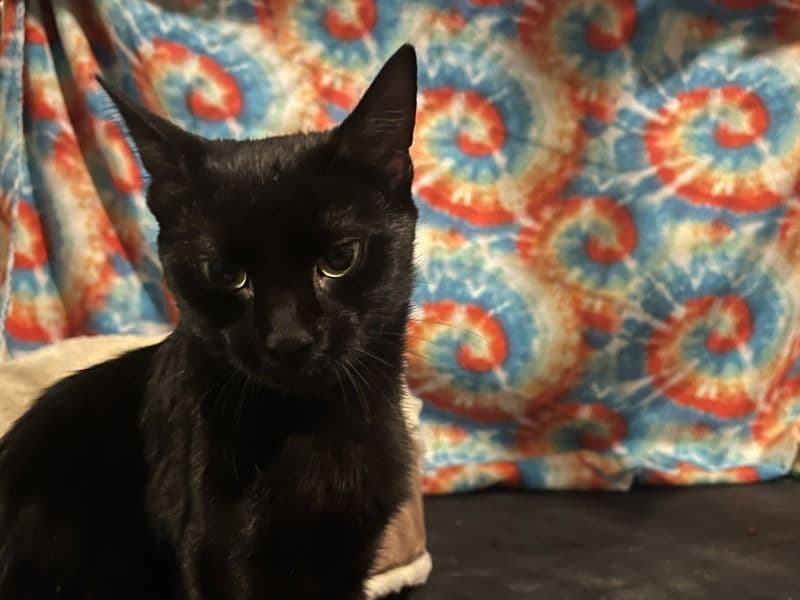
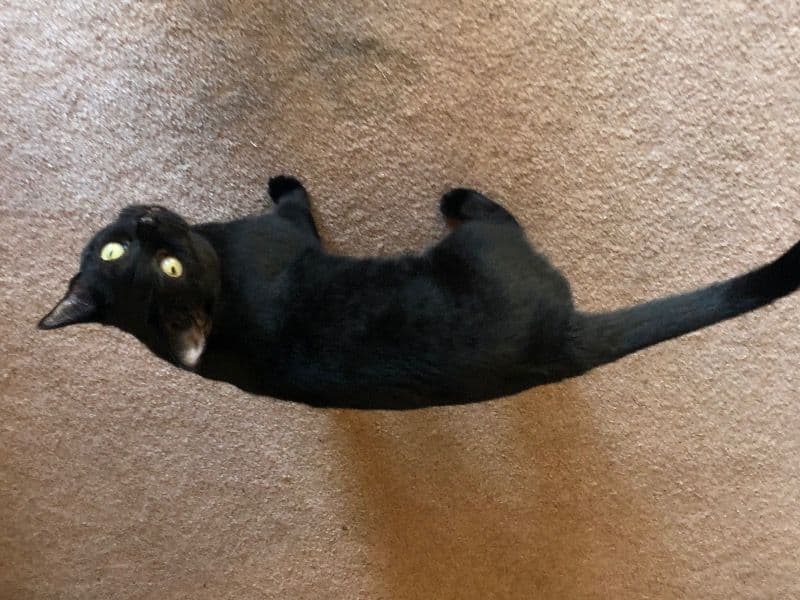
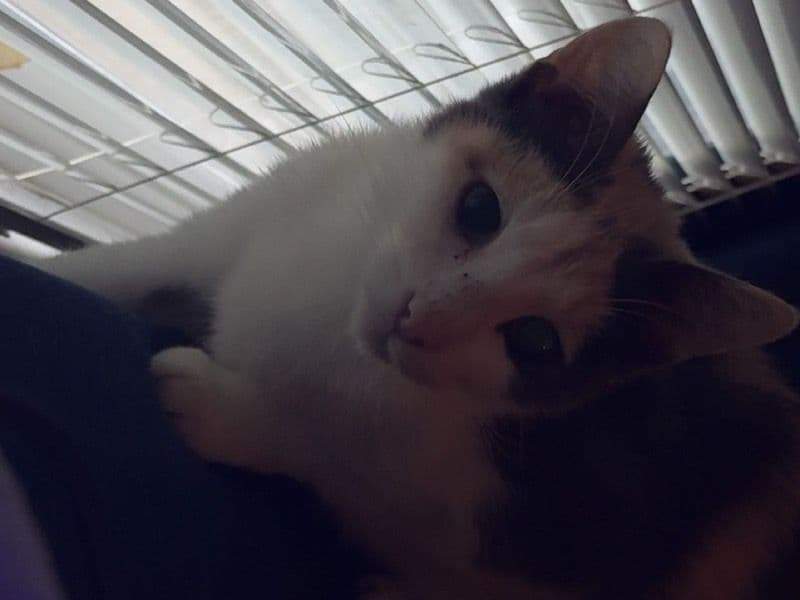
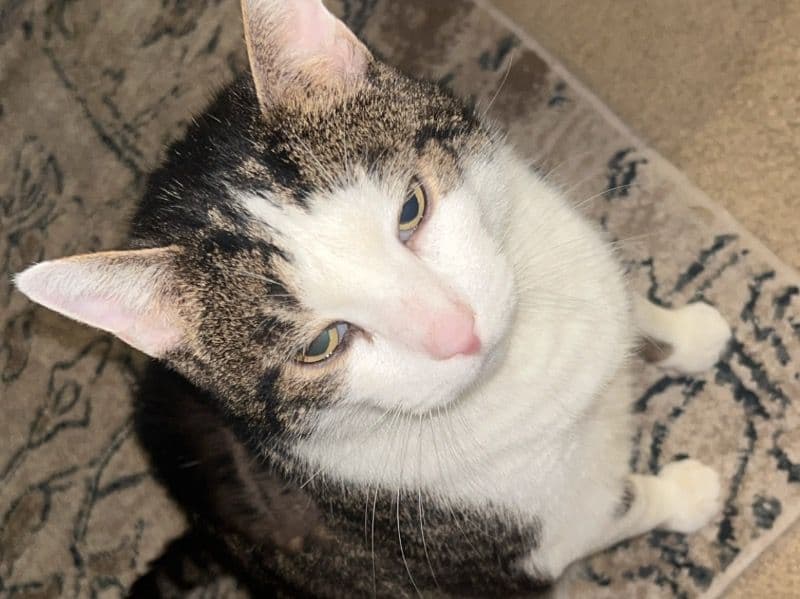
Usually not. Rehoming listings inherit whatever the last owner or a vet record called the cat, and this is the most commonly misapplied breed name in the United States. A registered American Shorthair needs both parents registered and a five-generation pedigree, and that paperwork rarely travels with a rehomed adult.
02
Does it matter if the cat is not really an American Shorthair?
Far less than it would with a kitten. A breed label is a prediction about the adult a kitten will grow into. The cat you are meeting has already grown into it. You can see its size, coat and temperament for yourself, so the label has very little left to tell you.
03
What is the difference between an American Shorthair and a domestic shorthair?
An American Shorthair is a registered pedigree cat with five generations of recorded ancestry. A domestic shorthair is any short-haired cat of mixed or unknown ancestry. The two often look identical, because the breed was developed from ordinary American street cats.
04
Should I adopt an adult cat or buy a kitten?
If size and temperament matter to you, an adult answers both questions before you commit, where a kitten is a prediction. Adults are also usually past the destructive stage and are often already neutered and litter trained.
05
What should I ask the current owner?
Ask what the cat does rather than what it is. How does it react when someone knocks at the door? Where does it sleep? Has it lived with children or a dog? What does it do when it is unhappy, and why is it being rehomed? Specific questions get specific answers.
06
Will an adult cat bond with a new person?
Yes, though the first few days tell you very little. A cat that hides at first is behaving normally rather than rejecting you. Give it a small quiet room, let it come out on its own terms, and judge the relationship in weeks rather than days.
07
Do adopted cats come with papers?
Rarely. Registration paperwork usually stays with the original buyer and does not follow the cat. If the current owner says papers exist, ask to see them. Remember that a registration certificate records ancestry and says nothing about the cat’s health.
08
What health checks should I ask for?
Vet records and the name of the practice, vaccination and worming history, neutering status, dental condition, and any ongoing medication. Arrange your own vet check soon after the cat arrives, whatever you were told beforehand.
09
Do American Shorthairs need heart screening?
There is no DNA test for heart disease in this breed, and the two validated feline tests apply to Maine Coons and Ragdolls only. Authorities disagree about whether the breed is predisposed at all. Cornell lists it and the 2020 veterinary cardiology consensus does not. If the cat is older or has a murmur on record, an echocardiogram is the only tool.
10
How long do American Shorthairs live?
No study has measured life expectancy for this breed. Figures of fifteen to twenty years circulate with no source behind them. The nearest real data is a UK study putting cat life expectancy at 11.7 years from birth, with pedigree cats living over 1.5 years less than crossbred cats.
11
What is a fair rehoming fee?
There is no published benchmark, and the fee is set by the current owner rather than by any standard. It usually reflects recent vet costs rather than the cat’s value. Ask what it covers, and treat a fee that looks like a sale price as a reason to ask more questions.
12
Can I rehome my own American Shorthair through Petmeetly?
Yes. Petmeetly is built for owner-to-owner rehoming, so you choose who takes your cat rather than handing that decision to an institution. List the cat, describe it honestly, and talk to the people who get in touch.