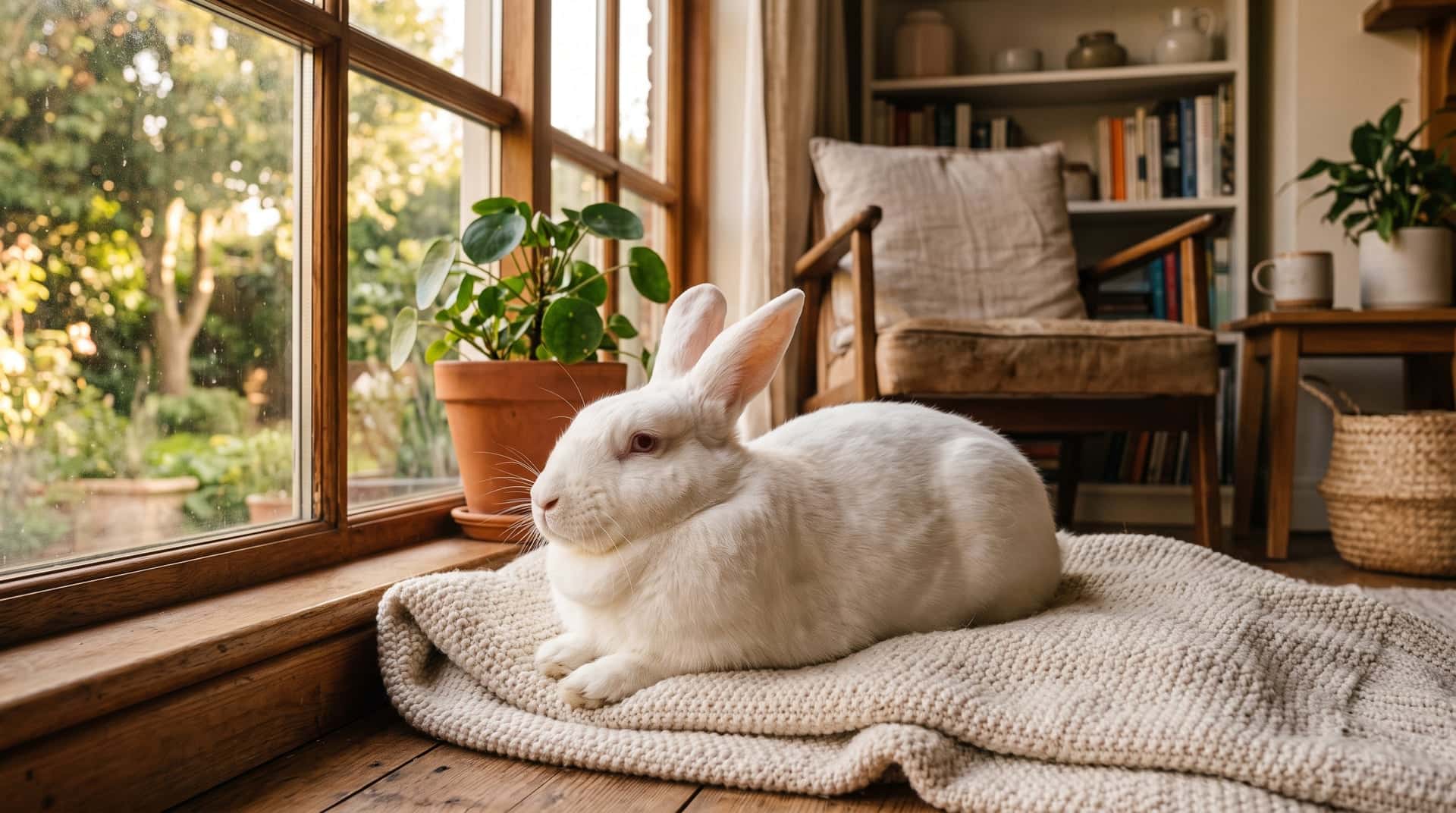
Adopt an adult New Zealand from an owner near you and meet the calm ten-pound rabbit most people scroll past.
New Zealand

New Zealand
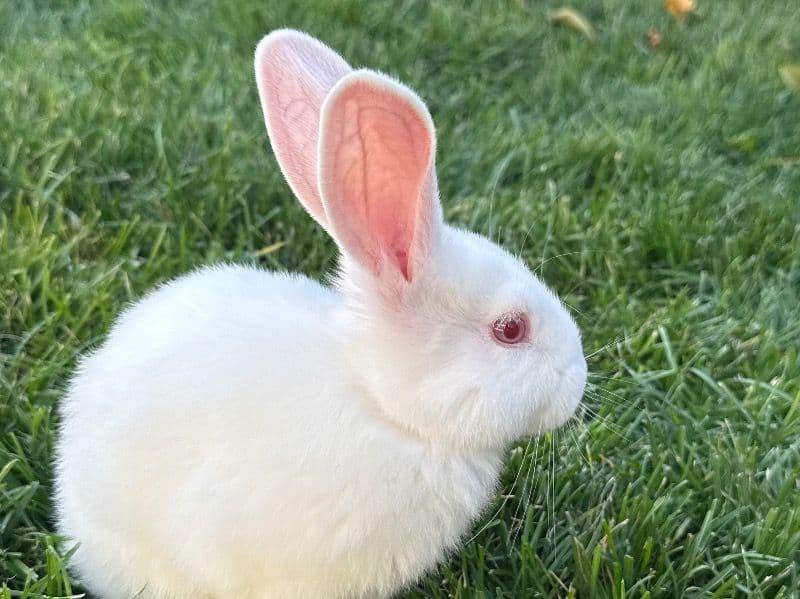
New Zealand rabbit adoption in the US mostly means one thing: a big white rabbit with ruby eyes, rehomed by an owner, waiting longer than it should. The eyes are simple albinism, the temperament is gentle by a century of selection, and the adults above are the proof. Here is what adopting one involves.
One quick note if your search took a detour: the breed is American despite the name. Results about rescues in the country New Zealand are the map talking, not the rabbit. The listings above are US owners rehoming their own animals.
Short answer
Rescues say it plainly: red-eyed white rabbits are the ones adopters skip. Best Friends Animal Society writes that albino rabbits are “sometimes skipped over for adoption because not everyone finds red-eyed bunnies irresistible,” and a House Rabbit Network volunteer reports most callers ask for a dwarf or a Holland Lop instead. The rabbit is not the problem.
The record on this is unusually direct. Best Friends wrote in 2019 that albino rabbits get skipped over for their eyes.[1] Five years earlier, the same organization told the story of Norah, a white New Zealand found injured by a road. Rabbits like her, it noted, “are adopted less frequently than their black counterparts because of their red eye color.” Norah herself went from hiding in a box to greeting visitors from on top of it.[2]
The House Rabbit Network’s essay on the breed goes further: “most people don’t even want to meet the big white rabbits with the red eyes.” Overloaded shelters sending transfer rabbits are sometimes asked not to send the whites, because they are unlikely to be adopted. One named rabbit, Lightning, waited six months at a Boston shelter. Nearly every caller with a breed in mind, the essay adds, wants a dwarf or a Holland Lop.[3] A rabbit rescue completes the picture with the why: horror films taught people to read red eyes as sinister. That rescue notes many rescue groups call them “the golden retrievers of the bunny world.”[4]
On a peer-to-peer platform, that prejudice quietly works in your favor. The rabbit the rescues call overlooked is the one you can simply go and meet: a calm, known adult whose owner is waiting for one serious message.
Short answer
No. A white rabbit with red eyes is an albino: its iris is unpigmented and nearly transparent, so you are seeing the blood vessels behind it, according to a veterinary-reviewed ophthalmology explainer. Albino rabbits need no special care beyond shade from direct sun and harsh lighting. Red eyes on a COLORED rabbit are the medical sign.
Albinism means no melanin, the pigment that colors fur and eyes. Without it the iris, the colored ring of the eye, is still there but nearly transparent, so what you see through it is the red of the eye’s own blood vessels. That explanation comes from a guide reviewed by a veterinarian with an ophthalmology certification.[5] The same guide draws the line that matters: white fur with red eyes is albinism, while red or inflamed eyes on a colored rabbit can be a medical condition worth a vet visit.[5]
What albinism changes in practice is small and manageable. Albino rabbits are sensitive to bright light, so give shade outdoors, keep indoor lighting soft, and know that white ears can sunburn.[5] That is the whole list. There is no medicine to give and nothing to monitor that other rabbits do not also need.
Why is the signature New Zealand white at all? The House Rabbit Network essay states it without flinching: the breed was selectively bred toward albinism because laboratories wanted a standardized white rabbit for testing.[3] The eyes people flinch from are just part of the breed’s working history, and that same history built the temperament covered next.
Short answer
Mostly from owners whose circumstances changed, like every rehomed rabbit. This breed adds two pipelines of its own: retired laboratory rabbits, since New Zealand Whites are the standard research breed, and grown-up spring purchases from fair and Easter season. Rescues report post-Easter waves, though national intake data shows no clean statistical spike.
Start with the ordinary answer, because it is most of the truth. A good rabbit usually loses its home through the owner’s circumstances, a move, an allergy, a schedule, rather than through any fault of its own. That is the story behind most rabbit adoption listings, and on Petmeetly the previous owner hands you that history directly: the vet, the diet, the habits, and the reason.
The breed’s own pipeline is the laboratory. New Zealand Whites are the most common breed used in research,[6] and when studies end, some labs now release their rabbits instead of euthanizing them. The Animal Welfare Institute documented ten New Zealand White does rehomed through a small-animal rescue. The lab spayed and vaccinated them first, more than $3,000 of care, and handed over full medical records. The rescue described the does as “friendly, outgoing,” and “unusually curious and active.”[7] The Beagle Freedom Project’s rescued New Zealand Whites are “all very social,” placed in pairs or into homes with a resident rabbit.[8] An ex-lab adult has been handled by humans daily its whole life. What it needs from you is space, novelty, and time.
Then there is spring. This is the classic white Easter rabbit and the standard 4-H meat-pen breed, so outgrown spring purchases and finished project rabbits do reach rehoming. Ohio rescues told public radio that surrenders tick up after Easter and that their spaces fill.[9] Honesty requires the other half: a national shelter-data analysis found rabbit intake fairly consistent month to month, with no obvious Easter spike, and the viral claim that four out of five Easter rabbits are abandoned has no scientific basis.[10] Both things can be true. Individual rescues see waves; the national statistics do not show one. This page will not repeat the fake number, and you should distrust pages that do.
Short answer
Calm on purpose. For over a century, barns and laboratories kept the New Zealands that tolerated handling, so PetMD’s vet-reviewed page calls the breed docile, friendly, social, and easier to handle than smaller, more skittish rabbits. Adults weigh 9 to 12 pounds with does the heavier sex, and an adult’s size and personality are finished, visible facts.
The calm is not an accident of the individual; it is the breed’s job description. Laboratories prefer New Zealands for their docility,[6] and a century of production barns kept the does that raised litters calmly and tolerated daily handling. PetMD’s vet-reviewed page describes the result: friendly, social, outgoing personalities, easier to handle than the smaller skittish breeds.[11] The House Rabbit Network’s essay agrees from the rescue side: they share the calm, friendly disposition of other large rabbits, like the American, and many are outright personable.[3]
The adult also settles the size question a kit only gestures at. A New Zealand kit weighs around 4.5 pounds at eight weeks and roughly doubles from there,[12] finishing at 9 to 12 pounds with does the heavier sex.[6] The adult in front of you is done growing and done maturing. The Los Angeles Rabbit Foundation’s adoption guidance makes the same point: with an adult, the rabbit you meet is already the final version, and no surprise is coming later.[13]
Day to day, this is a floor-time companion rather than a cage animal. PetMD wants at least five hours a day outside the enclosure,[11] and a ten-pound rabbit loafing beside you on the rug is most of what ownership looks like. If you already have a rabbit, size is not the barrier people expect: a House Rabbit Network bonding guide reports pairs of 11-pound rabbits bonded with 3-pounders, and notes the smaller rabbit is often the boss.[14]
Short answer
Check the weight first: PetMD flags this breed as gaining weight easily, so feel for a defined waist over the hips. Then teeth, since rabbit teeth grow continuously, then inside the ears for crusting from ear mites, and glance at the footpads if the rabbit lived on wire. Ask the owner for history on all four.
Weight is the breed-specific check, because a century of meat-production genetics cuts both ways: PetMD notes these rabbits tend to gain weight easily.[11] Run a hand over the hips and feel for a defined waist rather than a shelf. Then ask the diet questions: which pellets, how much, and what treats. An overweight adult is fixable, but you want to know on day one rather than at the first vet visit.
The day-one check, in order
Then use the peer-to-peer advantage: the person handing you the rabbit knows its whole story. Ask about spay or neuter status, the vet used, the diet, the flooring history, how the rabbit takes to handling, and the honest reason for rehoming. With this breed, add one more: any barn or laboratory background. That history usually arrives with records rather than mystery, and an ex-lab spay certificate is worth real money at your vet.
Short answer
Scale everything up. PetMD’s formulas for this breed: unlimited hay as at least 80 percent of the diet, about a quarter cup of pellets per 4 to 5 pounds of body weight, and a cup of dark leafy greens per 2 to 3 pounds daily. For a full-grown adult, that means roughly three to five cups of greens.
The daily numbers for a 10-pound adult
Space scales too, and two published figures frame it. PetMD wants the enclosure at least four times the rabbit’s stretched-out length.[11] The UK’s Rabbit Welfare Association lists the New Zealand White in its giant-breed guidance. That guidance asks for room to take at least three consecutive hops in any direction, potentially 12 feet.[15] The practical reading: a store-bought small-breed cage is a hamster wheel for this rabbit. Think exercise pen or rabbit-proofed room, with the enclosure as the bedroom rather than the world.
Handling is the other big-rabbit difference. The same welfare guidance is blunt: big rabbits should be handled only when necessary, from the floor, with the spine supported at all times. A badly held rabbit can kick hard enough to hurt you both.[15] Sit down, let the rabbit come to you, and save carrying for the vet crate. Keep bedding deep and soft and check the feet as part of ordinary grooming.[15]
The commitment is measured in years, and one honest number covers it: PetMD puts the breed’s average lifespan at 5 to 8 years, longer when spayed or neutered and housed indoors.[11] Adopting an adult means those years arrive with known habits, a settled personality, and often a completed spay and a vet file. That is the quiet economics of adoption: the previous owner already paid for the expensive unknowns.
Buy one honestly rather than settling. Our page on New Zealand rabbits for sale covers the real prices, $25 to $65 at working barns, how to read a seller, and how to spot the lookalike crosses sold under the name.
Just carry one fact over from this page: the adult above shows you everything a kit makes you guess about. The finished size, the settled temperament, the health history, and the eyes that turned out to be nothing at all.
On cost, the comparison favors adoption either way. Rescue fees typically run about $100 to $150 with the spay or neuter included; Indiana’s House Rabbit Society, for example, charges $100 for a single rabbit and $175 for a bonded pair.[16]Owner-to-owner rehoming fees vary and are often lower, and the vet history comes handed over rather than reconstructed.
Sources
Fact-checked against Best Friends Animal Society, the House Rabbit Network, PetMD, the Animal Welfare Institute, and the Rabbit Welfare Association and Fund.
What adopters ask before taking on the big white rabbit with the ruby eyes
The red eyes. Best Friends Animal Society writes that albino rabbits are sometimes skipped over because not everyone finds red-eyed bunnies irresistible. House Rabbit Network volunteers report that most callers ask for a dwarf or a Holland Lop instead. The wait has nothing to do with the rabbit itself; it is a cosmetic prejudice.
Not on a white rabbit. White fur with red eyes is albinism: the iris is unpigmented and nearly transparent, so you are seeing the blood vessels behind it. Red or inflamed eyes on a colored rabbit are the medical sign worth a vet visit.
Only light management. A vet-reviewed guide advises keeping albino rabbits out of direct sunlight and keeping indoor lighting soft; their white ears can also sunburn. Otherwise they need nothing that other rabbits do not also need.
Nine to 12 pounds, and does are the heavier sex: senior does run 10 to 12 pounds against 9 to 11 for bucks. An adult you adopt is done growing, so what you see is what you keep.
Yes, and on purpose. PetMD calls the breed docile, friendly, social, and easier to handle than smaller, more skittish rabbits. Barns and laboratories spent a century keeping the calmest animals, and that selection is what you adopt.
PetMD puts the breed at an average of 5 to 8 years, or longer if spayed or neutered and housed indoors. Adopting an adult means the remaining years come with known habits, and often a completed spay and a vet file.
Weight first: this breed gains weight easily, so feel for a defined waist over the hips. Then the teeth, since rabbit teeth grow continuously, the ears for crusting from ear mites, and a glance at the footpads if the rabbit lived on wire flooring. Ask the owner about all four.
Scale the standard formulas up. PetMD recommends unlimited hay as at least 80 percent of the diet. Pellets run about a quarter cup per 4 to 5 pounds of body weight, plus a cup of dark leafy greens per 2 to 3 pounds daily. For a 10-pound adult that works out to roughly half a cup of pellets and 3 to 5 cups of greens.
More than a store cage. PetMD wants an enclosure at least four times the rabbit stretched out. Giant-breed welfare guidance that covers the New Zealand White asks for room to take three consecutive hops in any direction, potentially 12 feet. Think pen or room, not cage.
Yes. New Zealand Whites are the standard laboratory rabbit, and some labs now release rabbits to rescues when studies end, often already spayed, vaccinated, and used to daily human handling. One documented group of ten arrived with full medical records and were described as friendly, outgoing, and unusually curious.
Size is not the barrier people expect. A House Rabbit Network bonding guide reports pairs of 11-pound rabbits bonded with 3-pounders, and notes the smaller rabbit is often the aggressor. Bond gradually on neutral ground, the same as any pair.
Rescue adoption fees typically run about $100 to $150 and include the spay or neuter. Owner-to-owner rehoming fees vary and are often lower, and the previous owner hands you the vet history directly. Either route costs far less than the first vet bills would on an unknown rabbit.
Find loving rabbits of various breeds waiting for their forever homes
Message the owner directly, hear the rabbit’s real story, and give the overlooked white rabbit the second look it earned.
No card required to sign up.