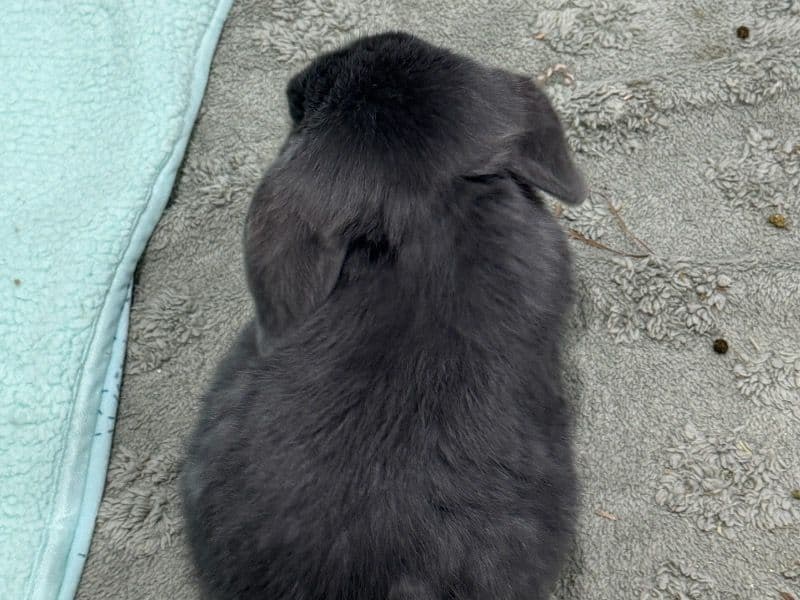
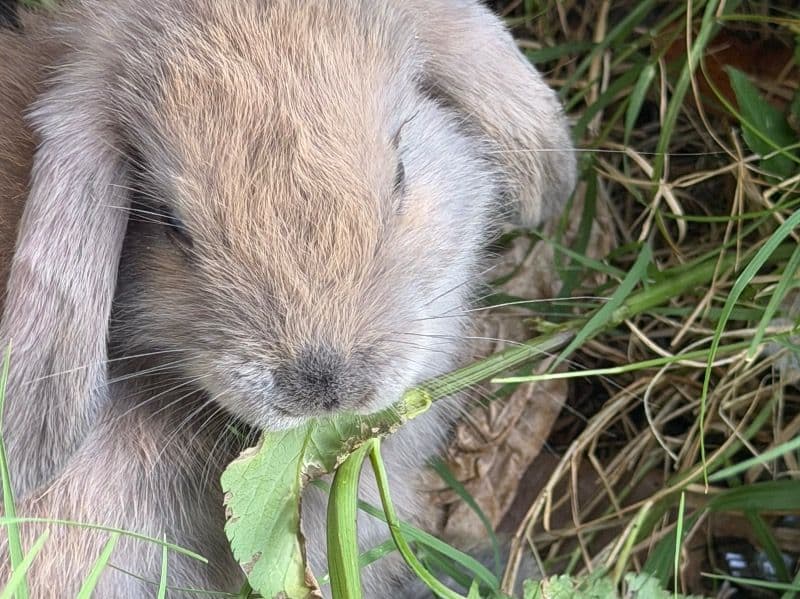
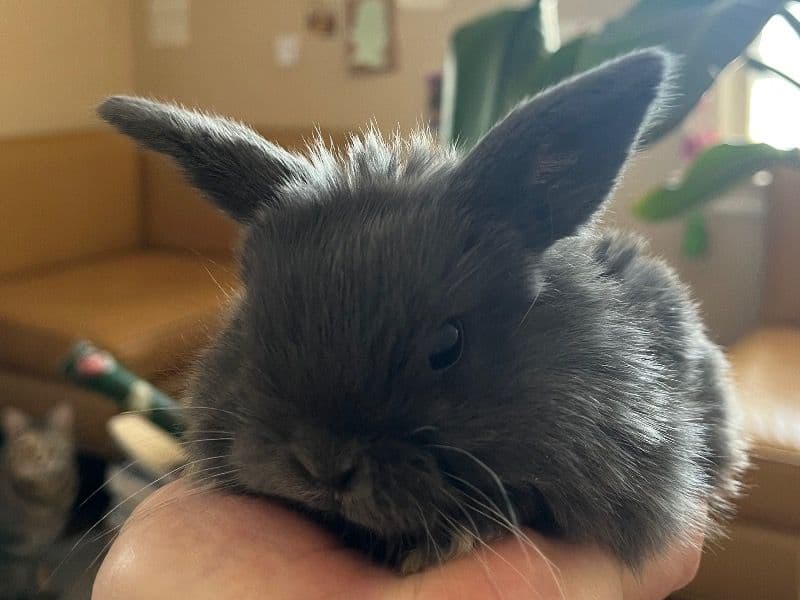
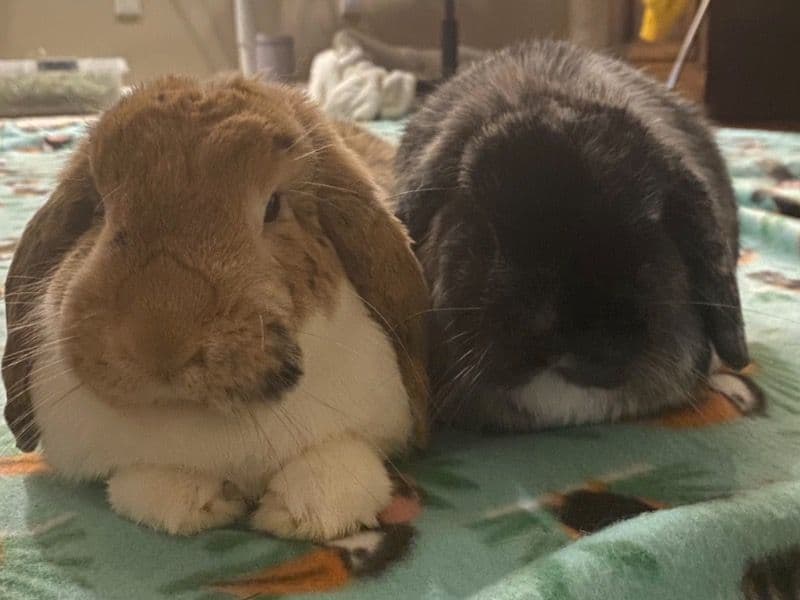
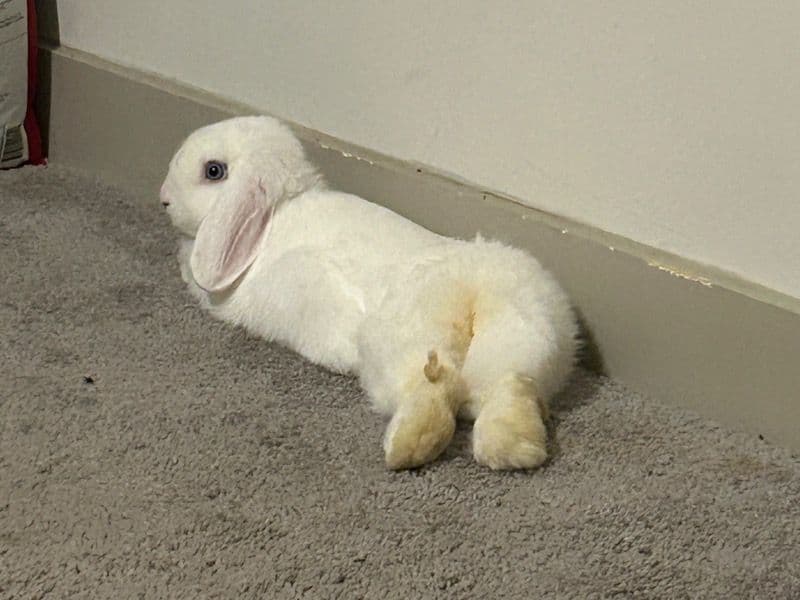
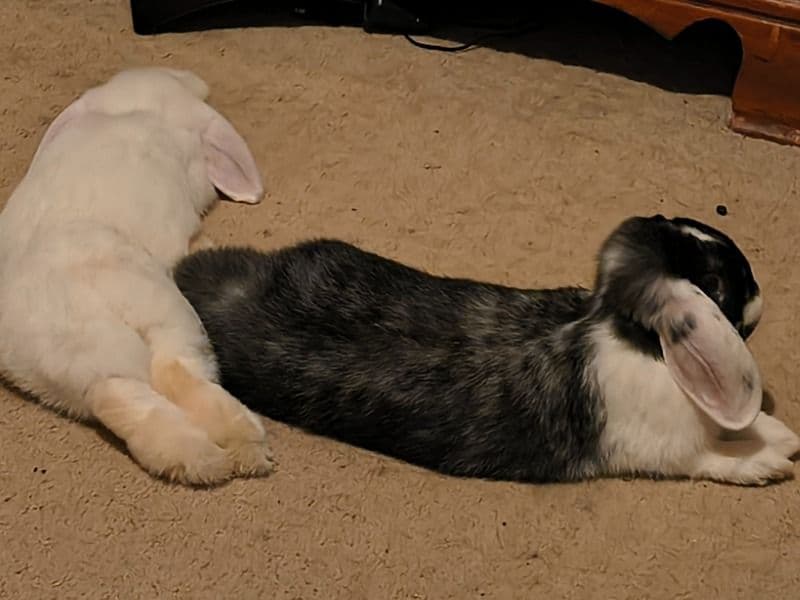
Holland Lop adoption usually means meeting an owner, not visiting a shelter. Holland Lops are one of America’s most popular pet rabbit breeds, so they show up in rehoming listings regularly. They are often litter trained, often already fixed, and always come with a history someone can actually tell you. The rabbits above are looking for new homes now.
Why do Holland Lops end up needing new homes?
Short answer
Almost always because of the owner’s circumstances, not the rabbit’s behavior. In the one regional study that counted, more than three quarters of shelter rabbits were surrendered by their owners, and the top reasons were not enough time, housing rules, and too many rabbits. A rehomed Holland Lop is rarely a problem rabbit.
Faunalytics, a group that publishes animal welfare research, summarized a study of four shelters in Massachusetts and Rhode Island. More than three quarters of the rabbits arriving there had been handed in by their owners.[1] The most common reason had nothing to do with the rabbit. It was the owner not being able to keep up the care, or losing interest in it.[1]
A published summary of the same paper breaks it down. About 27% of owners could not manage the care or had stopped wanting to, 22% hit housing or landlord rules, and 22% had too many rabbits.[1] Allergies come up too, and the hay is often as much to blame as the rabbit.
The same dataset carries a harder number. About one in four rabbits did not leave those shelters alive, with a live release rate of 75.54%.[1] That is the plainest argument there is for an owner finding the next home directly, before a shelter is ever involved.
Easter is the season everyone brings up. Some rescues do report more rabbits being given up in the weeks after it, though that evidence is anecdotal rather than counted.[2] You will also see a claim that four out of five Easter rabbits are abandoned or die within a year. Animal welfare fact-checkers went looking for the study behind it and found none, which is why this page does not repeat the number.[2]
How to read the reason in a listing. A landlord who changed the rules tells you nothing about the rabbit. It tells you the owner ran out of options and wants the next home to be a good one. Treat that line as information, not as a warning label.
Is adopting an adult Holland Lop better than buying a baby?
Short answer
For most first-time owners, yes. An adult’s size and personality are known, adults are easier to litter-train than babies, and many rehomed rabbits arrive already spayed or neutered with their setup included. Buying a kit means adding a $200 to $600 surgery, vaccinations, and equipment on top of the purchase price.
A kit, which is a baby rabbit, is a forecast. Holland Lops are a dwarf breed, so a kit that fits in your palm at eight weeks can finish anywhere from 2 to 5 lb. Personality is the bigger unknown. A House Rabbit Society chapter puts it well: adult rabbits are what they seem to be, and they do not turn into someone else later on.[3]
Litter habits are the everyday version of the same advantage. The House Rabbit Society is blunt about it, saying older rabbits are easier to train than younger ones, especially babies.[4] With an adult you are not training a rabbit from scratch. You are taking on one that already knows.
Most rehomed adults are already spayed or neutered, and that matters more than it sounds. Fixed rabbits are more likely to learn proper litter habits, while unfixed ones start marking territory once they reach puberty at three to six months.[4] Spaying also removes a serious risk. The House Rabbit Society warns that almost all unspayed females older than four show uterine changes or tumors.[5]
Here is the arithmetic, in the order you actually pay it.
What each route costs you
Cost of buying a Holland Lop kit compared with adopting a rehomed adult
Surgery quotes vary widely by region. A House Rabbit Society chapter in Missouri puts experienced rabbit vets at $250 to $500.[7] RHDV2 is a fast-fatal rabbit virus that has been spreading in the United States since March 2020. The course is two doses 21 days apart, then a booster every year, and the House Rabbit Society strongly recommends it.[8]
If your heart is set on raising a baby, that is a fair choice, and it is the only way to shape a rabbit’s handling from week one. Our guide to Holland Lops for sale near you covers fair prices and how to tell a careful seller from a careless one.
What should you ask the current owner before adopting?
Short answer
Ask for the rabbit’s age, spay or neuter status, vet history, RHDV2 vaccination record, exact food, and litter habits, and ask why they are rehoming. An owner who answers easily and asks about your home in return is exactly the kind of rehoming you want.
Rehoming is a conversation, not a transaction. The House Rabbit Society tells owners to screen adopters with questions of their own, including whether you already have a rabbit-savvy vet, meaning one who treats rabbits regularly.[9] Expect to be asked. The owner who asks you nothing is the one to worry about.
Ten questions before you say yes
How old is the rabbit, and where did it come from? A pet shop rabbit and a breeder’s rabbit tend to have very different histories.
Is it spayed or neutered? Ask for the vet and the date, rather than taking a yes on trust.
What does the vet history look like? Ask whether there is a rabbit-savvy vet on record.
Is there an RHDV2 record? Ask for the last booster date. The course is two doses, then a booster every year.[8]
Which pellets and which hay? Get the exact brands. You will need both for the first fortnight.
How are the litter habits, honestly? “Good, but misses when the box is full” is more useful than “perfect”.
How is it with children and other pets? Ask what actually happened, not what the owner expects.
Has it lived indoors or outdoors? An outdoor rabbit moving inside needs a slower first week.
Does the enclosure come along? It often does, and it changes what the rehoming really costs you.
Is this rabbit bonded to another rabbit? A bonded pair is two rabbits who live as a couple, and the Rabbit Welfare Association says never to split them.[10]
Take notes, and write down the vet’s name. A rabbit with a written history is worth more than a rabbit with a good photo.
What a fair rehoming fee looks like, and why free is dangerous
A modest fee is normal, and it protects the rabbit. The House Rabbit Society tells owners to charge one, so the person collecting the rabbit “isn’t looking for a free meal for their snake”.[9] On private rehoming listings you will usually see something around $25 to $75. Adoption listings often run $25 to $100.[6] No official national figure exists; those are simply the ranges you will see on real listings.
Why free to a good home is the red flag. Free rabbits attract people looking for snake food, bait and quick resale. The Rabbit Welfare Association tells owners never to advertise a rabbit that way, because of what has happened to rabbits given away like that.[10] A small fee is the cheapest filter there is.
Ask what the fee includes, because it usually covers a great deal more than the rabbit.
What usually comes with the rabbit
The pen or enclosure, and the litter box
The hay, pellets and litter already in use
Bowls, hides, tunnels and toys
Vet records and vaccination dates
A $60 fee with a $150 pen attached costs you less than a free rabbit with nothing.
On Petmeetly the fee conversation happens directly between you and the owner. There is no middleman setting a price, and no markup on the listing.
How do you settle a rehomed Holland Lop into your home?
Short answer
Set up a quiet room, keep the routine identical for the first two weeks, and keep the rabbit on the exact food it came with. Most rabbits settle within a week or two. Change the diet slowly over 10 days or more, because sudden food switches can shut a rabbit’s gut down.
Keep the first week boring. Give the rabbit one quiet room, or a pen in a low-traffic corner, and let the rabbit come out to you instead of reaching in. Expect some territorial droppings even from a rabbit that was perfectly litter trained before. The House Rabbit Society says a move sets off exactly that, and that the habits return as the rabbit gets used to the place.[4]
The first two weeks
1Before the rabbit arrives. Set the pen up in a quiet room, with a hide to bolt into and the litter box well away from the food and water.
2Days 1 to 7. Same food, same routine, same room. Sit on the floor and read a book. Handling can wait.
3Days 7 to 14. Once the rabbit is eating well and using the box, open up more space. Keep everything else identical.
4Week three onward. Book the first checkup with a rabbit-savvy vet, take the vaccination record along, and only then start a food change if you want one.
Ask the owner for a bag of the pellets and the hay the rabbit is already eating, and keep feeding both. Moving is a stress by itself, so this is not the week to change anything else. If you want to switch brands later, mix the new food in a little at a time. The PDSA advises taking two to four weeks over it, and warns that a sudden switch is stressful enough to stop a rabbit eating.[11]
The one emergency to learn on day one. GI stasis is the gut slowing down and stopping. A rabbit that stops eating or stops passing droppings for 12 hours needs a vet, and the House Rabbit Society says to treat 12 hours or more as an emergency.[12] Rabbits hide illness well, so the litter box is your early warning system. Look in it every day.
Make a weekly ear check part of the routine from day one. Lop ears fold over the canal and trap wax. A Royal Veterinary College study of rescue rabbits found lop-eared rabbits had narrowed ear canals and pain responses far more often than erect-eared rabbits.[13] PetMD recommends weekly ear cleaning for the same reason.[14]
Can you bond an adopted Holland Lop with your current rabbit?
Short answer
Yes, and rabbits are happier in pairs, but bonding is a weeks-long process, not an introduction. Both rabbits must be spayed or neutered first. Start with enclosures side by side, then short meetings in neutral space. Most pairs bond within two weeks to two months. Never rush the first meeting.
Both rabbits need to be fixed before you start. Hormones drive most of the fighting, and the House Rabbit Society calls spaying and neutering the first step that lets rabbits form close bonds without the aggression of mating.[15] Neutral space matters for the same reason. In a room neither rabbit has claimed, there is nothing to defend.
The bonding sequence
1Pens side by side. Set them close enough to see and smell each other through wire, with no contact.[16] Take this stage slowly, and only move on once both rabbits look relaxed near the divider.[17]
2Swap their smells. Trade litter trays between the pens, or rub a cloth over one rabbit and then the other.[16]
3Meet on neutral ground. Use a space neither rabbit has lived in. Scatter distractions, two of everything, and stay in the room the whole time.[16]
4Build up slowly. Keep early sessions short and add time day by day. Separate at the first sign of tension and try again tomorrow.[16]
The PDSA says the whole process can take as little as a day or as long as several months, depending on the rabbits.[17]
Ask the owner whether this rabbit has lived with another rabbit before. A rabbit that has been bonded once usually settles into a new pairing more easily. If the rabbit you like is already half of a bonded pair, take both. Splitting a bonded pair is the one thing every welfare group agrees you should never do.[10]
2 to 4 lb. Bigger “false dwarf” Hollands, which did not inherit the dwarfing gene, reach about 5 lb
Space
A permanent pen rather than a hutch, plus several hours of run time a day[18]
Diet
Unlimited grass hay, a small measured pellet ration, and daily leafy greens[18]
Grooming
Brush once or twice a week, daily during a molt. Nails every one to two months[14]
Health rhythm
Weekly ear checks, a yearly vet visit with the RHDV2 booster, and a daily look at the droppings
Kids
Best with children about 9 and up, supervised. Rabbits startle easily and dislike being carried[14]
Rabbits ask for more than most people expect on the day they bring one home. That gap is how a lot of the rabbits on this page lost their first home. Reading this table before you message an owner is the whole point of it.
Holland Lops are not the only lops in the listings. Mini Lops are bigger than Holland Lops despite the name, and Netherland Dwarfs are smaller. Both turn up in rehoming listings for the same ordinary reasons.
Almost always because of the owner's circumstances. In a study of four Massachusetts and Rhode Island shelters, more than three quarters of the rabbits were handed in by their owners. The most common reason was that the owner could not keep up the care, or had lost interest in it. Housing rules, allergies and having too many rabbits are the other common triggers.
02
What is a typical rabbit rehoming fee?
There is no official national figure. On private rehoming listings you will usually see about $25 to $75, and adoption listings often run $25 to $100. The fee often comes with the pen, the remaining food and litter, and the vet records. A fee with the setup attached can cost you less than a free rabbit.
03
Why shouldn't rabbits be given away free?
A free rabbit attracts people looking for snake food, bait or a quick resale. The House Rabbit Society tells owners to charge a modest fee, so the adopter is not after a free meal for their snake. The Rabbit Welfare Association tells owners never to advertise a rabbit as free to a good home. A small fee is the cheapest filter there is.
04
Is an adult rabbit easier than a baby?
For most first-time owners, yes. An adult's size and personality are already settled, older rabbits are easier to litter train than babies, and many rehomed adults arrive already spayed or neutered. Buying a baby means paying for the spay or neuter surgery, the vaccinations and the equipment on top of the purchase price.
05
What should I ask before adopting a Holland Lop?
Ask for the age, the spay or neuter status and the vet history. Ask for the RHDV2 record and last booster date, the exact pellet brand and hay type, and an honest account of litter habits. Ask how the rabbit is with children and other pets, and why the owner is rehoming. If the rabbit is bonded to another rabbit, the pair should be rehomed together.
06
How long does a rehomed rabbit take to settle in?
Most rabbits settle within a week or two. Keep the first two weeks quiet and predictable, and resist the urge to handle the rabbit constantly. Some territorial droppings are normal at first, even from a rabbit that was reliably litter trained before. The habits come back as the rabbit settles.
07
Should I change the rabbit's food after adopting?
Not at first. Ask the owner for a bag of the pellets and hay the rabbit is already eating, and keep feeding those. If you change brands later, mix the new food in gradually. The PDSA advises taking two to four weeks, because a sudden switch on top of the stress of moving can stop a rabbit eating.
08
Can I bond an adopted Holland Lop with my current rabbit?
Yes, and rabbits are happier in pairs. Both rabbits must be spayed or neutered first, because hormones drive most of the fighting. Start with the pens side by side for a couple of weeks, then meet on neutral ground where neither rabbit has lived. Two weeks to two months is typical, and some pairs take longer.
09
How much space does a Holland Lop need?
A Holland Lop needs more than a pet shop hutch. Plan on a permanent pen the rabbit can stand up and stretch out in, plus run time in a rabbit-proofed room. The House Rabbit Society recommends several hours of exercise a day for indoor rabbits.
10
How long do Holland Lops live?
Seven to ten years with good care. That makes an adopted three-year-old a commitment of several more years, not a short one. Budget for a yearly vet visit, and expect older rabbits to need more attention to their teeth, ears and weight.
11
Do adopted rabbits need the RHDV2 vaccine?
Yes, where the virus is present. RHDV2 is a fast-fatal rabbit virus that has been spreading in the United States since March 2020, and the House Rabbit Society strongly recommends vaccinating. The course is two doses 21 days apart, then a booster every year. Ask the owner for the record and the last booster date.
12
Are Holland Lops good with children?
They suit children of about 9 and up, with supervision. PetMD notes that Holland Lops startle easily, which is why it recommends that age. They dislike being picked up, so interaction works best at floor level. An adult should own the daily care either way.
Fact-checked against Faunalytics, the House Rabbit Society, the Rabbit Welfare Association and Fund, the PDSA, PetMD and peer-reviewed veterinary research.
Explore Other Rabbit Breeds for Adoption
Find loving rabbits of various breeds waiting for their forever homes