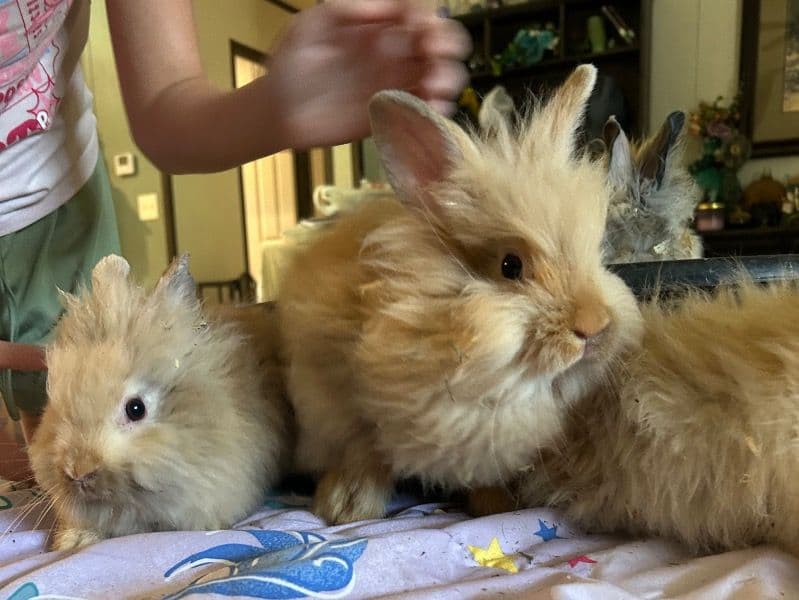
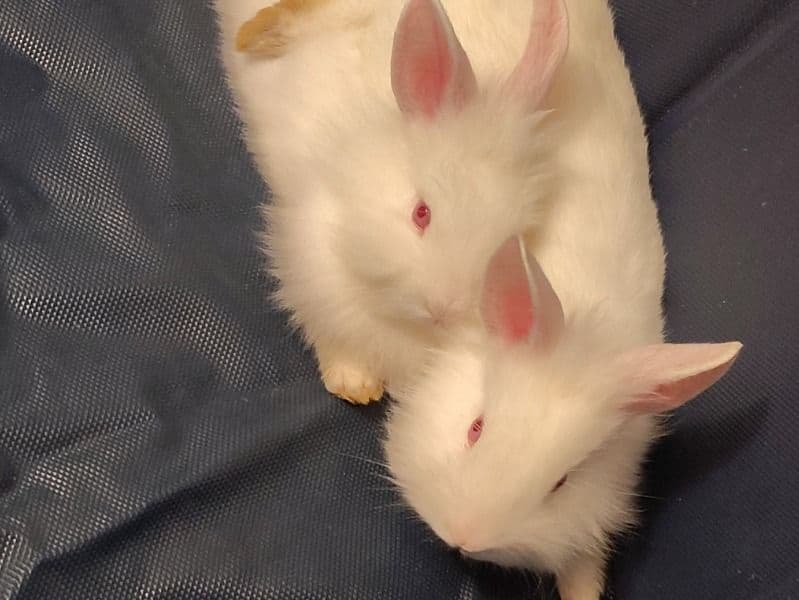
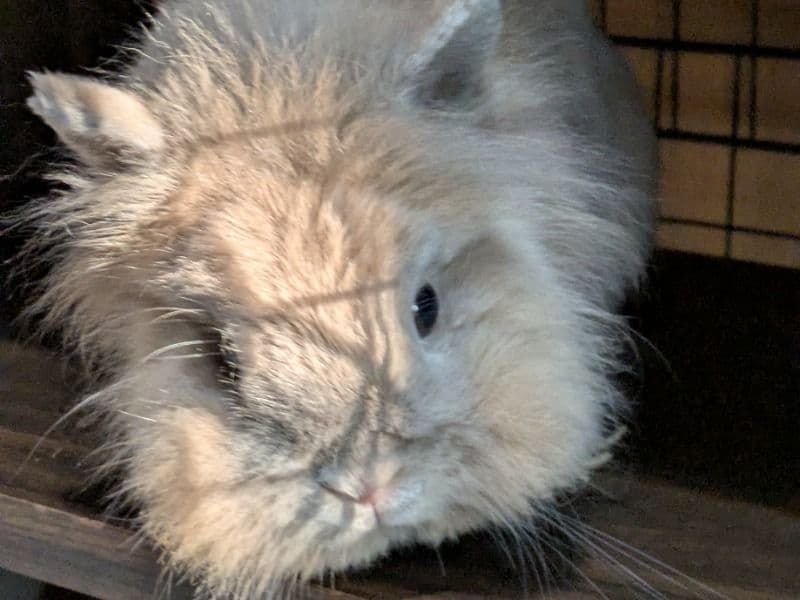
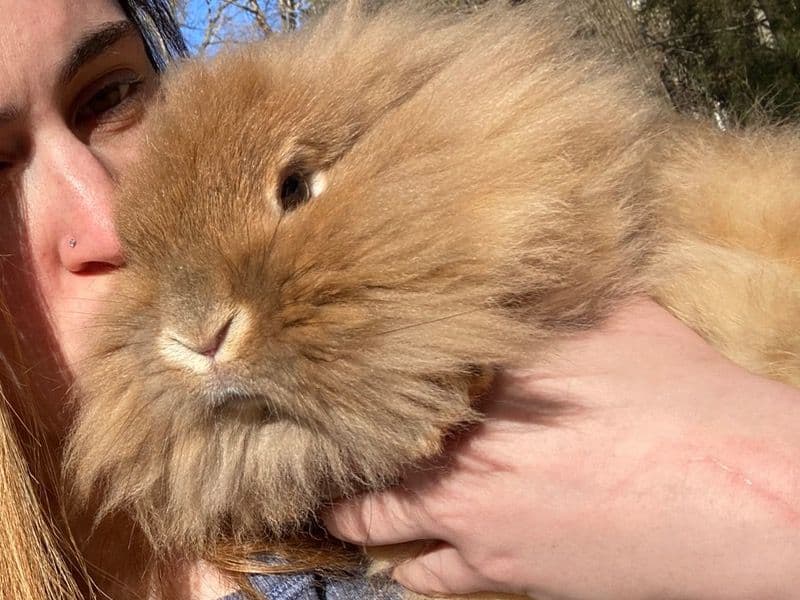
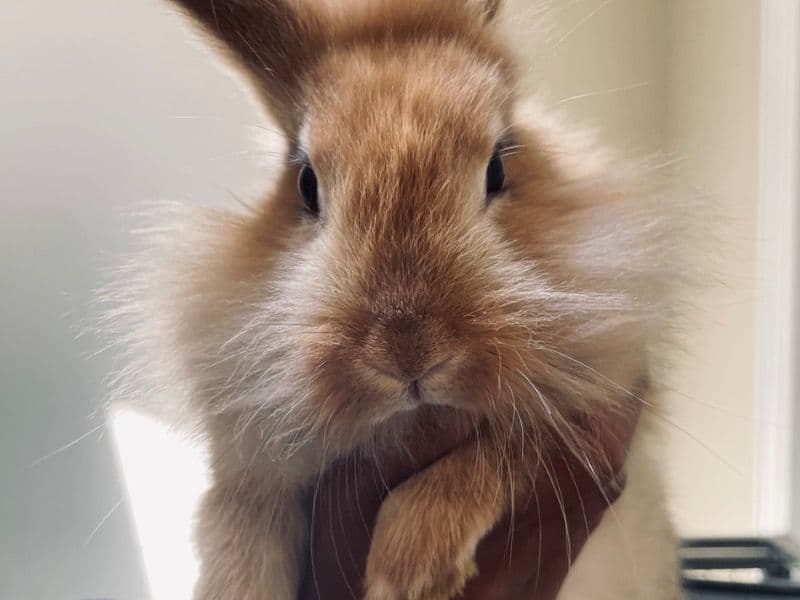
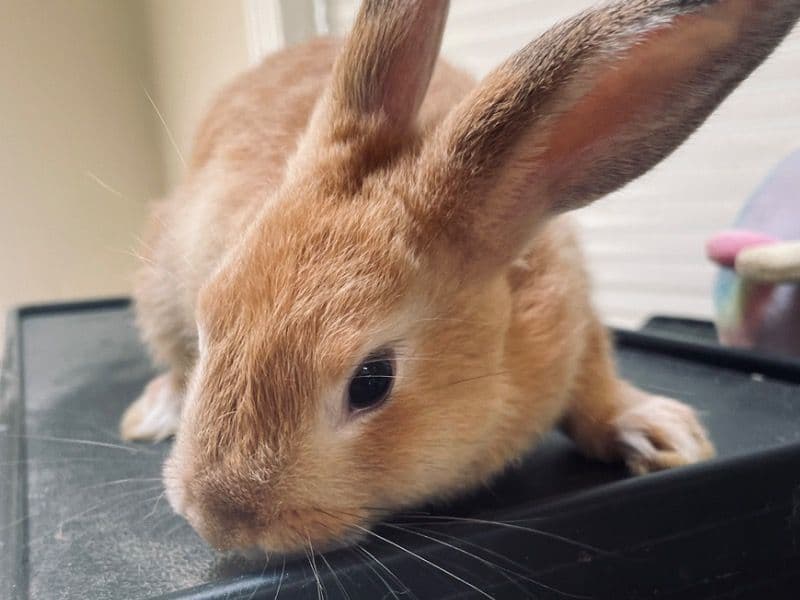
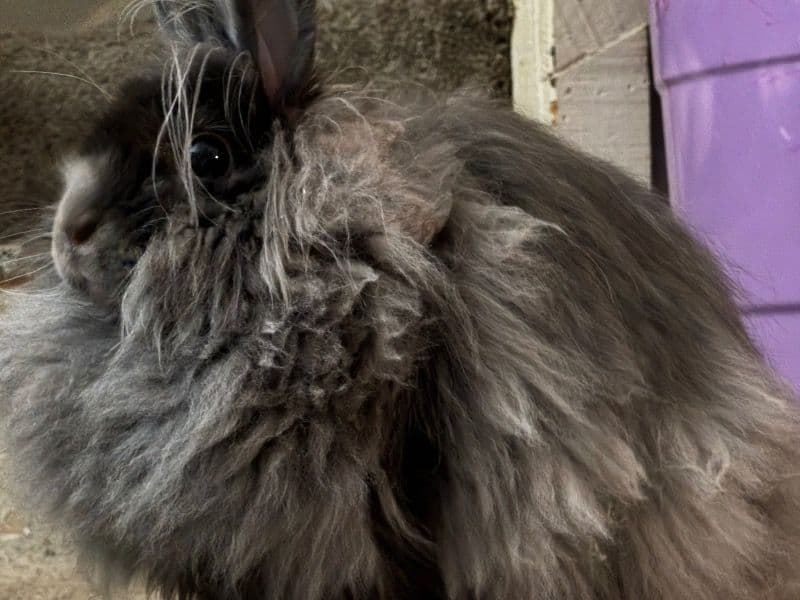
Lionhead rabbit adoption solves the two problems buying cannot: you can see the adult coat instead of guessing at a baby’s fluff, and the person handing you the rabbit knows exactly how much brushing it takes. The Lionheads above are listed by their current owners right now.
Why do Lionheads end up needing new homes?
Short answer
Usually the workload, not the rabbit. The House Rabbit Society reports that many Lionheads in shelters started as impulse buys: people fall for the fluff, then discover the fluff needs brushing several times a week for 7 to 9 years. Housing changes and allergies do the rest, as with every breed.
The House Rabbit Society names the pattern for this breed. Many Lionheads arriving in shelters started as impulse buys, often in shops where staff play down the upkeep.[1] Within months the same rabbits are handed over “matted, scared, and sometimes sick”.[1]
Skipped brushing is not a cosmetic problem. The same guide links neglected coats to flystrike, which is flies laying eggs in soiled fur, plus digestive blockages and skin infections.[1]
The wider rehoming picture is ordinary. In a study of four shelters in Massachusetts and Rhode Island, more than three quarters of the rabbits were handed in by their owners.[2] The leading reasons were the owner no longer managing the care, housing rules, and having too many rabbits.[2] Behavior barely features.
That pattern works in your favor. On Petmeetly the person rehoming the rabbit writes the listing and answers your messages. Nothing is filtered through an intake form. The same conversation that explains why they cannot keep up the brushing also hands you the routine, the tools and the coat history.
One more reason to take on a Lionhead that already exists. The Rabbit Welfare Association and Fund lists the breed among brachycephalic, or flat-faced, rabbits, and ties that face to crowded cheek teeth and misaligned front teeth.[3] Its advice is to take on a rabbit that needs a home rather than buy a new one, so breeders stop producing the extreme look.[3]
Why is an adult Lionhead a safer choice than a baby?
Short answer
Because the coat has already declared itself. Every baby Lionhead looks fully maned, but single-mane rabbits lose most of that fluff after the molt at 5 to 6 months. An adult shows you the real mane, the real grooming load, and a temperament that is finished forming. There is no lottery left.
Every Lionhead is fluffy at eight weeks, and that fluff predicts nothing on its own. PetMD, reviewed by Laurie Hess, DVM, puts it plainly. A single mane sits around the head when the rabbit is young, then turns wispy and thins with age. A double mane stays thick for life.[4] Breeders can only tell the two apart in the first days after birth, before the wool grows in.
The change lands at the adult molt, the seasonal coat shed that hits at around 5 to 6 months. Single manes lose all but a few wisps of mane and bib, along with the whole wool skirt down the flanks.[5] A buyer finds this out at six months. An adopter finds it out by looking at the rabbit.
The honesty runs both ways. A thick double mane in front of you means signing up for the full routine. A thinned single mane is the lion look’s easier cousin. Either way you know before you commit.
Everything else is settled too. Adult Lionheads weigh 2.5 to 3.75 pounds and measure 8 to 10 inches, so there is no growth curve left to guess at.[4] Litter habits are established, and the House Rabbit Society describes a well-kept adult as “curious, social, and full of personality”.[1] Many are already spayed or neutered, which matters more than it sounds. The same group warns that almost all unspayed females older than four show uterine changes or tumors.[6]
Here is the arithmetic, in the order you actually pay it.
What each route costs you
Cost of buying a baby Lionhead compared with adopting a rehomed adult
There is no single savings figure, because the total depends on what the owner sends along with the rabbit. RHDV2 is a fast-fatal rabbit virus that has been spreading in the United States since March 2020. The course is two doses 21 days apart, then a booster every year, and the House Rabbit Society strongly recommends it.[8]
Would you rather raise a baby and shape its handling from week one? That is a fair choice, and our guide to Lionhead rabbits for sale covers price bands, mane disclosure, and what to check before you pay a deposit.
Ask for the grooming routine first: how often they brush, which tools work, and whether the rabbit tolerates it. Then the usual history: age, spay or neuter status, vet and dental records, RHDV2 vaccination, diet brand, litter habits, and why they are rehoming. Ask them to include the brush.
The House Rabbit Society tells adopters that rescues can say how much brushing a rabbit needs, which tools work best, and whether it enjoys grooming.[1] In an owner-to-owner rehoming you get those same three answers from the person who has done the brushing. Ask for all three, then ask for the brush itself.
The grooming handover, ask these first
How often do you brush, and how long does it take? You are checking whether the answer matches your week.
Which brush and comb actually work on this coat? Wool textures differ, and the wrong tool skates over the top.
Does the rabbit sit for grooming or fight it? A rabbit that tolerates handling is a much easier ten minutes.
Has it ever matted, and where? Mats repeat in the same places, usually the rear, the flanks and under the chin.
How heavy are the spring and fall molts? Two big sheds a year set the busiest weeks of your calendar.
Can the brush, comb and current food come along? Owners usually say yes, and it removes two variables at once.
Then ask about teeth, because this is the breed problem. CottonTails, a UK rabbit charity, published its own intake figures. Of the 494 Lionheads that arrived between 2001 and 2019, 26% had significant dental disease.[9] The mechanism is anatomy. A small head with a slightly longer lower jaw pushes the teeth out of line, so they wear unevenly.[4]
The dental ask, in one question. “When did a vet last look in the mouth, and what did they say?” The signs to ask about are appetite dips, dribbling or a wet chin, runny eyes, wiping the front paws, and tooth grinding.[9] A clean dental history is real information. A known dental problem is a budget line and a routine, not automatically a reason to walk away.
The rest of the history
Age, and where the rabbit came from originally
Spay or neuter confirmed with the vet name and date, before transfer
The RHDV2 record and last booster date, since the course is two doses then yearly[8]
The exact pellet brand and the hay it eats
Litter habits, described honestly rather than sold
Indoor or outdoor history, and how much run time
Behavior with children, dogs and cats, based on what happened
Whether the rabbit is half of a bonded pair, meaning two rabbits who live as a couple
Ask why they are rehoming, and treat the answer as information rather than a warning label. A new baby, a house move, or a work schedule with no room left for brushing tells you about the household, not the rabbit.
On the fee. A modest one is normal and it protects the rabbit. The House Rabbit Society tells owners to charge something, so the person collecting is not “looking for a free meal for their snake”.[10] The Rabbit Welfare Association and Fund tells owners never to advertise a rabbit as free to a good home.[11] Organized adoption fees run about $95 to $200.[7] Owner-to-owner rehoming usually costs less. Ask what the fee includes, because the pen, the litter box and the brush usually come with it.
Day one with a rehomed Lionhead: coat check and settling in
Do the coat check gently, on the first quiet evening. Part the wool at the flanks, the rear and under the chin, and feel for knots against the skin. Mats pull painfully with every hop, and they hide sores.[1] What you find sets your first month of grooming.
Never cut a mat out with scissors. Rabbit skin is delicate and cuts easily. The House Rabbit Society grooming guide says to take mats apart with a mat splitter or mat rake, a bladed comb that cuts the mat and not the skin.[12] If a mat sits tight against the skin, the Rabbit Welfare Association and Fund says to have a vet clip it with a blade meant for rabbit fur.[13] And never bathe a rabbit. Spot-clean with a damp cloth instead.[1]
The first two weeks
1Before the rabbit arrives. Set the pen up in a quiet room, with a hide to bolt into, hay already down, and the litter box well away from the food and water.
2Days 1 to 7. Same food, same room, same routine. Expect hiding, and expect some territorial droppings even from a rabbit that was reliably litter trained. The House Rabbit Society says a move sets that off and the habits return as the rabbit settles.[14]
3Days 7 to 14. Once the rabbit is eating well and using the box, open up more space. Run the previous owner’s grooming schedule unchanged.
4Week three onward. Book a checkup with a rabbit-savvy vet, meaning one who treats rabbits regularly, and take the records along. Only then start a food change, mixing the new pellets in over two to four weeks as the PDSA advises.[15]
Ask the owner for a bag of the pellets and hay already in use, and keep feeding both for at least two weeks. A sudden diet change on top of moving stress is how a rabbit stops eating.[15] A rabbit that stops eating is heading for GI stasis, which is the gut shutting down.
Transplant the routine before you improve it. Run the previous owner’s grooming schedule unchanged for a month, at the same time of day if you can. Then adjust. The rabbit already trusts that routine, and consistency is the fastest bond you can offer.
If you already have a rabbit, both must be spayed or neutered before you start bonding, because hormones drive most of the fighting.[16] Set the pens side by side first, then meet in a room neither rabbit has lived in. Plan for weeks rather than days. Bonded Lionhead pairs do turn up in rehoming listings, and taking both is usually the easiest transition, because the rabbits keep each other steady. Never split a bonded pair.[11]
How much grooming does an adult Lionhead actually need?
Short answer
Brush 2 to 3 times a week as the floor, every day during the spring and fall molts, and daily for a thick double mane. Ten minutes with a slicker brush and a comb covers it. The payoff is a rabbit that swallows less wool, mats less, and stays fly-safe.
The schedule is health care, not grooming for looks. A rabbit swallows wool every time it cleans itself, and it cannot bring any of it back up. The modern veterinary view flips the old story. Long Beach Animal Hospital states that any hairball in the stomach is a result of GI stasis, not the cause of it.[17] So the protection that works is unlimited hay plus extra brushing during molts, not a hairball remedy.
The rear end deserves the daily look. Soiled or matted wool is where flies lay their eggs, which is how flystrike starts. The Rabbit Welfare Association and Fund builds a bottom check into ordinary grooming.[13] Trim soiled wool rather than letting it stay damp, and treat wet fur back there as urgent in warm weather.
Wool also traps heat. Keep summer housing shaded and airy, with a cool surface to stretch out on.
Older Lionheads need two extra habits. Book a yearly checkup and ask the vet to look inside the mouth, since dribbling, runny eyes and appetite dips are tooth signs in this breed.[9] Then watch appetite and droppings every day, because GI stasis tends to occur in middle-aged and older rabbits.[17]
Are Lionheads good family rabbits?
Short answer
Yes, with adult hands. A well-kept Lionhead is curious, social, and full of personality, and PetMD calls the breed good with children who understand calm handling. But this is a 2.5-to-3.75-pound prey animal that startles easily, so adults do the lifting and young children interact at floor level.
PetMD says Lionheads make great pets and are good with young children who handle them gently and calmly.[4] That is true, and so is the physics. A startled rabbit kicks out hard, and a rabbit this small can hurt itself doing it. So adults do any lifting, and children meet the rabbit at floor level.
7 to 9 years, so an adopted three-year-old is still a long commitment[4]
Space
A pen, not a hutch. The Rabbit Welfare Association and Fund puts the minimum for a pair at 3m x 2m x 1m high, roughly 10 by 6.5 feet[18]
Litter habits
Trains like any rabbit, and adults learn faster than babies[14]
Energy
Busy and people-oriented, so plan daily run time outside the pen
Adopting an adult gives you something a baby cannot. The current owner can tell you how this exact rabbit behaves around a toddler, a vacuum cleaner, a dog walking past the pen, and being picked up. That is lived observation, not a breed average.
Still choosing between breeds? If the grooming schedule is what worries you, adopting a Holland Lop is worth a look. They turn up in rehoming listings for the same everyday reasons and carry none of the wool work. If you want an even smaller rabbit without the wool, Netherland Dwarfs appear in rehoming listings too.
What adopting solves, and what it does not
Adoption removes the mane lottery and most of the guesswork. You can see the coat, read the dental history, meet the personality and hear how the last routine actually ran. What adoption does not remove is the brushing.
If the grooming schedule is what ended this rabbit’s first home, be honest about whether it fits your week before you say yes. Ten minutes, two or three times a week, every week, for years. That is the one question no source and no owner can answer for you.
Taking on a Lionhead that already exists also means one less order placed for the extreme flat face.[3] That is exactly what the Rabbit Welfare Association and Fund’s adopt-first advice is for.
Petmeetly puts you in the same conversation as the person who knows this rabbit best. No intake form, no middleman. The listings at the top of this page are where that conversation starts.
Grooming, most of the time. The House Rabbit Society reports that many Lionheads in shelters began as impulse buys. The same rabbits come back within months, once the brushing turns out to be a standing job. The rest is the ordinary rabbit picture: a house move, a landlord, an allergy, a change in working hours. Very little of it is about the rabbit's behavior.
02
Is it better to adopt an adult Lionhead or buy a baby?
It depends on what you want to control. An adult shows you the finished mane, the real grooming load, the adult size and the personality, and it often arrives already spayed or neutered. A baby lets you shape handling from week one, but its mane type is a guess unless the breeder recorded it in the first days after birth. For a first rabbit, the adult is the lower-risk choice.
03
Will an adopted Lionhead still have its mane?
You can see the answer before you commit, which is the whole point. Double-maned Lionheads keep a thick mane for life. Single manes are wispier and usually thin with age. Most of the mane, the bib and the whole wool skirt goes at the adult molt, around 5 to 6 months. An adult in a rehoming listing has already been through that molt.
04
How much grooming does a Lionhead need?
Two to three brushings a week is the floor, and daily brushing through the spring and fall molts. A thick double mane needs daily attention year round. Ten minutes with a slicker brush and a comb usually covers it. Add monthly nail trims and a daily look at the rear end, which is where soiled wool causes the most trouble.
05
What should I ask the current owner before adopting?
Start with grooming: how often they brush, which tools work, whether the rabbit sits still for it, and where mats have formed before. Then ask for age, spay or neuter status, the vet name and the dental history. Ask for the RHDV2 record and last booster, the exact pellet and hay, litter habits, and why they are rehoming. Ask for the brush and the food to travel with the rabbit.
06
What is a fair rehoming fee for a Lionhead?
A modest fee is normal and it protects the rabbit. Organized adoption fees run about $95 to $200. Owner-to-owner rehoming usually costs less, since there is no clinic bill behind it. The fee often includes the pen, the litter box, the open bag of pellets and the brush. Welfare groups tell owners never to advertise a rabbit as free to a good home.
07
How long does a rehomed Lionhead take to settle in?
One to two weeks for most rabbits. Keep the first week quiet, keep the food and the routine exactly as they were, and let the rabbit come out to you rather than reaching in. Some territorial droppings are normal at first, even from a rabbit that was reliably litter trained before. The habits come back as the rabbit settles.
08
Can I bond an adopted Lionhead with my current rabbit?
Yes, and most rabbits are happier in company. Both rabbits must be spayed or neutered first, because hormones drive most of the fighting. Start with the pens side by side for a couple of weeks, then meet in a room neither rabbit has lived in. Plan for weeks rather than days. If the Lionhead you like is already half of a bonded pair, take both.
09
Do Lionheads have health problems I should know about?
Teeth are the breed problem. A UK rabbit charity found significant dental disease in 26% of the 494 Lionheads it took in between 2001 and 2019. The small head and slightly longer lower jaw push the teeth out of line, so they wear unevenly. Ask when a vet last looked in the mouth, and watch for dribbling, runny eyes and appetite dips.
10
Are Lionheads good with children?
With calm handling, yes. PetMD says Lionheads are good with young children who handle them gently. They also weigh 2.5 to 3.75 pounds and startle easily, so adults should do any lifting and children are best meeting the rabbit at floor level. An adult should own the daily feeding, cleaning and brushing either way.
11
How long do Lionheads live?
Seven to nine years with good care. An adopted three-year-old is still a commitment of several more years, including yearly vet visits and the brushing routine. Older Lionheads need the mouth checked at every visit, and they need a daily look at appetite and droppings, because gut slowdowns become more common with age.
12
What do I do if my adopted Lionhead is matted?
Do not reach for scissors. Rabbit skin is delicate and cuts easily under a tight mat. Take small mats apart with a mat splitter or mat rake, working from the outside edge in. If a mat sits tight against the skin, have a vet clip it with a blade meant for rabbit fur. Never bathe a rabbit; spot-clean with a damp cloth instead.