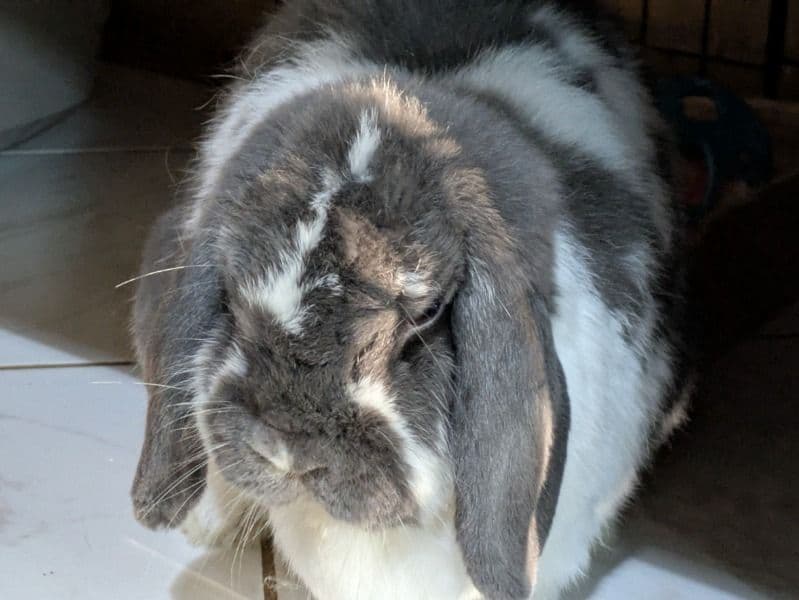
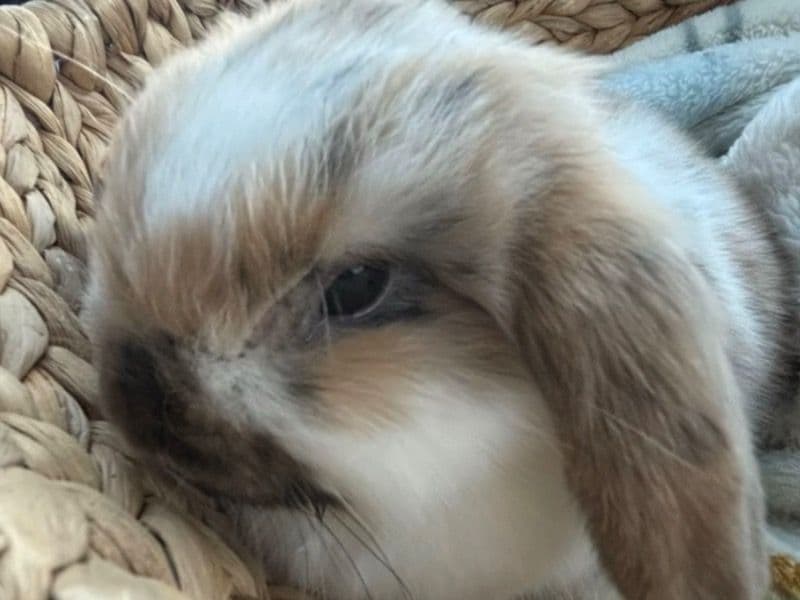
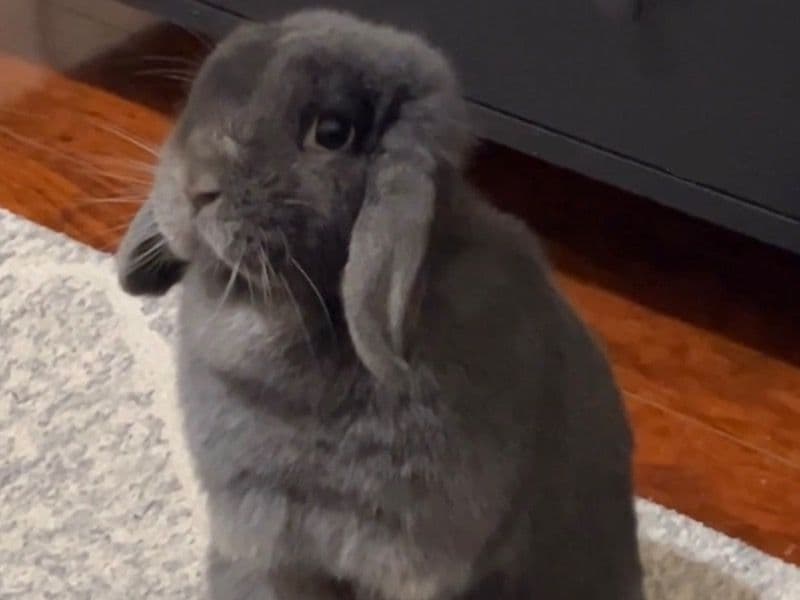
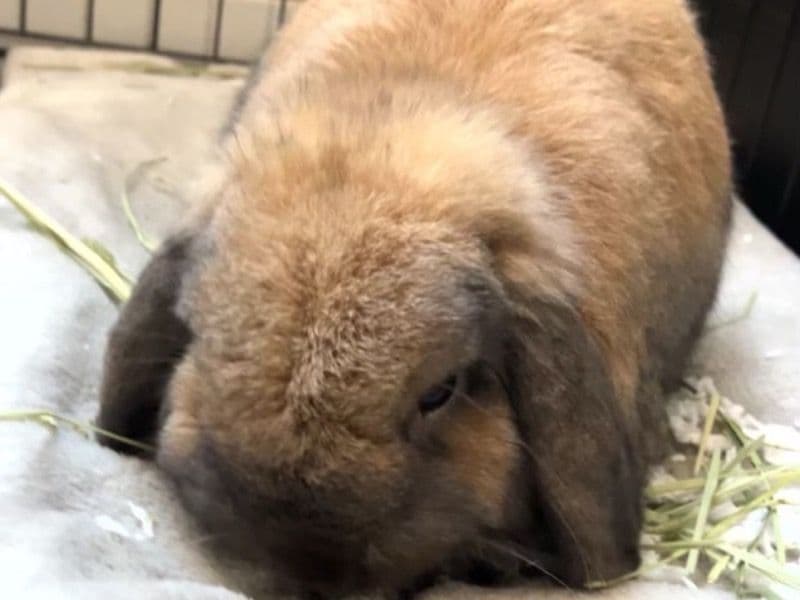
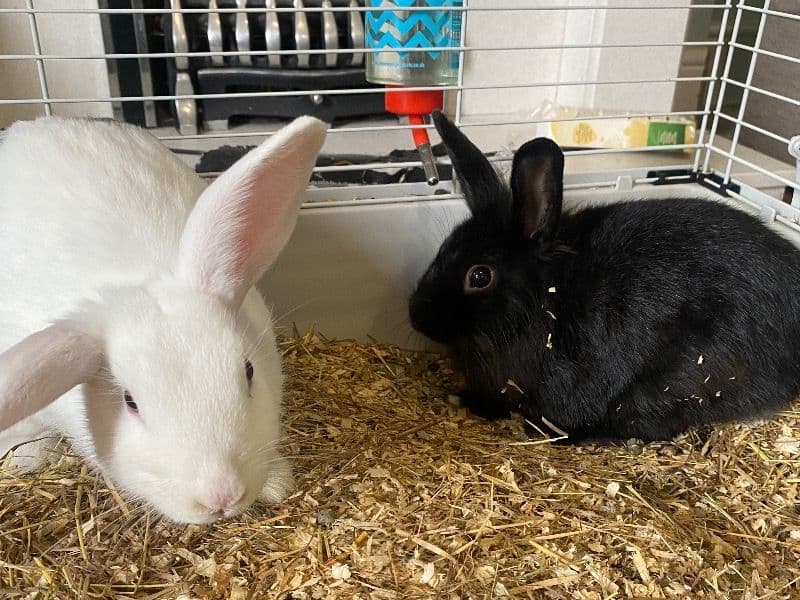
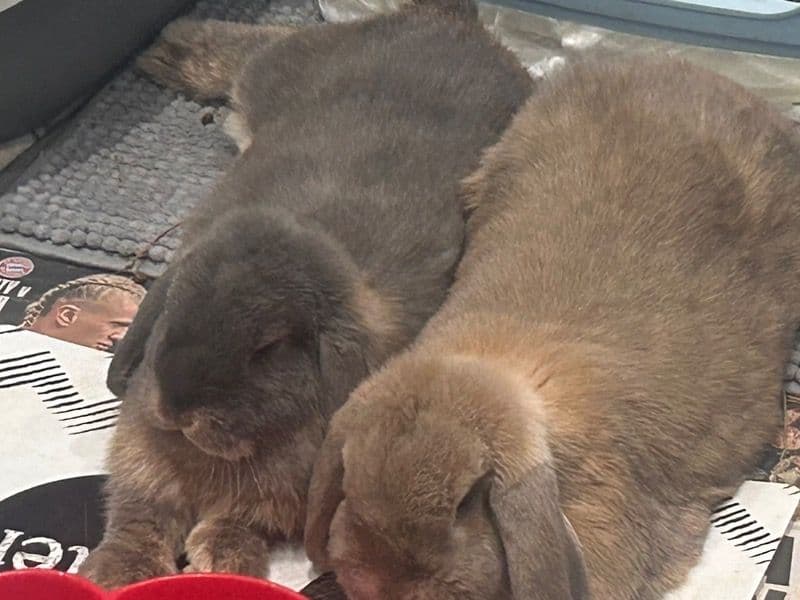
Mini Lop adoption usually starts with someone else’s hard decision. Most rabbits that lose their homes do so between six and twelve months old, right when a cute baby becomes a moody teenager and finishes growing. The owners above are rehoming theirs directly. Here is why that works in your favor.
Why are Mini Lops rehomed?
Short answer
Mostly timing, not temperament. House Rabbit Society reports that the majority of rabbits surrendered are six to twelve months old, the adolescent window when spraying, chewing, mounting, and mood swings peak. A Mini Lop also finishes outgrowing its “mini” name by then, reaching a solid 4.5 to 6.5 pounds. The rabbit is rarely the problem.
Amy Espie states it plainly for the House Rabbit Society. The majority of rabbits surrendered to shelters are between six and twelve months of age.[1] That is adolescence, and it arrives with a list. Spraying urine, circling, mounting, nipping, nest-building, extreme mood swings, digging, and fights between rabbits who were friends last month.[1] Adolescence most commonly starts at five or six months, sometimes as early as three, and most rabbits do not settle into adulthood until about a year old.[1]
The timing is cruel in one specific way. The chaos peaks at exactly the age most owners are told to book the spay or neuter, so people expect the surgery to flip a switch. Marinell Harriman, writing for the same organization, warns that it can take as long as eight months for a stubborn rabbit to calm down.[2] An owner three weeks past the operation is still finding chewed cables and urine on the sofa. It is easy to conclude the rabbit is simply like this. It is not. It is part-way through a phase that ends.
The name does some damage too. “Mini” means smaller than the German lop the breed was bred down from, not small. PetMD’s vet-reviewed profile puts an adult at a maximum of 6.5 pounds and describes the breed as medium-sized.[3] Rabbit educator Amy Pratt describes the pattern: people bring home a baby rabbit and are then surprised when the adult is the size of a small cat.[4] One caveat, and it matters. Nobody has published data tying Mini Lop rehoming to size surprise. The age window is the part with numbers behind it. The size gap is just an expectation problem, and an adult rabbit settles it on sight.
The rest is ordinary life. People move somewhere that will not take pets, have a baby, develop an allergy, or take a job that swallows the hours a rabbit needs. Almost every Mini Lop listed above is still with the person who raised it. That person is doing the work of finding the next home rather than handing the problem on.
What comes out the other side is the good part. PetMD describes the breed as friendly and affectionate, laid-back, gentle, and good with children.[3] That is the rabbit most families pictured when they bought a baby. An adopter gets to skip the year it takes to get there.
Why adopt an adult Mini Lop instead of buying a baby?
Short answer
Because the guesswork is gone. An adult shows you its final size and its actual personality on day one, is usually past the spraying-and-chewing phase, and often arrives spayed or neutered. House Rabbit Society puts it simply: adopt a rabbit at six to twelve months and its adult self will be a less exaggerated version of its teenage self.[1]
Start with size, because this breed has a naming problem that adoption solves outright. Three different rabbits are sold under the name “Mini Lop”, depending on the country and the registry, and their adult weights differ by roughly two to one. Our Mini Lops for sale guide spends a whole section on telling them apart. A full-grown rabbit in front of you ends that question in one look.
Litter habits come next. An adolescent rabbit stops using its box for months, then starts again once the hormones drop. An adult has already finished that cycle, and its current owner can tell you exactly how reliable it is, which box it prefers, and which litter it will use. The same goes for temperament. Nobody can tell you what an eight-week-old kit will be like at two. Somebody has lived with this one for years.
A welfare charity now recommends this route for lops specifically. The UK’s Rabbit Welfare Association and Fund responded to 2026 research on ear disease in lop-eared rabbits by telling owners not to buy baby rabbits from breeders. Its page quotes the exotics vet John Chitty: avoid buying baby lop-eared rabbits, do not support the breeding of them, adopt instead.[5] Take it for what it is, the position of one welfare body rather than a settled consensus. It still points the same way as everything else here, and the next section explains why.
Then there is the handover itself. A pet shop can tell you a breed profile. The person rehoming this rabbit can tell you which greens give it soft stools, which corner it bolts to when the doorbell goes, and whether it likes being stroked or resents being touched at all. That transfer of knowledge is the biggest practical advantage of owner-to-owner rehoming, and it costs nothing.
What should you check on an adopted Mini Lop on day one?
Short answer
Ears first. Lop ears trap wax where you cannot see it: UK studies found ear problems in roughly a quarter of lop-eared rabbits, against one in ten up-eared ones, and many middle-ear infections show no outward signs. Book a vet ear exam in week one, then check teeth alignment, nails, weight, and how it moves.
The mechanism is structural, not a matter of hygiene. A lop is born with a gap in the cartilage that would normally hold the ear upright, so the ear folds over and the canal is split into two parts. Ear wax, which in an upright ear works its way out on its own, now has nowhere to go. It builds up and the canal becomes inflamed. Inflamed wax can turn creamy enough to look like pus, so an owner peering into an ear cannot tell a wax problem from an infection.[6]
The scale only became clear in 2026. Researchers examined 435 pedigree rabbits from 49 breeds, all volunteered by their breeders and presumed healthy. Of those, 86% had flaky discharge in the ear canal and 42% had stenosis, meaning a narrowed canal. Almost every ear problem in the study was more common in lop-eared rabbits.[5] A 2023 survey of 551 UK rabbit owners found the same split in a different population. Roughly 25% of lop-eared rabbits had an ear condition indicated by a vet, against 10% of erect-eared ones. Lops were also about 19 times more likely to be reported with impaired hearing or deafness.[7]
Looking is not enough, which is the whole reason for the vet visit. The same survey cites a hospital imaging study in which 22% of 161 rabbits had otitis media, meaning a middle-ear infection. Of those cases, 61% had never been brought in for an ear problem at all.[7] The Rabbit Welfare Association and Fund draws the obvious conclusion for owners: ask for an ear exam even if your rabbit seems fine.[5] Make that the first appointment after the rabbit moves in.
The day-one check, in order
1Ears. Lift each one gently and look at the opening. Flaky or wet discharge, redness, crusting, swelling at the base or an unpleasant smell all mean book the vet sooner rather than later.[5]
2Teeth. Part the lips and check the front teeth meet cleanly. Drooling, a wet chin or dropped food are the signs worth asking about.
3Nails. Overgrown nails are the single most common disorder vets record in pet rabbits, and they change how the rabbit stands.[9]
4Weight. Run a hand over the spine and hips. Sharp bones or a thick fat pad are both worth asking about, and 4.5 to 6.5 pounds is the honest range for this breed.[3]
5Movement and appetite. Watch it hop, and watch it eat. A rabbit that will not eat is an emergency, not a shy one.
Ear warning signs to watch for at the handover
Frequent scratching at the ears, or rubbing the head on things
Head shaking, or holding the head tilted
Flaky or wet discharge inside the ear canal
Redness, crusting or a swelling at the ear base
An unpleasant smell coming from the ears
Startling easily, or no reaction to a treat bag opening behind it
Teeth deserve attention for a different reason. A 2024 study of 161,979 rabbits under UK primary veterinary care found a one-year dental disease prevalence of 15.36%, so roughly one pet rabbit in seven.[8] The same study checked whether lop ears or a flat face raised the odds and found neither did. Age raised them, and low bodyweight raised them.[8] Keep dental checks on the list for every rabbit, and keep the lop-specific worry where the evidence puts it, on the ears.
Age raises the stakes. The 2023 survey found that vet-indicated ear problems and signs of ear pain climbed with age in lop-eared rabbits specifically, and not in the other ear shapes.[7] Older rabbits were also more likely to show hearing loss.[5] If you are taking on a five-year-old rather than a two-year-old, the ear exam matters more, not less. Ask the owner when a vet last looked, and what was said.
Once the rabbit is home, the weekly habit is small. Look at and gently feel the outer ear. Never push anything into the canal, cotton buds included. PetMD suggests asking your own vet whether you should be cleaning the ears at all, because the answer depends on the rabbit.[3] The canal is the vet’s job. Your job is noticing the change early.
What should the current owner hand over?
Short answer
Everything they know. Vet records with spay or neuter proof, RHDV2 vaccination dates, the exact pellet brand and hay type, litter habits, quirks, and, for a lop, the ear history: exams, any wax or infection treatment, and how the rabbit tolerates ear handling. A modest rehoming fee is normal and protective.
House Rabbit Society tells owners preparing a rabbit for rehoming what to sort out first. The spay or neuter, the RHDV2 vaccination, litter training, and an honest advert naming the rabbit’s age and any medical conditions.[10] Turn that list around and it becomes your ask list. RHDV2 is a rabbit virus that kills fast and has a vaccine the same organization urges owners to get, so get the dates in writing.[11]
The handover, in one message
1The vet record. Clinic name, spay or neuter proof with the date, and anything treated since.[10]
2RHDV2 vaccination dates. Whether the rabbit has had the vaccine at all, and when the last booster was given.[11]
3The exact diet. Pellet brand, hay type, daily amounts, and which greens agree with it. Ask for a bag of the current food to travel with the rabbit.
4Litter habits and setup. Which box, which litter, where it sits in the pen, and how reliable the rabbit really is.
5The personality note. What frightens it, what it likes, who it lives with now, and the quirks a stranger would never guess.[10]
6Bonded partner status. If this rabbit is half of a bonded pair, meaning two rabbits who live as a couple, take both or keep looking.
The four extra questions a lop earns
When a vet last examined the ears, and what they found
Any history of wax build-up, ear drops or an ear infection
How the rabbit reacts to having its ears touched or lifted
The name of the exotics vet, meaning a vet who treats rabbits regularly
Settle the fee early, and expect there to be one. House Rabbit Society advises rehoming owners to charge a modest adoption fee. It confirms the new home is serious, and it makes sure the person on the other end is not looking for a free meal for their snake.[10] A fee owner to owner sits far below what a breeder charges for a kit, and it usually buys more. The pen, the litter box, a carrier and a half bag of pellets often come with the rabbit. Ask what is included before you agree a number.
Then work out the years. PetMD puts this breed at an average of 8 to 10 years.[3] House Rabbit Society writes that well-cared-for indoor rabbits live seven to 10 or more, and calls adopting one a long-term commitment for that reason.[12] Taking on a two-year-old is not a short arrangement. It is most of a decade, which is exactly why the questions above are worth asking properly rather than politely.
What does an adopted Mini Lop need at home?
Short answer
Room to be a real rabbit. Give a medium rabbit a pen or free-roam space it can sprint in, at least three hours of exercise a day, unlimited grass hay, one and a half to three cups of leafy greens daily, and a quarter cup of pellets. Set the space up before the rabbit arrives, not after.
House Rabbit Society writes its housing guidance as ratios rather than one box size. The sleeping and leisure area should be four times the size of the rabbit, and any cage should be three to four times the rabbit’s stretched-out length. A 4 foot by 4 foot exercise pen with access to free-roam time is the setup it calls ideal for most rabbits.[13] Measure the rabbit while it lies flat, then bring that number to the pen you buy. On exercise, PetMD advises at least three hours a day outside the cage, and House Rabbit Society asks for four or more hours of active play.[3][13] Either way, a cage on its own is somewhere to sleep, not somewhere to live.
Space and diet, run for a 6 pound rabbit
Ideal setup
A 4 foot by 4 foot exercise pen with access to free-roam time[13]
Exercise
At least three hours out of the pen daily,[3] and four or more hours of active play is better[13]
UK minimum
3m by 2m by 1m high, roughly 10 by 6.5 feet, available at all times[14]
1 to 2 cups per 4 pounds of body weight, so roughly 1.5 to 3 cups a day at this weight[15]
Pellets
5% of the diet,[15] about a quarter cup a day for a rabbit this size[12]
Grooming
A brush weekly, daily through the two annual molts; nails every month or two[3]
The UK welfare standard skips the ratios and sets a floor. The Rabbit Welfare Association and Fund puts the recommended minimum at 3 metres by 2 metres by 1 metre high, roughly 10 by 6.5 feet. The point of that campaign is that the space stays available all the time, not for an hour in the evening.[14] If a Mini Lop is more rabbit than your floor can take, that is worth knowing now. Holland Lops run a couple of pounds lighter and are rehomed for the same everyday reasons.
Diet is simple arithmetic once you have the weight. Hay is 85% of an adult rabbit’s diet and is offered unlimited. Greens work out at 1 to 2 cups for every 4 pounds of body weight, so a 5.5 to 6 pound rabbit lands around 1.5 to 3 cups a day. Pellets are the smallest slice at 5%, which the House Rabbit Society care primer puts at about a quarter cup a day for a rabbit this size.[15][12] Start at the lower end of the greens range and introduce one new type at a time, as the same guide advises.[15]
Grooming is the easy part of this breed. A Mini Lop carries a rollback coat, meaning fur that rolls slowly back into place when you stroke it the wrong way. PetMD asks for a weekly brush, more during the two annual molts, plus a nail trim every month or two.[3] That is the low-maintenance end of the lop family.
For the first two weeks, change nothing. Keep the same pellets, the same hay and the same litter, because a diet change on top of moving stress is how a rabbit stops eating. Expect some territorial marking while it maps the new space, and let it come to you instead of lifting it. Most rabbits settle in a week or two. Our rabbit adoption guide walks through the rest of that first week, and if the rabbit arrives with a bonded partner, they stay together. That one is not negotiable.
Bringing one home
The process is short. Message the owner, ask the questions from the handover list, and meet the rabbit where it lives if you can. Seeing the pen tells you more in ten seconds than any message thread will, and a rabbit is calmer on its own floor than in a carrier.
Treat the first meeting as a two-way interview. House Rabbit Society gives rehoming owners a list of questions to put to you. Where will the rabbit live, will it be indoors full-time, do you have a rabbit-savvy vet, and is an adult the primary caregiver.[10] Being asked those is a good sign. The owner who grills you is the owner whose rabbit you want.
Set the pen up before collection day. With an adult there is no upgrade coming, because the rabbit you meet is the size it will always be. Book the vet ear exam for the same week, take the handed-over records along, and ask for the teeth to be part of that visit.[5]
Set on a baby from a breeder instead? That is a fair choice. Our Mini Lops for sale page covers what the price bands mean, how to check a seller, and the three-breeds-one-name trap that catches buyers who never weighed a parent rabbit. If you want a bigger, calmer rabbit than this one, American rabbits are the large-breed equivalent and turn up in rehoming for the same reasons.
Spare a thought for the person on the other side. Most people rehoming a Mini Lop bought it as a baby, got through the worst of adolescence, and then ran out of room, time or luck. The questions on this page are not an interrogation. Take the notes, take the pen and the half bag of pellets, and send a photo a week later. A good handover is the best adoption insurance there is.
The Mini Lops listed at the top of this page are with their owners right now. Adopting one moves a loved rabbit from a home that cannot keep it to one that can, and you talk to that person directly to make it happen.
Timing, mostly. House Rabbit Society reports that the majority of rabbits surrendered to shelters are between six and twelve months old. That is the stretch when spraying, chewing, mounting and mood swings all arrive at once. Ordinary life changes account for the rest: a move, a new baby, an allergy, a job that ate the evenings. The rabbit is rarely the reason.
02
How big will an adopted Mini Lop be?
Adults run 4.5 to 6.5 pounds. PetMD puts the maximum at 6.5 pounds and describes the breed as medium-sized, not small. The name means smaller than the German lop it was bred down from, not tiny. With an adopted adult that number is already settled, so you can weigh the rabbit, look at it, and buy the right pen once.
03
Are adult Mini Lops good pets?
PetMD calls them friendly and affectionate, laid-back, gentle and good with children. What matters more for an adopter is that an adult shows you its real temperament before you commit. Watch how it reacts to a hand near the pen, to a stroke on the head, and to people moving through the room, then decide.
04
What does Mini Lop adoption cost?
Owner to owner, a modest rehoming fee is normal, and it sits well under what a breeder charges. House Rabbit Society tells rehoming owners to ask for one. It confirms the new home is serious, and it makes sure nobody is looking for a free meal for their snake. Ask what travels with the rabbit; the pen, litter box and current food often come along.
05
What should I check before adopting a Mini Lop?
Ears first, because lop ears hide their own problems. Then front teeth alignment, nail length, body condition over the spine and hips, and how the rabbit moves and eats in its own space. Book a vet ear exam in the first week even if nothing looks wrong, which is exactly what the Rabbit Welfare Association and Fund advises for lop-eared rabbits.
06
Why do lop ears need special attention?
The fold splits the ear canal and traps wax that cannot drain out. A 2026 field study of 435 pedigree rabbits found 42% with a narrowed ear canal, and almost every ear problem was more common in lop-eared rabbits. A 2023 owner survey put vet-indicated ear conditions at roughly 25% of lop-eared rabbits against 10% of erect-eared ones.
07
What records should the owner give me?
Vet records with proof of spay or neuter, RHDV2 vaccination dates, and the exact pellet brand and hay type with daily amounts. Add the litter setup and a straight note on personality and fear triggers. For a lop, ask for the ear history too: past exams, any wax or infection treatment, how the rabbit handles having its ears touched, and the name of its exotics vet.
08
How long do Mini Lops live?
PetMD puts the breed average at 8 to 10 years. House Rabbit Society writes that well-cared-for indoor rabbits live seven to 10 or more years, and calls adopting one a long-term commitment either way. Taking on a two-year-old still means most of a decade together, so ask when a vet last saw the rabbit.
09
How long does an adopted rabbit take to settle?
Usually a week or two. Keep the food, hay and litter setup exactly as they were for the first two weeks. A sudden diet change on top of moving stress is how a rabbit stops eating. Expect some territorial marking while it works out the new space, and let the rabbit come to you rather than lifting it.
10
How much space does a Mini Lop need?
More than a cage. House Rabbit Society calls a 4 foot by 4 foot exercise pen the ideal setup for most rabbits, with access to free-roam time. It also asks for four or more hours of active play a day, and PetMD advises at least three hours out of the cage. The UK welfare minimum is 3m by 2m by 1m high, roughly 10 by 6.5 feet.
11
Can I adopt a bonded pair?
Yes, and if the rabbit is half of one, take both. A bonded pair, meaning two rabbits who live as a couple, groom each other and sleep pressed together. Splitting them leaves you with two unsettled rabbits instead of one settled pair, and rebonding is slow work. Pairs also settle into a new home faster because they arrive with company.
12
Should I adopt an adult or buy a baby Mini Lop?
An adult shows you its final size and real temperament on day one, and often arrives already spayed or neutered. A baby means the six-to-twelve-month adolescent stretch is still ahead of you. Both routes exist on Petmeetly, and the Mini Lops for sale page covers prices, seller checks and the three-rabbits-one-name trap.