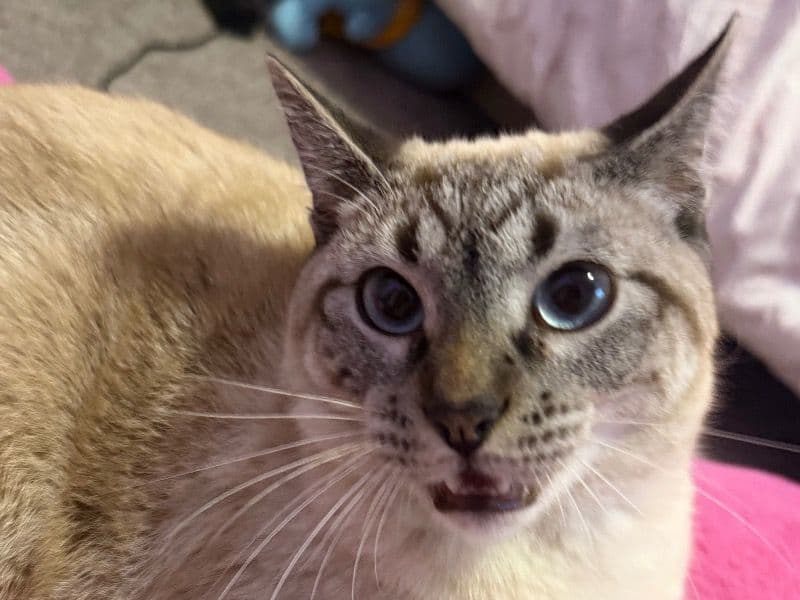
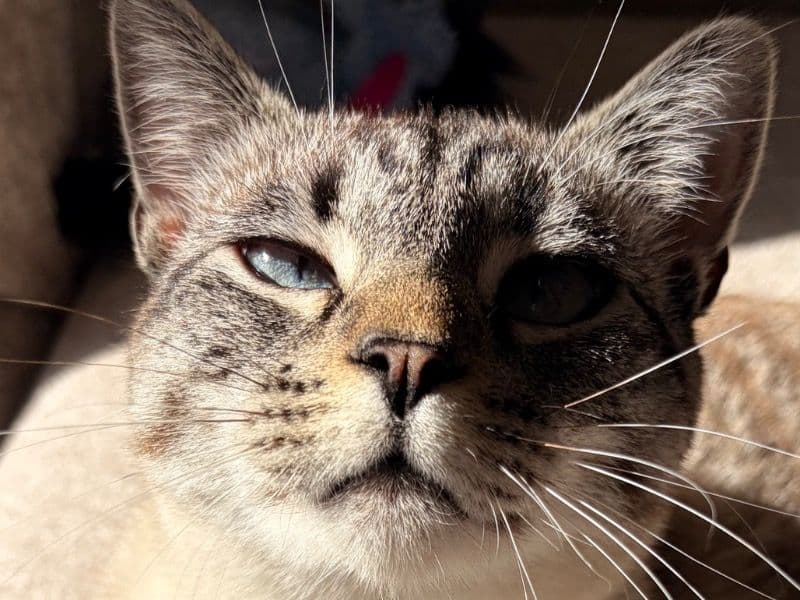
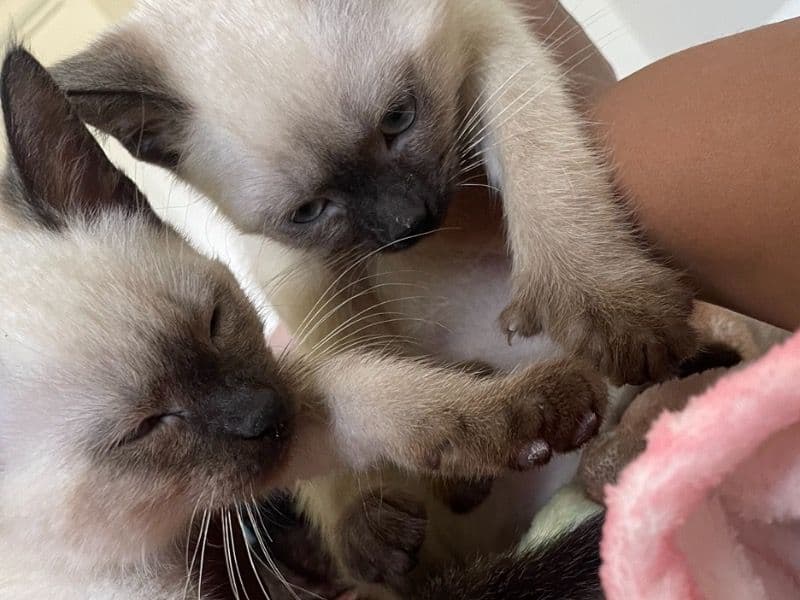
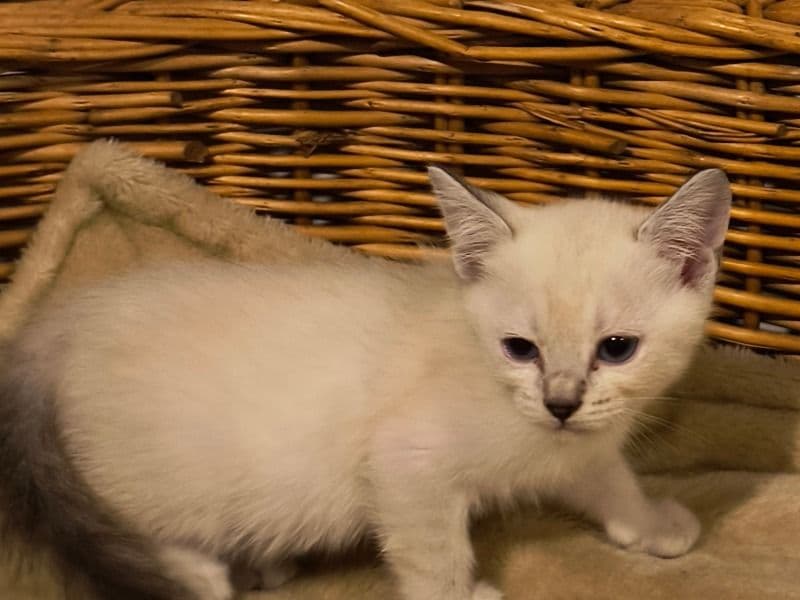
Around 11 to 14 years of cat. Three things are worth knowing about: the chest, the eyes, and a liver condition that runs in families and has no test.
Take lifespan first, because the listings get it wrong. UK life tables built from 7,936 cats give a Siamese 11.7 years from birth. That is the same as the average cat in the dataset, and slightly under crossbreeds at 11.9.[6] An older study using a different measure, the median age at death, reported 14.2 years, though on only 31 Siamese.[7] So an adult cat has fewer years ahead of it than the twenty-year promise suggests. Assume a lifetime nearer twelve years.
The chest comes next. A review of feline asthma notes it usually starts in young to middle-aged adults, at a mean age of four, and that the Siamese breed appears to be overrepresented.[2] Ask whether a cough has ever been investigated. Treated asthma is a manageable condition, and an untreated one is a cat that quietly struggles.
The eyes follow. An inherited retinal disease in this breed arrives in adult life, and researchers measured the variant at about a third of gene copies in North American and European Siamese populations.[3] A cat losing sight this way is not in pain and copes well in a home it already knows. The thing to avoid is finding out late, so ask whether either parent was tested or whether the cat has had an eye examination.
Last, the liver. In amyloidosis, a protein builds up until the organ becomes fragile, and it runs in Siamese and Oriental families. Researchers who traced 17 affected cats found signs usually appearing between one and seven years of age, with a heritability of 0.56.[8] There is no test, so the only useful question is what the cat’s relatives died of, if the owner happens to know.
None of these three should stop you adopting. They are the reason to ask for the vet records rather than a summary of them.