PetmeetlyPetmeetly
Find a match
Dog Breeders & Stud Dogs
Dogs For Sale
Dogs For Adoption
Cat Breeders & Stud Cats
Cats For Sale
Cats For Adoption
Rabbit Breeders
Rabbits For Sale
Rabbits For Adoption
Small Pet Breeders
Small Pets For Sale
Small Pets For Adoption
How It Works
Pet Blogs
Testimonials
About Us
Find a match

Dogs & Puppies

Dog Breeders & Stud DogsDogs For SaleDogs For Adoption

Cats & Kittens

Cat Breeders & Stud CatsCats For SaleCats For Adoption

Rabbits

Rabbit BreedersRabbits For SaleRabbits For Adoption

Small Pets

Small Pet BreedersSmall Pets For SaleSmall Pets For Adoption

Resources

How It WorksPet BlogsTestimonialsAbout Us
Find a MatchSign In
Petmeetly

Your platform for finding the perfect pet companion. Connect with pet owners and discover loving pets looking for homes.

App StoreGoogle Play

Quick Links

  • Home
  • How It Works
  • About Us
  • Editorial Team & Reviewers
  • Blog
  • Privacy Policy
  • Trust & Safety

Dogs

  • Dog Breeders
  • Dogs for Adoption
  • Dogs for Sale

Cats

  • Cat Breeders
  • Cats for Adoption
  • Cats for Sale

Rabbits

  • Rabbit Breeders
  • Rabbits for Adoption
  • Rabbits for Sale

Small Pets

  • Small Pet Breeders
  • Small Pets for Adoption
  • Small Pets for Sale

© 2026 Petmeetly. All rights reserved.

PrivacyTerms
Large adult Bengal cat with a brown spotted rosetted coat lying stretched out and relaxed on a grey sofa beside a sunlit window
121+ Bengal cats on Petmeetly

Bengal Cats for Adoption

Every kitten is busy. A grown Bengal shows you how busy it stays.

Meet Bengals near youWhat a Bengal home needs
  1. Home
  2. /
  3. Cat Adoption
  4. /
  5. Bengal

Bengal cats looking for new homes

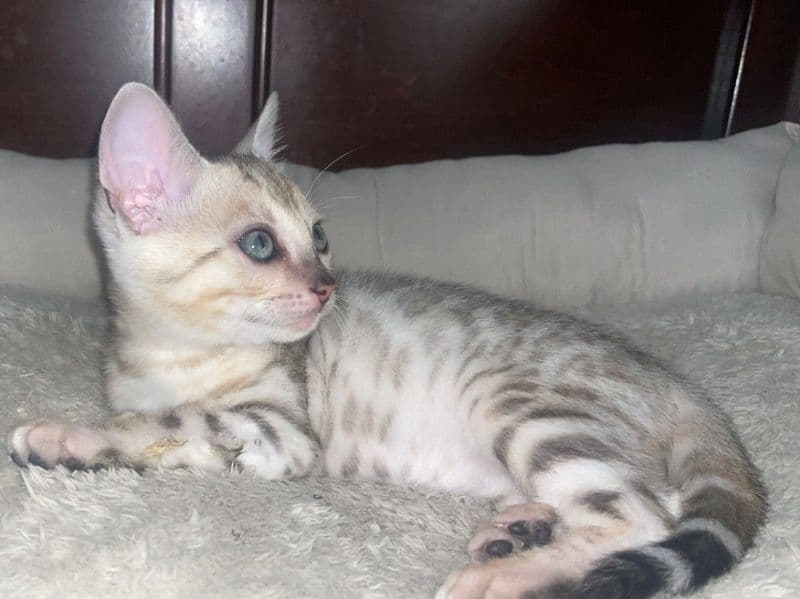
Sage - Bengal | Petmeetly

Sage

Bengal

6 months old,female
Suffolk County, New York, US
Vaccinated
Adoption Fee: $750.00
View Listing
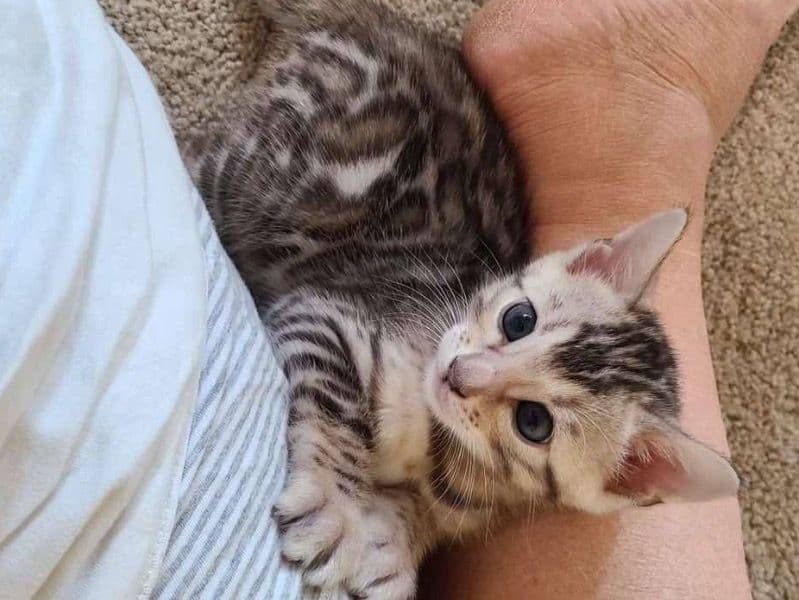
Melo - Bengal | Petmeetly

Melo

Bengal

1 year 8 months old,male
Milwaukee County, Wisconsin, US
VaccinatedNeutered
View Listing
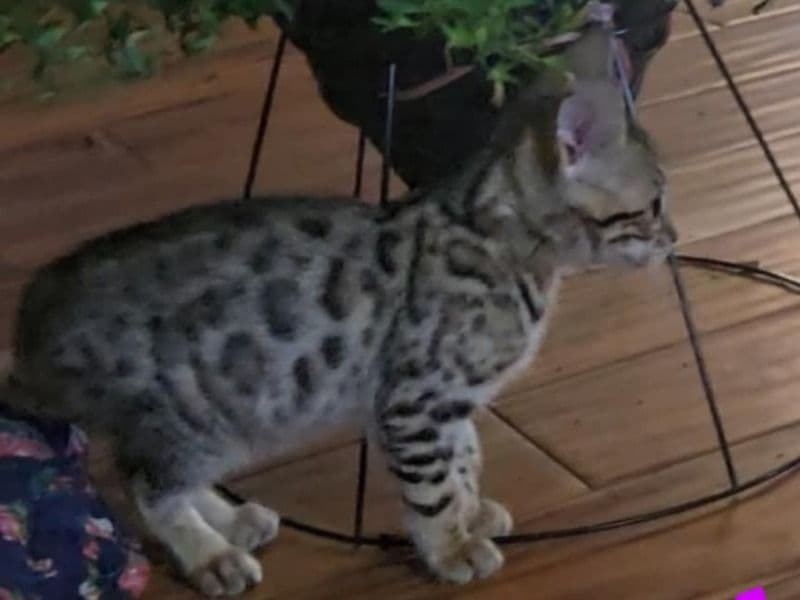
Maggie - Bengal | Petmeetly

Maggie

Bengal

1 year 2 months old,female
Harris County, Texas, US
VaccinatedPedigreeDNA Tested
Adoption Fee: $200.00
View Listing
Bella - Bengal | Petmeetly

Bella

Bengal

1 year 1 month old,female
Harris County, Texas, US
VaccinatedPedigreeDNA TestedNeutered
View Listing
Molly - Bengal | Petmeetly

Molly

Bengal

1 year 5 months old,female
Fulton County, Pennsylvania, US
Vaccinated
Adoption Fee: $1000.00
View Listing
Prince - Bengal | Petmeetly

Prince

Bengal

1 year 3 months old,male
Dallas County, Texas, US
View Listing
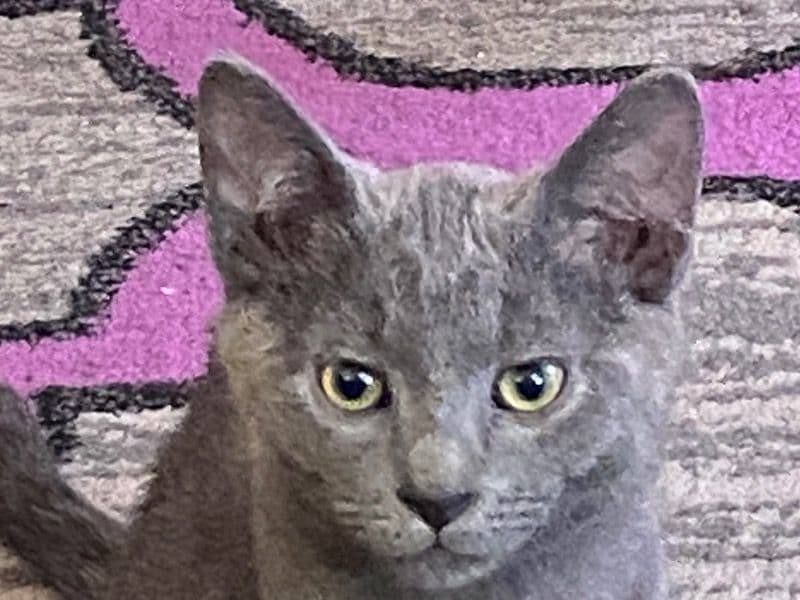
Un-named - Bengal | Petmeetly

Un-named

Bengal

5 months old,female
Lambton County, Ontario, CA
Vaccinated
Adoption Fee: C$300.00
View Listing
Sahara - Bengal | Petmeetly

Sahara

Bengal

2 years 3 months old,female
Greater Manchester, England, GB
Vaccinated
Adoption Fee: £50.00
View Listing
See every Bengal

Adopting a Bengal is less about the cat than about the house it is coming into. Researchers ranked 5,726 cats across 40 breeds and found Bengals among the most active of all.[1] A home set up for that gets a brilliant cat. A home that is not ready gets the destructive behaviour the breed is known for. Veterinary guidelines set out what any cat needs, and for this breed they stop being optional.

What a Bengal home actually needs

  • 1A safe placeSomewhere to retreat that nobody follows it into, at height if possible.
  • 2Separated food, water, tray, scratching, play and resting areasSpread them out. Resources bunched together create competition in multi-cat homes.
  • 3Opportunity for play and predatory behaviourThe pillar that decides whether this works. Daily, and it has to look like hunting.
  • 4Positive, consistent and predictable human contactOn the cat's terms and at roughly the same times. Bengals ask a lot; answer predictably.
  • 5An environment that respects the cat's sense of smellDo not scrub away its scent marks or wash every bed at once after a move.

These five are the AAFP and ISFM feline environmental needs guidelines, written for all cats. Pillar three is the one a Bengal will hold you to.[2]

You can see the thing that actually matters

Short answer

Activity level is the one Bengal question worth getting right, and it is the one a kitten cannot answer. Every kitten is busy. An adult has settled into whatever it is going to be, and the person living with it can describe it in detail.

A survey of 256 Bengal owners recorded what these cats actually do. Nearly nine in ten climbed and vocalised, four in five played with water, and almost none of those owners minded any of it.[3] The picture is of a busy, chatty, physical cat living happily with people who wanted exactly that.

The reassurance sits in one number from the same survey: 92.6 percent of owners said their cat had no behaviour problem at all.[3] Bengals are not a difficult breed. They are a specific breed, and the difficulty comes from mismatch rather than from the cats.

When you meet an adult, watch it for ten minutes rather than reading about it. Does it patrol the room or settle? Does it go up before it goes across? Does it bring you something to throw? A separate welfare review notes Bengals have been reported to show higher levels of hunting behaviour and to be highly active.[4] Seeing where that energy goes in its current home tells you where it will go in yours.

The work is enrichment, not training

Short answer

A Bengal does not need to be taught tricks. It needs somewhere to climb, food it has to work for, and play that looks like hunting. Do those three and most of the problems people describe never start.

The veterinary guidelines are unusually specific about this, and the reasoning is worth stating. Predatory behaviour happens whether or not a cat is fed. The guidelines warn that failing to provide outlets for it can produce boredom and frustration, which shows up as overgrooming, stress-related illness or misdirected aggression.[2] In other words, the destructive behaviour that ends Bengal placements usually comes from an unmet need, not from the cat’s temperament.

  • Build upwards. The guidelines describe access to an elevated area as increasing a cat’s vertical space and letting it monitor its environment. Shelves and a tall sturdy tree do more for a Bengal than extra floor space.
  • Make it work for food. Scatter dry food, toss kibble for the cat to chase, and use puzzle feeders to spread the day into small frequent meals rather than two bowls.
  • Play like prey. Move a wand toy the way something flying or fleeing moves, swooping through the air or running in straight lines away from the cat. Then let it catch the toy, because a hunt with no capture is frustrating rather than satisfying.
  • Rotate the toys. The guidelines recommend using toys on a rotating basis to prevent habituation and boredom. Three toys put away and swapped beat a basket of twenty left out.
  • Never use your hands as the toy. The guidelines say to avoid hands and feet in any kind of play, which protects both the cat and you. With a cat this physical it matters more than usual.

One honest note on training. Bengals are often advertised as unusually trainable and as natural lead-walkers. There is no evidence behind that. Cats in general can learn a great deal, and plenty of Bengals walk on a harness, but nothing shows the breed does it better. If a harness matters to you, adopt a cat that already wears one.

Meet Bengals near you

Why is this Bengal being rehomed?

Short answer

Usually because of something in the owner’s life, and sometimes because the household underestimated the cat. Despite how often you will read otherwise, there is no evidence Bengals are rehomed more than other breeds.

It is worth being straight about what is not known. No breed-level data shows Bengals being relinquished at a higher rate. The owner survey above pointed the opposite way, suggesting the behaviours these owners tolerated easily could mean fewer relinquishments rather than more.[3] Claims that shelters are overwhelmed with Bengals trace back to advocacy pages rather than to counts.

What is plausible, and worth asking about, is mismatch. A very active cat in a household with no time is a recipe for the behaviours nobody enjoys. That is a question you can put directly to the person rehoming the cat, and the answer tells you whether you are taking on a behaviour problem or simply a cat that needs a new home.

Questions that predict your life with the cat

  • Why are you rehoming this cat?The most important question, and an honest answer is a good sign in itself.
  • What does it do in the evening?Bengal peak hours. This tells you what your evenings will look like.
  • How often do you play with it, and with what?Tells you both the cat's needs and how well they have been met so far.
  • What does it do when the house is empty?Where destructive behaviour shows up, if it is going to.
  • Has anything in the house been damaged?A straight answer here is worth more than any breed description.
  • What are its litter habits, and have they changed?Bengals are among the breeds linked with inappropriate elimination. Ask plainly.
  • Has it lived with children, dogs or other cats?Past experience is the closest thing to a reliable prediction.

On litter habits specifically, a welfare review notes Bengals among breeds associated with higher rates of inappropriate elimination, which covers both urinating outside the tray and marking.[4] It is a fair question to ask and not an insulting one. A change in habits is also worth a vet conversation, because it often signals something physical.

When to slow down

  • The reason for rehoming changes each time you ask about it.
  • Nobody will say anything at all about the cat’s behaviour, good or bad. Every cat has quirks and an honest owner names them.
  • You are asked to pay before meeting the cat or the person who has it.
  • You have not yet checked whether your own area restricts Bengal ownership. A few places do, and the rules disagree.
  • You are hoping the cat will calm down once it settles. Activity level is who this cat is, not a phase.

Bringing an adult Bengal home

Short answer

Start small. One quiet room, the litter tray, the food it already eats, somewhere to hide, and something to climb. Let the cat decide when the rest of the house happens.

One piece of context you deserve before adopting. Bengals descend from crosses between domestic cats and the Asian leopard cat, and welfare organisations have real concerns about hybrid breeding. The Cat Group does not support breeding wild cat hybrids or keeping them as pets, and the UK government’s advisory committee has recommended banning breeding from the first two generations.[5]

Read accurately, that concern is aimed at early generation cats. The same statement notes most Bengal cats in the UK are now more than five generations removed from the original cross. Its proposed import ban also carves out cats of the fifth generation or later.[5] Adopting a settled adult Bengal that already needs a home is a different act from commissioning a hybrid litter, and it is the one this page is about.

  • Keep the food the same at first. Ask the current owner what it eats and buy that, then change it slowly later if you want to.
  • Put height in the first room. A cat that can get up somewhere settles faster than one confined to floor level.
  • Start the play routine immediately. Two short wand sessions a day from day one sets the pattern before boredom has a chance to invent its own.
  • Give it a hiding place and leave it alone. A cat under the bed is doing what cats do after a move, not rejecting you.
  • Book a vet visit early. Worth asking about the heart at that appointment, since Bengals are among the breeds the ACVIM consensus statement lists as believed to be at higher risk of heart muscle disease, while noting prevalence data for pedigree cats is lacking.[6]

How long settling takes varies so much between cats that any confident number is invented. Ask the previous owner how this particular cat has handled change before, because that is the only real evidence you have.

If you are still deciding between an adult and a kitten, the trade is simple. An adult shows you its activity level today. A kitten is a guess you make from a photograph. You can see Bengal kittens listed for sale if you are set on starting from the beginning.

Petmeetly connects owners to each other. Talk to the person who has lived with the cat, and choose the one whose energy suits the home you actually have.


Adopting a Bengal Cat FAQ

01

Why adopt an adult Bengal rather than buy a kitten?

Because the thing you most need to judge is how active the cat is, and an adult shows you that directly. Every kitten is busy, which tells you nothing about the cat at three. A grown Bengal has a settled routine the current owner can describe to you.

02

How active are Bengal cats really?

Among the most active of all cat breeds. A study of 5,726 cats across 40 breeds put Bengals at the top alongside the Cornish Rex and the Korat, with British Shorthairs at the other end. Plan around that rather than around the coat.

03

What does a Bengal actually need at home?

Height, hunting-style play, and food it has to work for. Veterinary guidelines describe access to an elevated area as a way for a cat to increase its vertical space and monitor its environment. They also recommend puzzle feeders and scatter feeding to give the day some structure.

04

Are Bengals difficult or badly behaved?

Mostly not. In a survey of 256 Bengal owners, 92.6 percent said their cat had no behaviour problem at all. The behaviours owners did find hard were destructive behaviour, eating non-food items, and spraying, and they were far less common than the breed reputation suggests.

05

Do Bengals have litter tray problems?

They are among the breeds associated with a higher rate of inappropriate elimination, which covers urinating outside the tray and marking. Ask the current owner directly about litter habits and whether anything has changed recently, because a change can signal a health problem.

06

Can I train a Bengal to walk on a lead?

Some cats take to it and some never do, and claims that Bengals are unusually trainable are breed folklore rather than evidence. If a harness matters to you, adopt a cat that already accepts one and ask to see it happen before you commit.

07

Does an earlier generation Bengal need different care?

On the available evidence, no. A survey comparing cats from generations F1 to F4 against F5 and later found no significant difference on any behaviour measured. Judge the cat in front of you rather than a number on a pedigree you cannot verify.

08

Should a Bengal be kept indoors?

That is a decision for you, your vet and local circumstances rather than a breed rule. If a Bengal lives indoors it needs the enrichment above to compensate, because a very active cat with nothing to do is where destructive behaviour tends to start.

09

Why would anyone rehome a Bengal?

Usually because of something in the owner’s life rather than something wrong with the cat, and sometimes because the household underestimated how much the cat needed. There is no evidence Bengals are rehomed more often than other breeds, despite the claim circulating widely.

10

What should I ask the person rehoming the cat?

Ask what the cat does in the evening, how often they play with it, what it does when the house is empty, and whether anything gets destroyed. Ask about litter habits too. These answers predict your life with the cat better than any breed description.

11

How long does a rehomed Bengal take to settle?

It varies enough that any confident number is made up. Give the cat one quiet room with its litter tray, food and a hiding place, and let it come out on its own schedule. Ask the current owner how it handled its last change of scene.

12

Is it legal to own a Bengal where I live?

Usually yes, but confirm it before you agree to take the cat. A few places restrict Bengal ownership or set a minimum number of generations from the wild ancestor, and the rules do not agree with each other. Your local authority can tell you in one call.

Sources

  1. Salonen et al. (2019), Scientific Reports, breed differences of heritable behaviour traits in cats (5,726 cats)
  2. Ellis et al. (2013), J Feline Med Surg, AAFP and ISFM feline environmental needs guidelines
  3. Martos Martinez-Caja et al. (2021), Journal of Veterinary Behavior, behaviour and health issues in Bengal cats as perceived by their owners (256 cats)
  4. Roberts et al. (2025), Animal Welfare, a framework to refocus the conversation around the welfare of UK purebred cats
  5. The Cat Group (2025), International Cat Care, position statement on hybrid cats
  6. ACVIM consensus statement (2020), J Vet Intern Med, classification and management of feline cardiomyopathies
ByPetmeetly Editorial Team•Published August 8, 2026

Fact-checked against peer-reviewed feline behaviour and welfare research, the AAFP and ISFM feline environmental needs guidelines, the ACVIM consensus statement on feline cardiomyopathies, and the published position of The Cat Group.

Bengals Who Found New Homes

Real stories from cat owners who found perfect companions on Petmeetly

We found a loving home for Valentino, but I’d like to keep the ad active so people can see what our kittens look like.

JW

Jacqueline Wolf

Texas, US

Very grateful to Petmeetly! I found Cola, a 10-year-old black cat who is experienced with dogs and the outdoors, and is so affectionate and sweet. He’s settling in slowly, as cats do, and gaining more confidence every day. His previous owner so generously gave me his scratchers, food bowl, bed, remaining food, litter box, brush, water fountain, and even his adorable bow-tie collar. He was very sad to part with him, but may visit to say one last goodbye ☺️ I hadn’t wanted to go through shelters, and Petmeetly felt so much more personal. I was able to learn about Cola’s health, past life, and his likes and needs. Keep doing amazing work — many blessings to you! 🙌

A

Anastasia

Victoria, AU

My pet was successfully adopted. I’m very happy with his new home; they already love him so much. I’m very grateful to this website for that.

ES

Em Scott

New York, US

Read More Success Stories

Explore Other Cat Breeds for Adoption

Find loving cats of various breeds waiting for their forever homes

American Shorthair for AdoptionBritish Shorthair for AdoptionDomestic Shorthair for AdoptionMaine Coon for AdoptionPersian for AdoptionRagdoll for AdoptionScottish Fold for AdoptionSiamese for AdoptionTabby for Adoption50+ breeds more

Give a Bengal cat a second home

121+ Bengal cats are on Petmeetly. Talk to the person who knows each one best.

Meet Bengals near you